
具有近红外激光刺激形状记忆效应的多壁碳纳米管增强生物基苯并恶嗪/环氧树脂复合材料
Multiwalled Carbon Nanotube Reinforced Bio-Based Benzoxazine/Epoxy Composites with NIR-Laser Stimulated Shape Memory Effects.
作者信息
Prasomsin Wassika, Parnklang Tewarak, Sapcharoenkun Chaweewan, Tiptipakorn Sunan, Rimdusit Sarawut
机构信息
Polymer Engineering Laboratory, Department of Chemical Engineering, Faculty of Engineering, Chulalongkorn University, 254 Phayathai Road, Pathumwan, Bangkok 10330, Thailand.
National Nanotechnology Center (NANOTEC), National Science and Technology Development Agency (NSTDA), 111 Thailand Science Park, Phahonyothin Road, Khlong Nueng, Khlong Luang, Phatum Thani 12120, Thailand.
出版信息
Nanomaterials (Basel). 2019 Jun 14;9(6):881. doi: 10.3390/nano9060881.
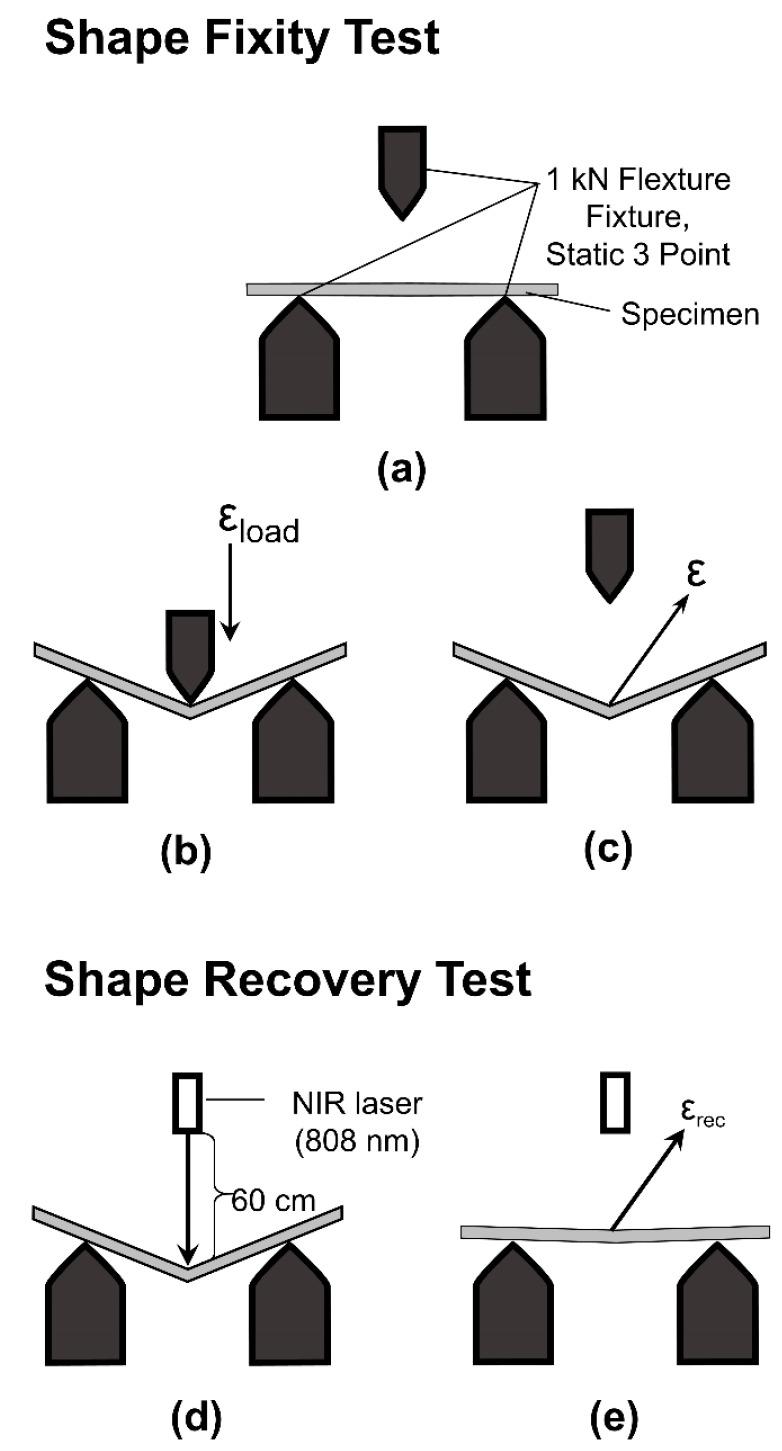
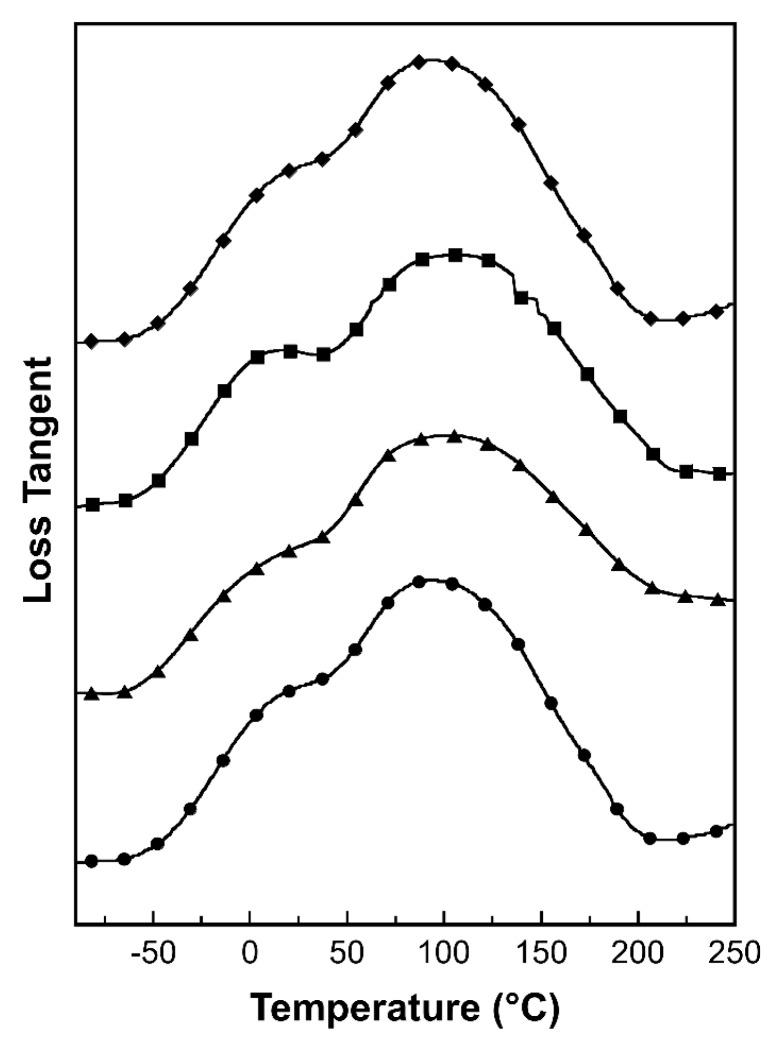
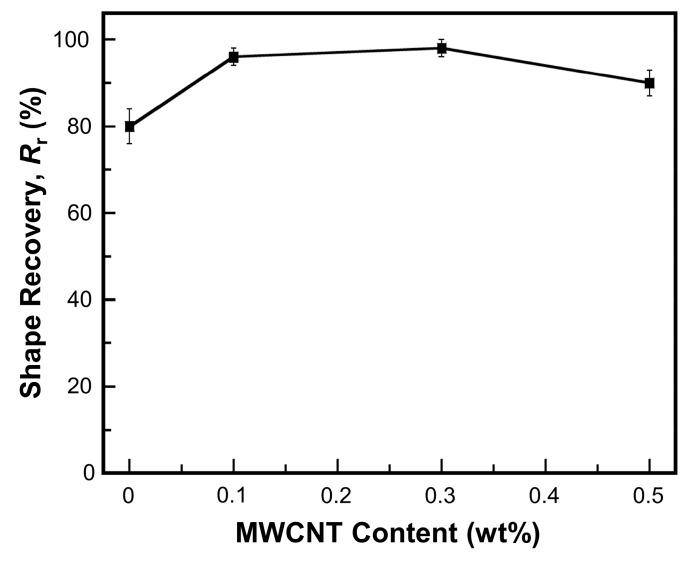
Smart materials with light-actuated shape memory effects are developed from renewable resources in this work. Bio-based benzoxazine resin is prepared from vanillin, furfurylamine, and paraformaldehyde by utilizing the Mannich-like condensation. Vanillin-furfurylamine-containing benzoxazine resin (V-fa) is subsequently copolymerized with epoxidized castor oil (ECO). When the copolymer is reinforced with multiwalled carbon nanotubes (MWCNTs), the resulting composite exhibits shape memory effects. Molecular characteristics of V-fa resin, ECO, and V-fa/ECO copolymers are obtained from Fourier transform infrared (FT-IR) spectroscopy. Curing behavior of V-fa/ECO copolymers is investigated by differential scanning calorimetry. Dynamic mechanical properties of MWCNT reinforced V-fa/ECO composites are determined by dynamic mechanical analysis. Morphological details and distribution of MWCNTs within the copolymer matrix are characterized by transmission electron microscopy. Shape memory performances of MWCNT reinforced V-fa/ECO composites are studied by shape memory tests performed with a universal testing machine. After a significant deformation to a temporary shape, the composites can be recovered to the original shape by near-infrared (NIR) laser actuation. The shape recovery process can be stimulated at a specific site of the composite simply by focusing NIR laser to that site. The shape recovery time of the composites under NIR actuation is four times faster than the shape recovery process under conventional thermal activation. Furthermore, the composites possess good shape fixity and good shape recovery under NIR actuation.
在这项工作中,利用可再生资源开发了具有光驱动形状记忆效应的智能材料。通过类似曼尼希缩合反应,由香草醛、糠胺和多聚甲醛制备了生物基苯并恶嗪树脂。随后,含香草醛-糠胺的苯并恶嗪树脂(V-fa)与环氧化蓖麻油(ECO)共聚。当用多壁碳纳米管(MWCNT)增强该共聚物时,所得复合材料呈现形状记忆效应。通过傅里叶变换红外(FT-IR)光谱获得V-fa树脂、ECO和V-fa/ECO共聚物的分子特征。通过差示扫描量热法研究V-fa/ECO共聚物的固化行为。通过动态力学分析测定MWCNT增强的V-fa/ECO复合材料的动态力学性能。用透射电子显微镜表征MWCNT在共聚物基体中的形态细节和分布。通过使用万能试验机进行形状记忆测试,研究了MWCNT增强的V-fa/ECO复合材料的形状记忆性能。在显著变形至临时形状后,复合材料可通过近红外(NIR)激光驱动恢复到原始形状。只需将NIR激光聚焦到复合材料的特定部位,就能在该部位刺激形状恢复过程。在NIR驱动下,复合材料的形状恢复时间比传统热激活下的形状恢复过程快四倍。此外,该复合材料在NIR驱动下具有良好的形状固定性和良好的形状恢复性。







 Zotero 插件