Tantiwisawaruji Sukanlaya, Rocha Maria J, Silva Ana, Pardal Miguel A, Kovitvadhi Uthaiwan, Rocha Eduardo
Learning Institute, King Mongkut's University of Technology Thonburi, Bangkok 10140, Thailand.
Laboratory of Histology and Embryology, Department of Microscopy, ICBAS-School of Medicine and Biomedical Sciences, University of Porto (U.Porto), 4050-313 Porto, Portugal.
Animals (Basel). 2022 Aug 31;12(17):2248. doi: 10.3390/ani12172248.
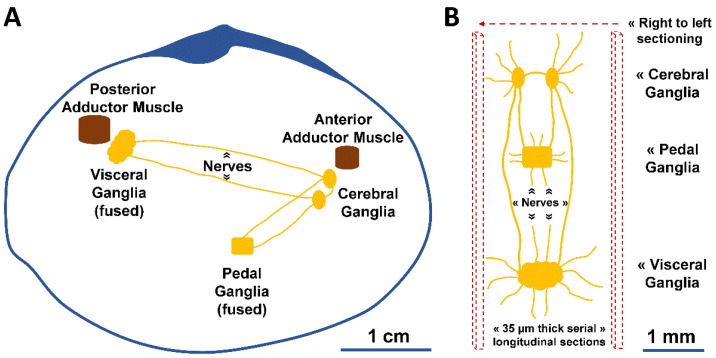
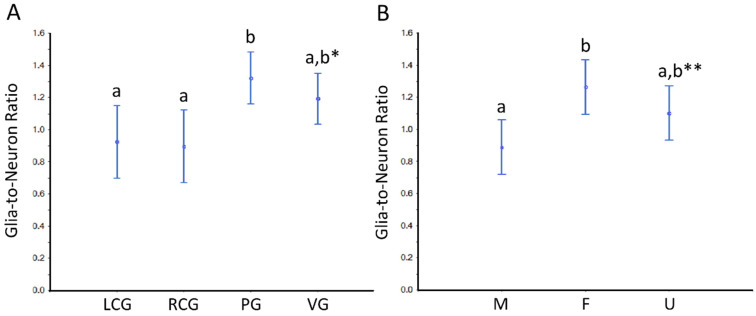
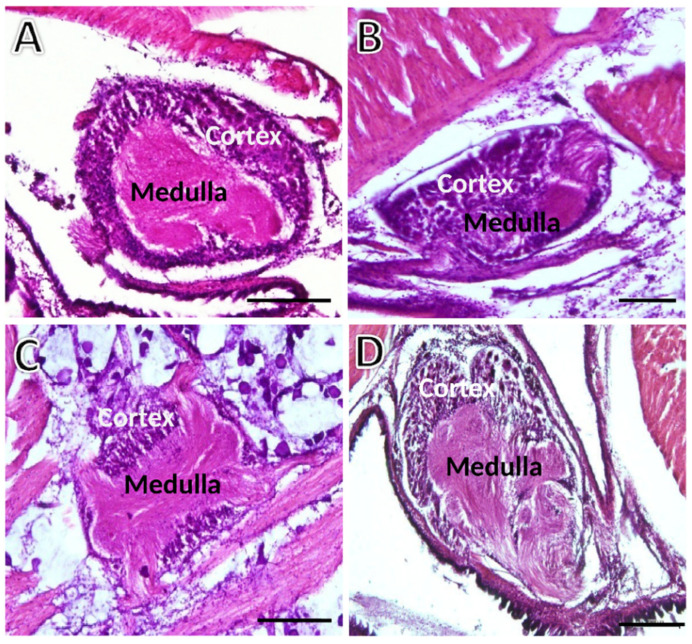
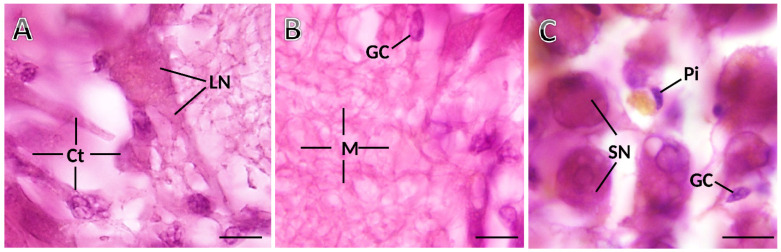
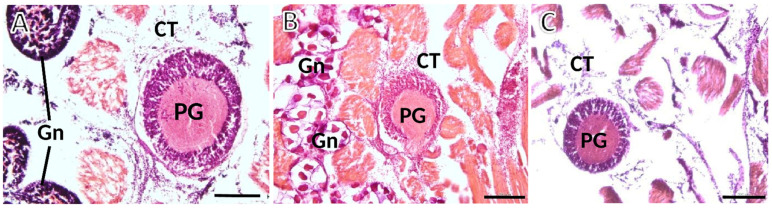
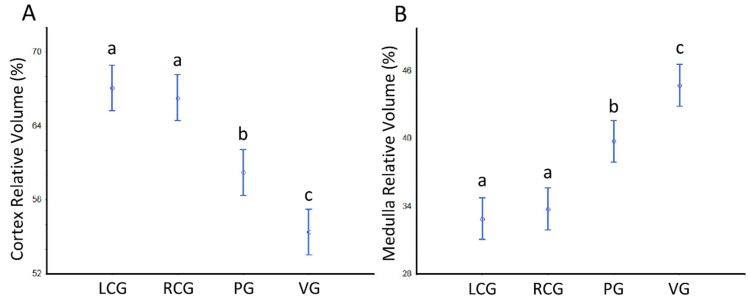
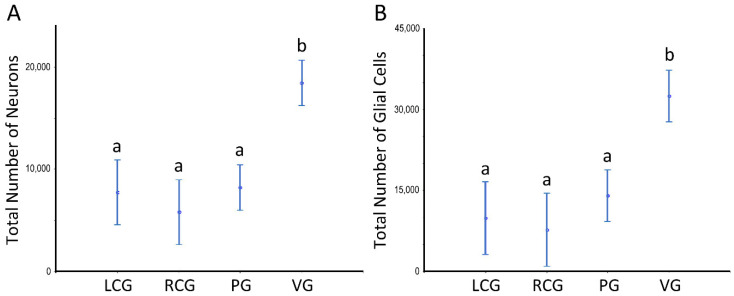
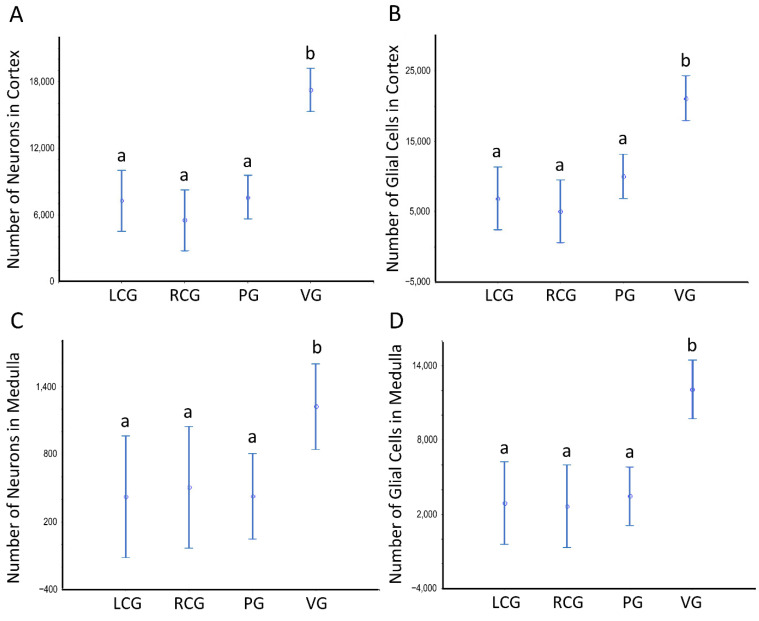
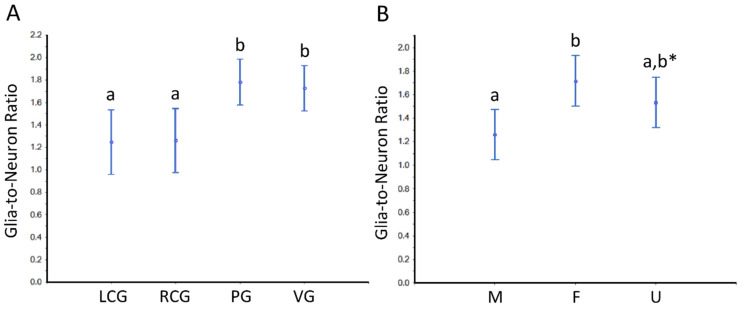
Neurotransmitters modulate gonadal maturation in bivalves. However, it remains unclear whether there are differences in the nervous system structure between sexes, maturation, and ganglia. Therefore, a stereological study was conducted on the ganglia of adult peppery furrow shell (). Equal-sized males, females, and undifferentiated (gamete absence) animals were fixed with 10% formalin and processed for light microscopy. They were serially cut into 35 µm paraffin thick sections and stained with hematoxylin-eosin. Sections with cerebral (cerebropleural), pedal, and visceral ganglia were studied. The parameters estimated were the volumes of the ganglia, the total and relative volumes of their cortex (outer layer) and medulla (neuropil), and the total number of cells (neurons, glia, and pigmented) per ganglia and compartment. The volumes and numbers were estimated, respectively, by the Cavalieri principle and by the optical fractionator. Females show a larger glia to neuron numerical ratio. Further, females have a greater ganglionic volume than undifferentiated adults, with males showing intermediate values. These facts indicate that the ganglia size is related somehow to maturation. The cell size forms the basis of the differences because total cellularity is equal among the groups. The three ganglion types differ in total volumes and the volume ratio of the cortex versus the medulla. The greater volumes of the pedal ganglia (vis-a-vis the cerebral ones) and of the visceral ganglia (in relation to all others) imply more voluminous cortexes and medullae, but more neuronal and non-neuronal cells only in the visceral. The new fundamental data can help interpret bivalve neurophysiology.
神经递质调节双壳贝类的性腺成熟。然而,性别、成熟度和神经节之间的神经系统结构是否存在差异仍不清楚。因此,对成年胡椒沟壳的神经节进行了体视学研究。将大小相等的雄性、雌性和未分化(无配子)动物用10%福尔马林固定并进行光学显微镜处理。将它们连续切成35μm厚的石蜡切片,并用苏木精-伊红染色。研究了具有脑(脑胸膜)、足和内脏神经节的切片。估计的参数包括神经节的体积、其皮质(外层)和髓质(神经纤维网)的总体积和相对体积,以及每个神经节和隔室的细胞(神经元、神经胶质细胞和色素细胞)总数。体积和数量分别通过卡瓦列里原理和光学分割器进行估计。雌性显示出更大的神经胶质细胞与神经元数量比。此外,雌性的神经节体积比未分化的成年个体更大,雄性则显示出中间值。这些事实表明神经节大小在某种程度上与成熟度有关。细胞大小构成了差异的基础,因为各组之间的总细胞数是相等的。三种神经节类型在总体积以及皮质与髓质的体积比方面存在差异。足神经节(相对于脑神经节)和内脏神经节(相对于所有其他神经节)的体积更大,这意味着皮质和髓质更庞大,但仅在内脏神经节中有更多的神经元和非神经元细胞。这些新的基础数据有助于解释双壳贝类的神经生理学。