Mikrobiologisches Institut-Klinische Mikrobiologie, Immunologie und Hygiene, Universitätsklinikum Erlangen and Friedrich-Alexander Universität Erlangen-Nürnberg, Erlangen, Germany.
Division of Immunobiology, Cincinnati Children's Hospital, Cincinnati, OH, United States of America.
PLoS Genet. 2019 Jun 14;15(6):e1008178. doi: 10.1371/journal.pgen.1008178. eCollection 2019 Jun.
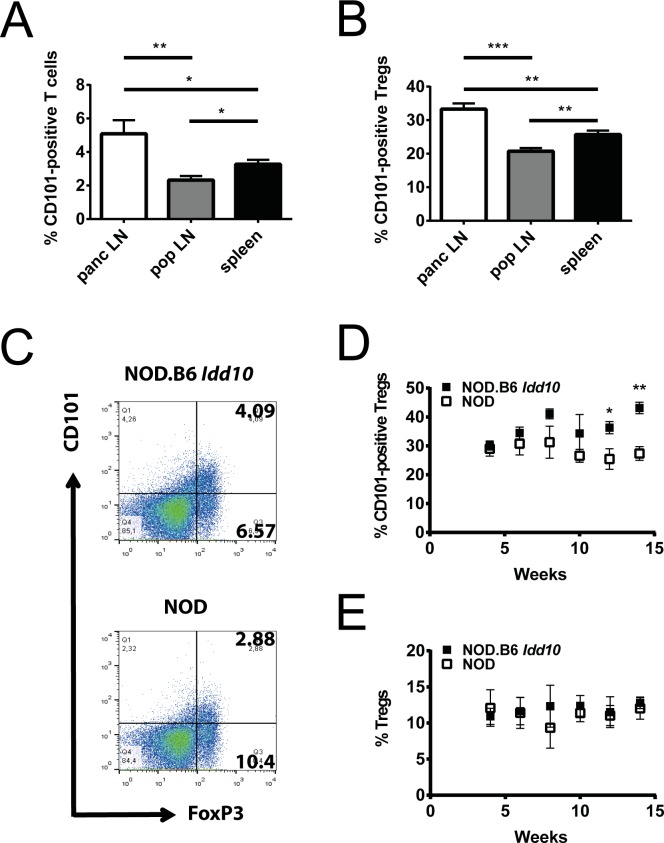
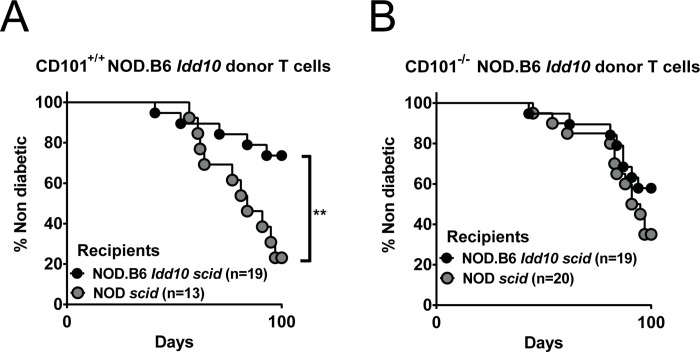
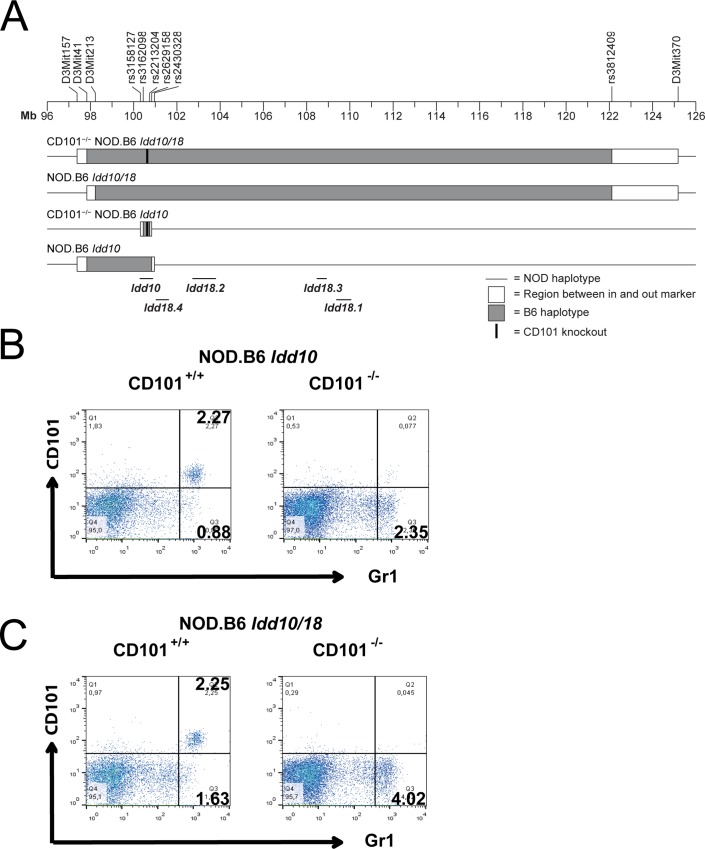
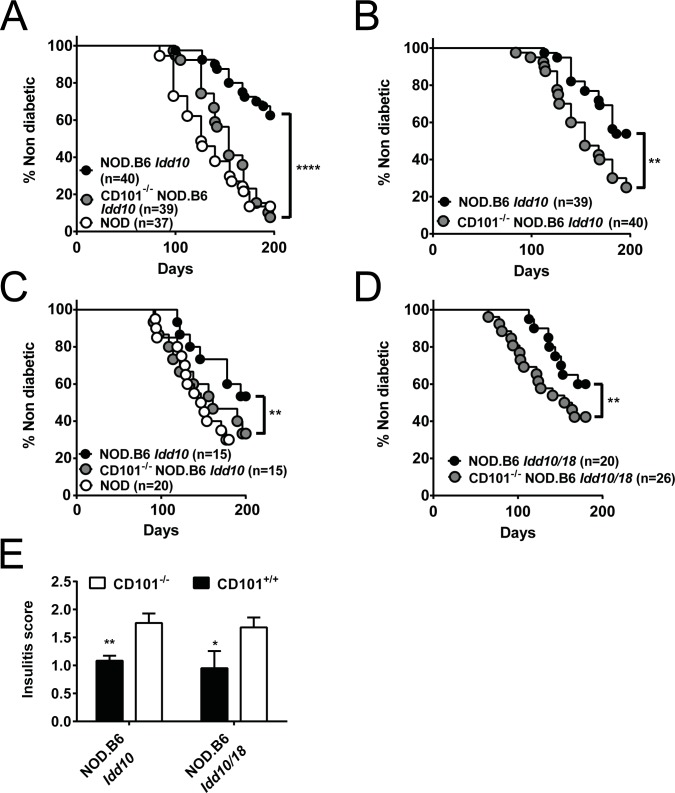
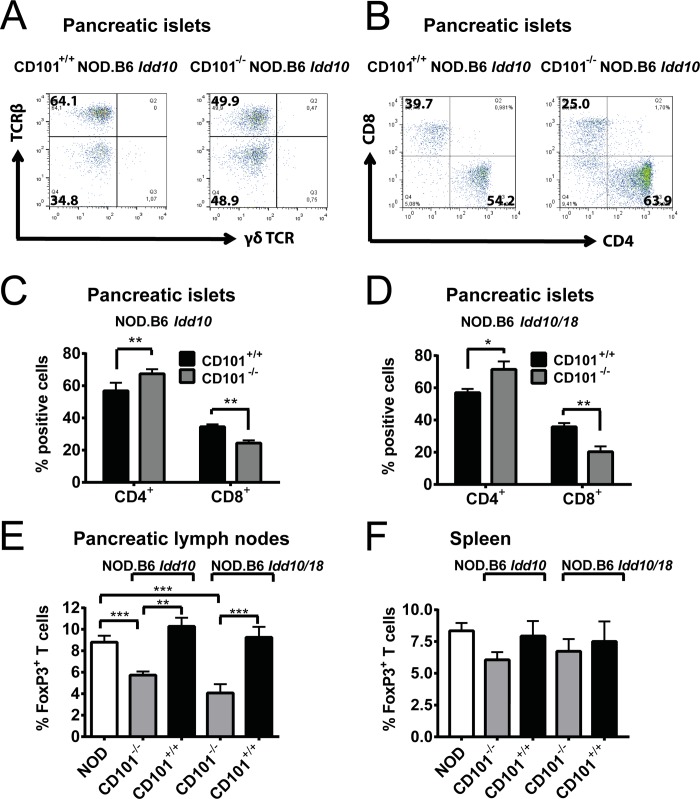
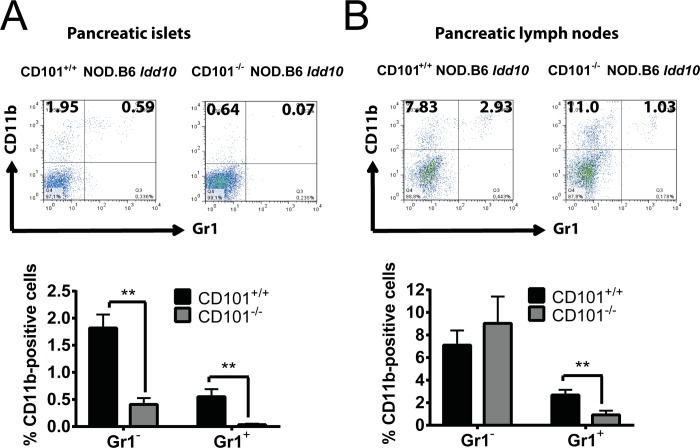
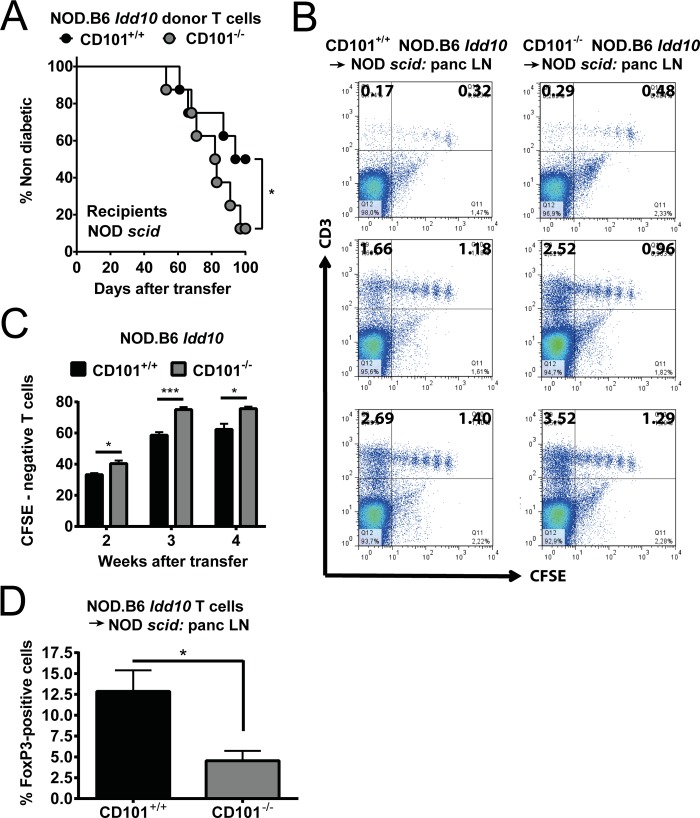
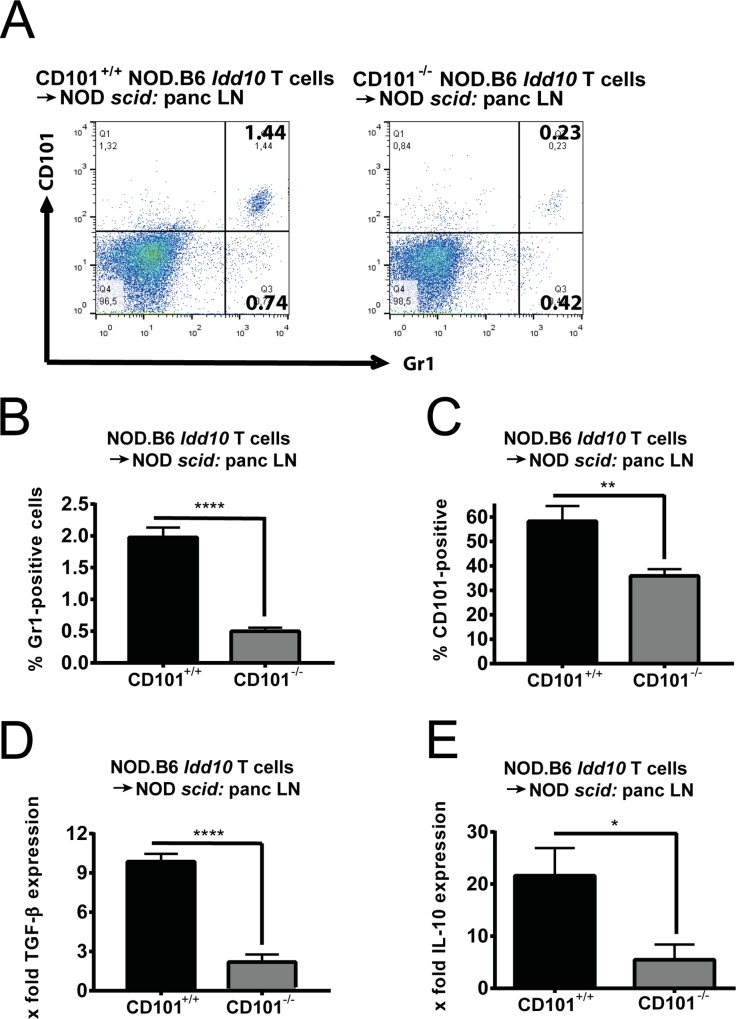
Type 1 diabetes (T1D) is a chronic multi-factorial disorder characterized by the immune-mediated destruction of insulin-producing pancreatic beta cells. Variations at a large number of genes influence susceptibility to spontaneous autoimmune T1D in non-obese diabetic (NOD) mice, one of the most frequently studied animal models for human disease. The genetic analysis of these mice allowed the identification of many insulin-dependent diabetes (Idd) loci and candidate genes, one of them being Cd101. CD101 is a heavily glycosylated transmembrane molecule which exhibits negative-costimulatory functions and promotes regulatory T (Treg) function. It is abundantly expressed on subsets of lymphoid and myeloid cells, particularly within the gastrointestinal tract. We have recently reported that the genotype-dependent expression of CD101 correlates with a decreased susceptibility to T1D in NOD.B6 Idd10 congenic mice compared to parental NOD controls. Here we show that the knockout of CD101 within the introgressed B6-derived Idd10 region increased T1D frequency to that of the NOD strain. This loss of protection from T1D was paralleled by decreased Gr1-expressing myeloid cells and FoxP3+ Tregs and an enhanced accumulation of CD4-positive over CD8-positive T lymphocytes in pancreatic tissues. As compared to CD101+/+ NOD.B6 Idd10 donors, adoptive T cell transfers from CD101-/- NOD.B6 Idd10 mice increased T1D frequency in lymphopenic NOD scid and NOD.B6 Idd10 scid recipients. Increased T1D frequency correlated with a more rapid expansion of the transferred CD101-/- T cells and a lower proportion of recipient Gr1-expressing myeloid cells in the pancreatic lymph nodes. Fewer of the Gr1+ cells in the recipients receiving CD101-/- T cells expressed CD101 and the cells had lower levels of IL-10 and TGF-β mRNA. Thus, our results connect the Cd101 haplotype-dependent protection from T1D to an anti-diabetogenic function of CD101-expressing Tregs and Gr1-positive myeloid cells and confirm the identity of Cd101 as Idd10.
1 型糖尿病(T1D)是一种慢性多因素疾病,其特征是免疫介导的胰岛β细胞破坏。大量基因的变异影响非肥胖型糖尿病(NOD)小鼠自发性自身免疫性 T1D 的易感性,NOD 小鼠是研究人类疾病最常用的动物模型之一。对这些小鼠的基因分析确定了许多胰岛素依赖型糖尿病(Idd)基因座和候选基因,其中之一是 Cd101。CD101 是一种高度糖基化的跨膜分子,具有负共刺激功能,并促进调节性 T(Treg)功能。它在淋巴样和髓样细胞的亚群中大量表达,特别是在胃肠道中。我们最近报道,与亲本 NOD 对照相比,NOD.B6 Idd10 同基因小鼠中 CD101 表达的基因型依赖性与 T1D 易感性降低相关。在这里,我们显示在导入的 B6 衍生 Idd10 区域内敲除 CD101 会增加 T1D 的频率,达到 NOD 株的水平。这种对 T1D 的保护丧失与 Gr1 表达的髓样细胞和 FoxP3+Treg 的减少以及胰腺组织中 CD4+阳性 T 淋巴细胞对 CD8+阳性 T 淋巴细胞的积累增强相对应。与 CD101+/+NOD.B6 Idd10 供体相比,来自 CD101-/-NOD.B6 Idd10 小鼠的 T 细胞过继转移增加了淋巴缺失性 NOD scid 和 NOD.B6 Idd10 scid 受体的 T1D 频率。T1D 频率的增加与转移的 CD101-/-T 细胞的更快扩增以及胰腺淋巴结中受者 Gr1 表达的髓样细胞比例降低相关。接受 CD101-/-T 细胞的受体中的 Gr1+细胞较少表达 CD101,并且这些细胞具有较低水平的 IL-10 和 TGF-βmRNA。因此,我们的结果将 Cd101 单倍型依赖性对 T1D 的保护与 CD101 表达的 Treg 和 Gr1 阳性髓样细胞的抗糖尿病功能联系起来,并证实了 Cd101 作为 Idd10 的身份。