Department of Biology, McMaster University, Hamilton, Ontario, Canada.
Department of Pathology & Molecular Medicine, McMaster Immunology Research Centre (MIRC), McMaster University, Hamilton, Ontario, Canada.
PLoS One. 2019 Jun 14;14(6):e0217220. doi: 10.1371/journal.pone.0217220. eCollection 2019.
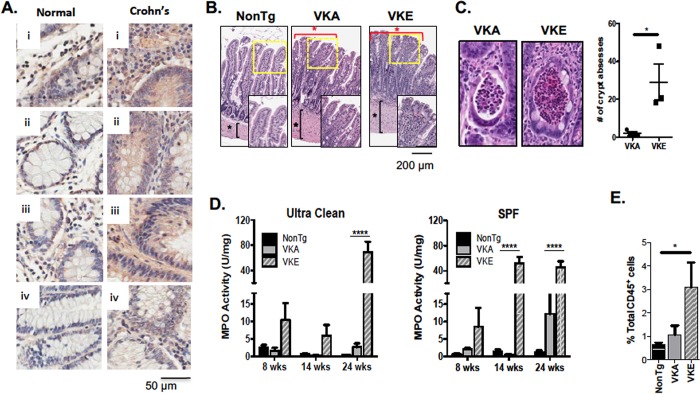
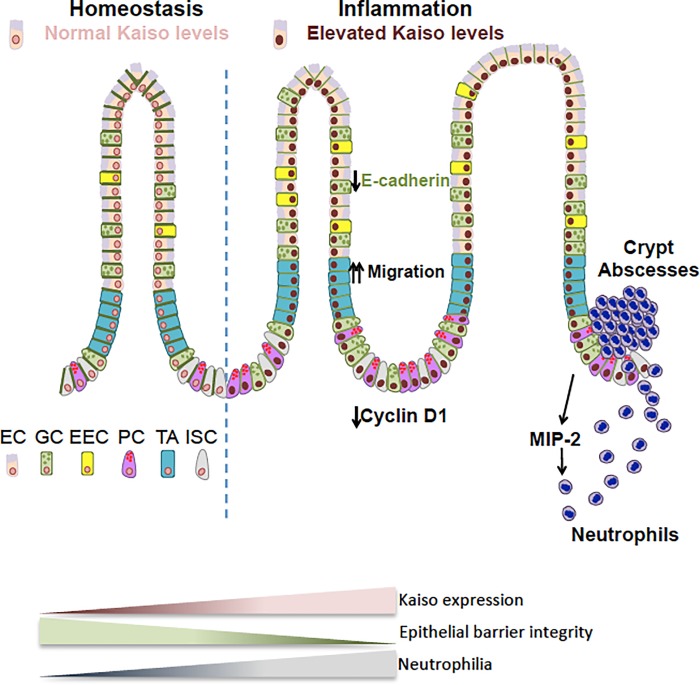
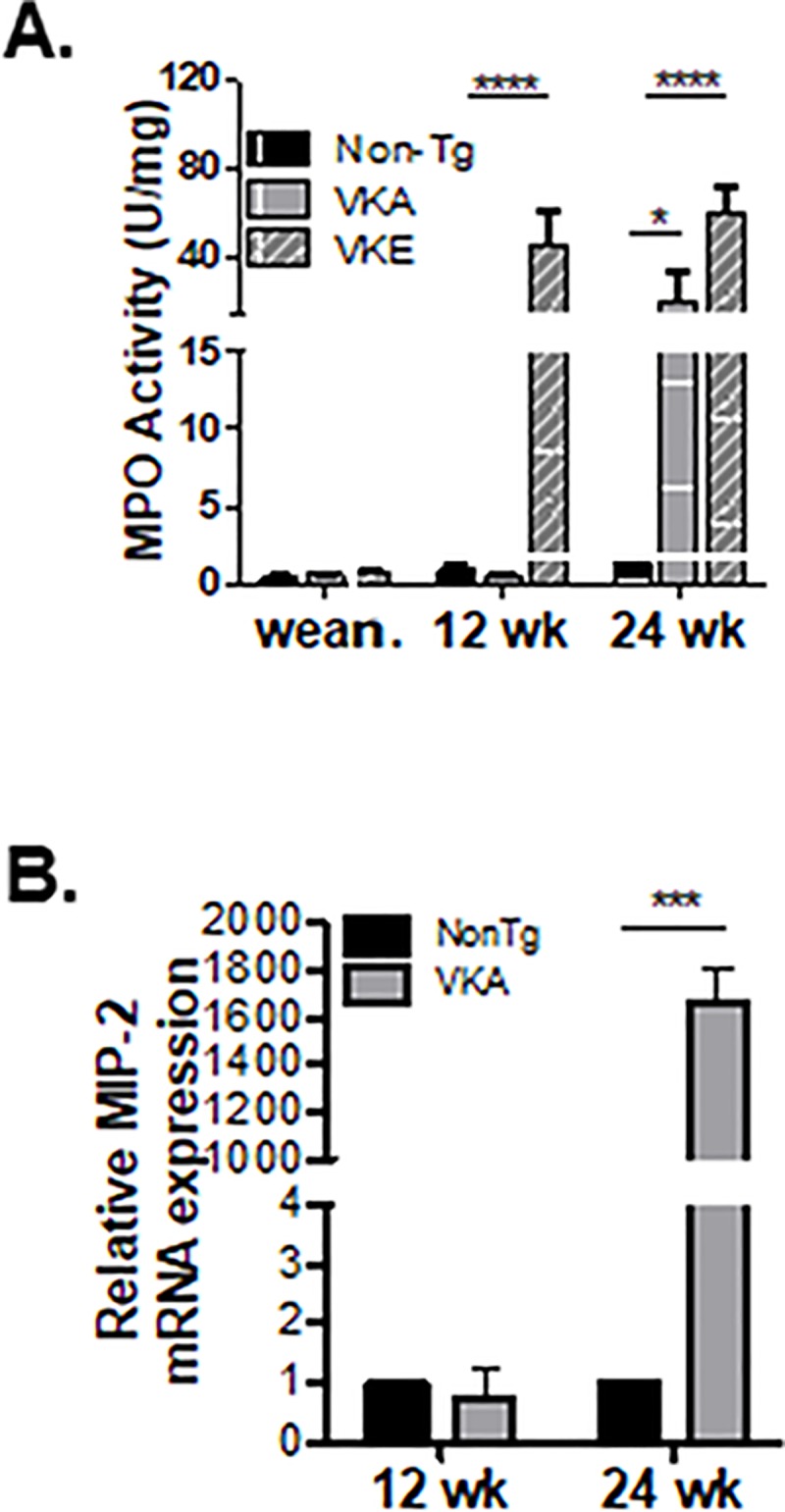
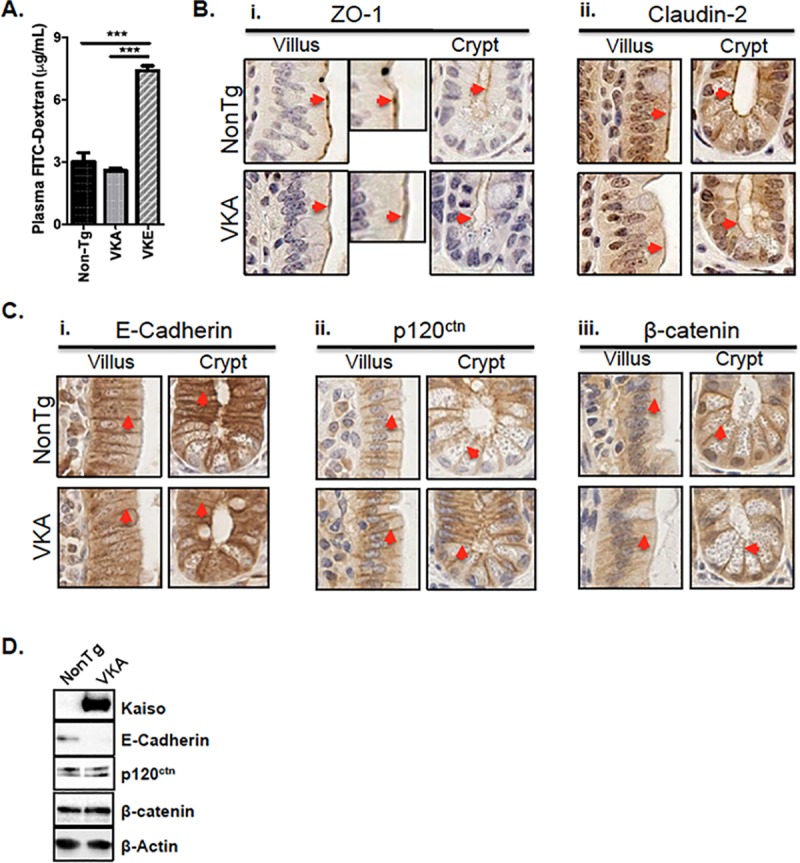
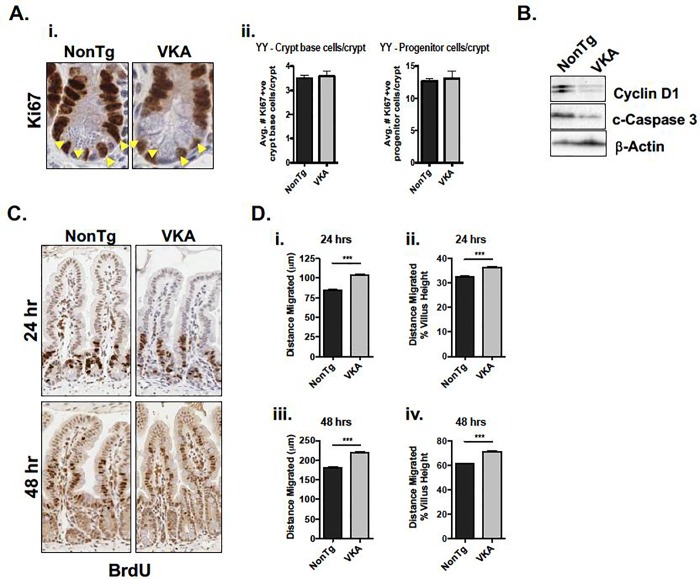
Chronic intestinal inflammation contributes to pathologies such as inflammatory bowel disease (IBD) and colon cancer. While the precise etiology remains controversial, IBD is believed to manifest as a result of various factors. We previously reported that intestinal-specific overexpression of the transcription factor Kaiso results in an intestinal inflammatory response; however, the cause of this inflammation is unknown. To elucidate the underlying mechanism(s) of the Kaiso-mediated intestinal inflammatory phenotype, we evaluated two independent transgenic mouse lines that express varying levels of Kaiso (KaisoTg). Histological analyses of KaisoTg mice revealed intestinal damage including thickening of the mucosa, intestinal "lesions" and crypt abscesses, which are reminiscent of IBD pathology. Additionally, higher Kaiso levels induced intestinal neutrophilia as early as 12 weeks, which worsened as the mice aged. Notably, the Kaiso-induced intestinal inflammation correlated with a leaky intestinal barrier and mis-regulation of E-cadherin expression and localization. Interestingly, Kaiso overexpression resulted in reduced proliferation but enhanced migration of intestinal epithelial cells prior to the onset of inflammation. Collectively, these data suggest that Kaiso plays a role in regulating intestinal epithelial cell integrity and function, dysregulation of which contributes to a chronic inflammatory phenotype as mice age.
慢性肠道炎症会导致炎症性肠病(IBD)和结肠癌等疾病。虽然确切的病因仍存在争议,但据信 IBD 是由多种因素引起的。我们之前曾报道过,转录因子 Kaiso 在肠道中的特异性过表达会导致肠道炎症反应;然而,这种炎症的原因尚不清楚。为了阐明 Kaiso 介导的肠道炎症表型的潜在机制,我们评估了两种表达不同水平 Kaiso 的独立转基因小鼠品系(KaisoTg)。KaisoTg 小鼠的组织学分析显示肠道损伤,包括粘膜增厚、肠道“损伤”和隐窝脓肿,这与 IBD 病理学相似。此外,早在 12 周时,较高水平的 Kaiso 就诱导了肠道中性粒细胞增多,随着小鼠年龄的增长,这种情况恶化。值得注意的是,Kaiso 诱导的肠道炎症与肠道屏障通透性增加以及 E-钙黏蛋白表达和定位的失调有关。有趣的是,Kaiso 过表达会导致肠道上皮细胞在炎症发生前增殖减少但迁移增强。总的来说,这些数据表明 Kaiso 在调节肠道上皮细胞的完整性和功能方面发挥作用,其失调会导致小鼠衰老时出现慢性炎症表型。