Department of Microbiology, Tumor and Cell Biology, Biomedicum, Karolinska Institutet, Stockholm, Sweden.
University of Helsinki, Department of Microbiology, Faculty of Agriculture and Forestry, Helsinki, Finland.
PLoS Pathog. 2019 Jun 14;15(6):e1007842. doi: 10.1371/journal.ppat.1007842. eCollection 2019 Jun.
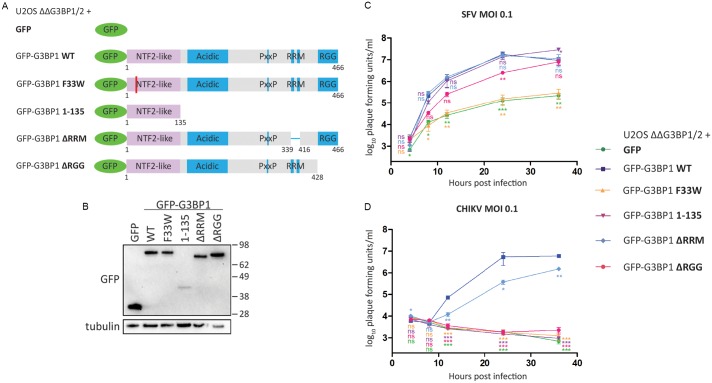
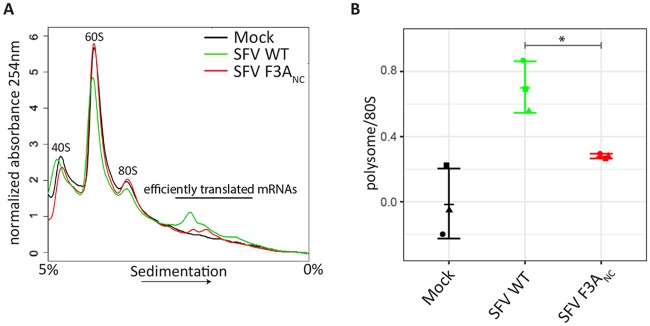
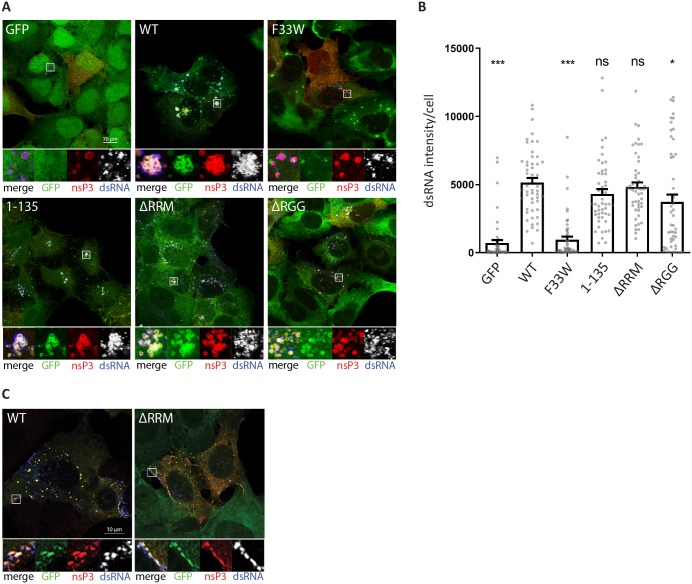
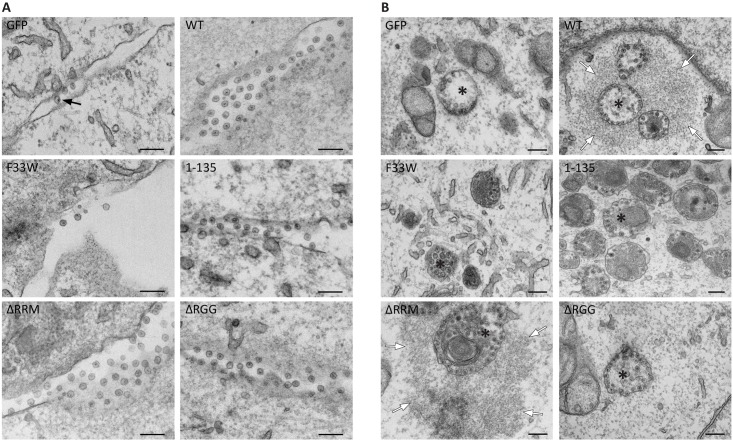
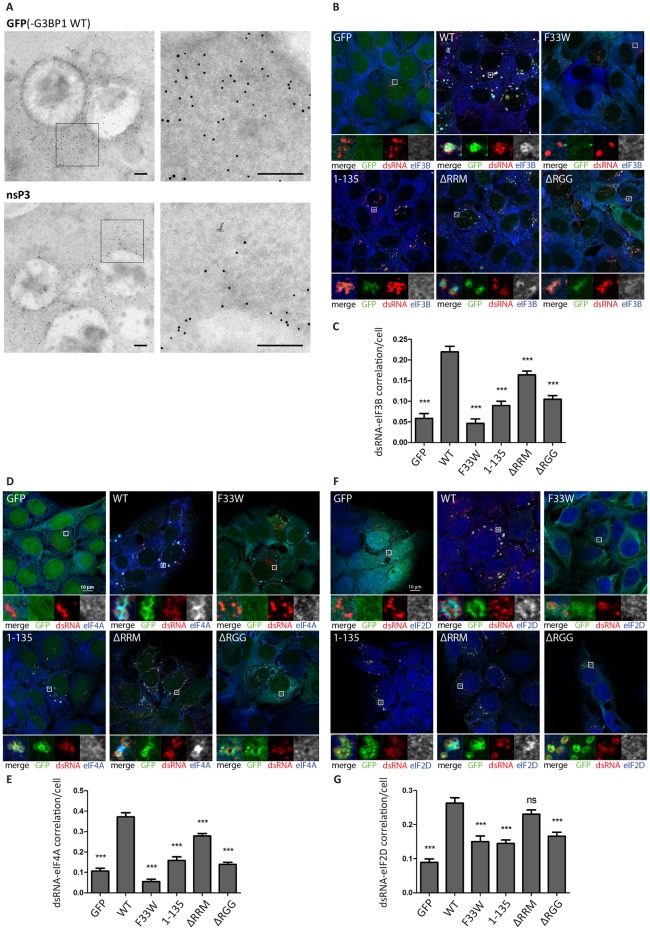
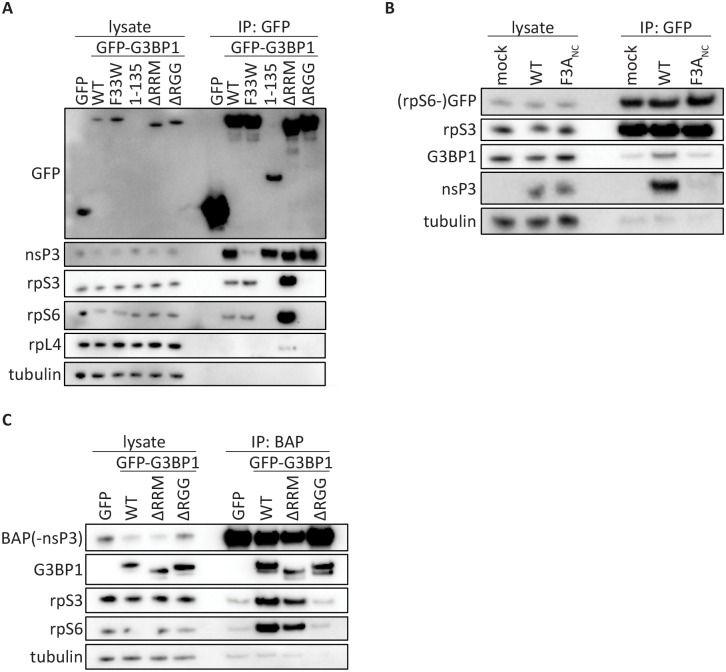
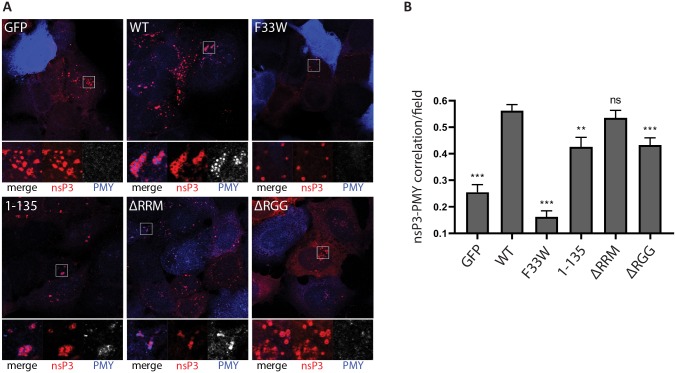
G3BP-1 and -2 (hereafter referred to as G3BP) are multifunctional RNA-binding proteins involved in stress granule (SG) assembly. Viruses from diverse families target G3BP for recruitment to replication or transcription complexes in order to block SG assembly but also to acquire pro-viral effects via other unknown functions of G3BP. The Old World alphaviruses, including Semliki Forest virus (SFV) and chikungunya virus (CHIKV) recruit G3BP into viral replication complexes, via an interaction between FGDF motifs in the C-terminus of the viral non-structural protein 3 (nsP3) and the NTF2-like domain of G3BP. To study potential proviral roles of G3BP, we used human osteosarcoma (U2OS) cell lines lacking endogenous G3BP generated using CRISPR-Cas9 and reconstituted with a panel of G3BP1 mutants and truncation variants. While SFV replicated with varying efficiency in all cell lines, CHIKV could only replicate in cells expressing G3BP1 variants containing both the NTF2-like and the RGG domains. The ability of SFV to replicate in the absence of G3BP allowed us to study effects of different domains of the protein. We used immunoprecipitation to demonstrate that that both NTF2-like and RGG domains are necessary for the formation a complex between nsP3, G3BP1 and the 40S ribosomal subunit. Electron microscopy of SFV-infected cells revealed that formation of nsP3:G3BP1 complexes via the NTF2-like domain was necessary for clustering of cytopathic vacuoles (CPVs) and that the presence of the RGG domain was necessary for accumulation of electron dense material containing G3BP1 and nsP3 surrounding the CPV clusters. Clustered CPVs also exhibited localised high levels of translation of viral mRNAs as detected by ribopuromycylation staining. These data confirm that G3BP is a ribosomal binding protein and reveal that alphaviral nsP3 uses G3BP to concentrate viral replication complexes and to recruit the translation initiation machinery, promoting the efficient translation of viral mRNAs.
G3BP-1 和 -2(以下简称 G3BP)是多功能 RNA 结合蛋白,参与应激颗粒(SG)的组装。来自不同家族的病毒将 G3BP 作为靶标招募到复制或转录复合物中,以阻止 SG 的组装,但也通过 G3BP 的其他未知功能获得促病毒效应。旧世界甲病毒,包括 Semliki Forest 病毒(SFV)和基孔肯雅热病毒(CHIKV)通过病毒非结构蛋白 3(nsP3)的 C 末端的 FGDF 基序与 G3BP 的 NTF2 样结构域之间的相互作用将 G3BP 募集到病毒复制复合物中。为了研究 G3BP 的潜在促病毒作用,我们使用了通过 CRISPR-Cas9 生成的缺乏内源性 G3BP 的人骨肉瘤(U2OS)细胞系,并使用 G3BP1 突变体和截断变体的面板进行了重建。虽然 SFV 在所有细胞系中的复制效率不同,但 CHIKV 只能在表达含有 NTF2 样和 RGG 结构域的 G3BP1 变体的细胞中复制。SFV 在没有 G3BP 的情况下复制的能力使我们能够研究该蛋白不同结构域的影响。我们使用免疫沉淀来证明 NTF2 样和 RGG 结构域都是 nsP3、G3BP1 和 40S 核糖体亚基之间形成复合物所必需的。SFV 感染细胞的电子显微镜显示,通过 NTF2 样结构域形成 nsP3:G3BP1 复合物是 CPV 聚集的必要条件,而 RGG 结构域的存在是 CPV 周围聚集包含 G3BP1 和 nsP3 的电子致密物质的必要条件。聚集的 CPV 还表现出病毒 mRNA 的局部高水平翻译,如通过 ribopuromycylation 染色检测到的。这些数据证实 G3BP 是一种核糖体结合蛋白,并揭示了甲病毒 nsP3 利用 G3BP 来浓缩病毒复制复合物并招募翻译起始机制,从而促进病毒 mRNA 的有效翻译。