
嗜热四膜虫相连的端粒。
The cohering telomeres of Oxytricha.
作者信息
Oka Y, Thomas C A
机构信息
Helicon Foundation, San Diego, CA 92109.
出版信息
Nucleic Acids Res. 1987 Nov 11;15(21):8877-98. doi: 10.1093/nar/15.21.8877.
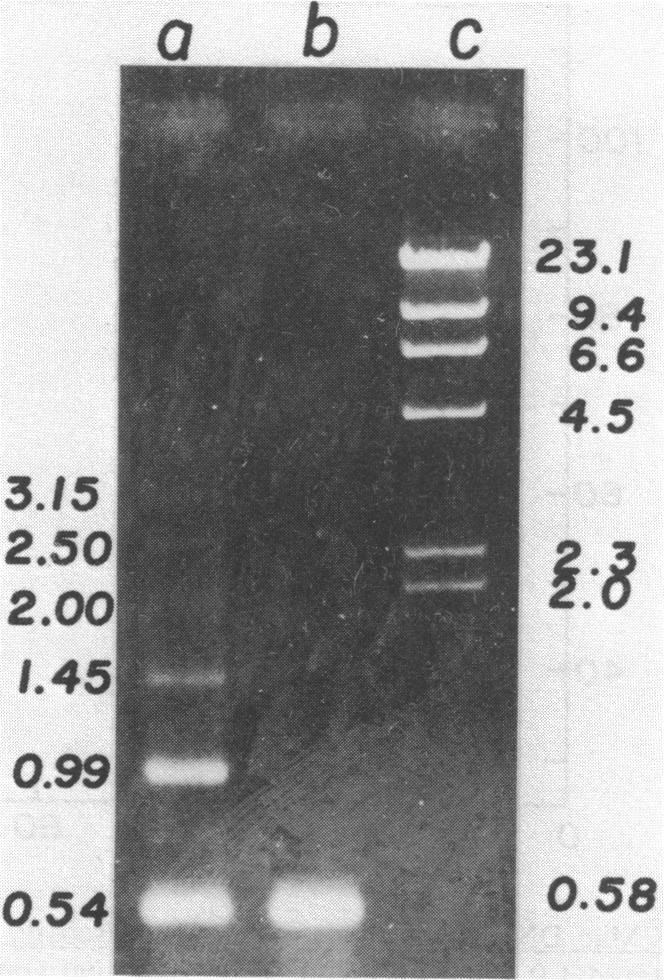
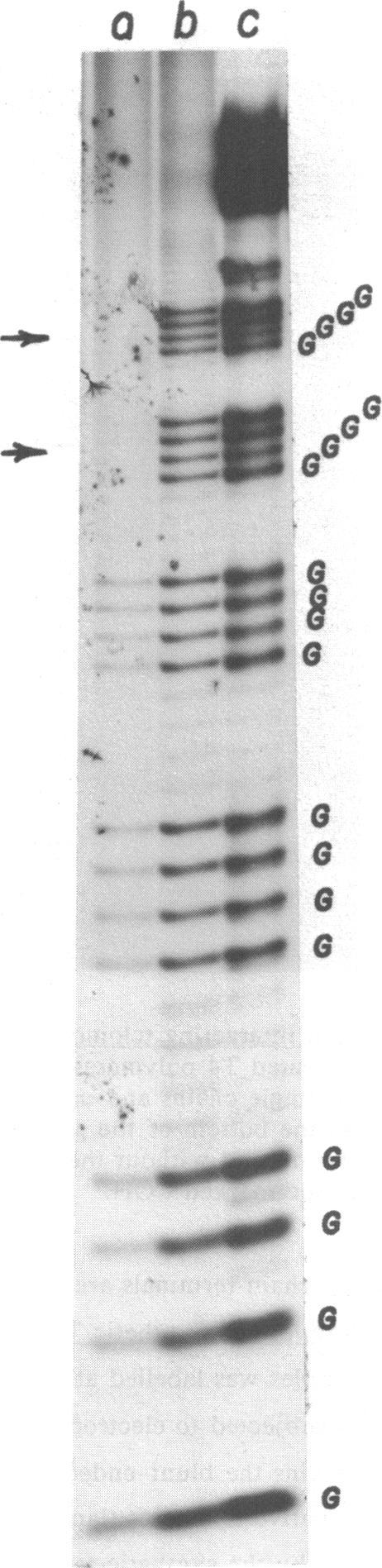
We have studied the process by which purified Oxytricha macronuclear DNA associates with itself to form large aggregates. The various macronuclear DNA molecules all have the same terminal or telomeric DNA sequences that are shown below. 5' C4A4C4A4C4--mean length----G4T4G4T4G4T4G4T4G4 G4T4G4T4G4T4G4T4G4-----2.4 kb------C4A4C4A4C4. When incubated at high concentrations, these telomeric sequences cohere with one another to form an unusual structure--one that is quite different from any DNA structure so far described. The evidence for this is the following: 1) These sequences cohere albeit slowly, in the presence of relatively high concentrations of Na+, and no other cation tested. This contrasts with the rapid coherence of complementary single-chain terminals of normal DNA (sticky ends) which occurs in the presence of any cation tested. 2) If the cohered form is transferred into buffers containing a special cation, K+, it becomes much more resistant to dissociation by heating. We estimate that K+ increases the thermal stability by 25 degrees or more. The only precedent known (to us) for a cation-specific stabilization is that seen in the quadruplex structure formed by poly I. The thermal stability of double helical macronuclear DNA depends on the cation concentration, but not the cation type. Limited treatment with specific nucleases show that the 3' and 5'-ended strands are essential for the formation of the cohering structure. Once in the cohered form, the telomeric sequences are protected from the action of nucleases. Coherence is inhibited by specific, but not by non-specific, synthetic oligomers, and by short telomeric fragments with or without their terminal single chains. We conclude that the coherence occurs by the formation of a novel condensed structure that involves the terminal nucleotides in three or four chains.
我们研究了纯化的大核草履虫DNA自身结合形成大聚集体的过程。各种大核DNA分子都具有相同的末端或端粒DNA序列,如下所示。5' C4A4C4A4C4--平均长度----G4T4G4T4G4T4G4T4G4 G4T4G4T4G4T4G4T4G4-----2.4 kb------C4A4C4A4C4。当在高浓度下孵育时,这些端粒序列相互凝聚形成一种不寻常的结构——一种与迄今为止描述的任何DNA结构都截然不同的结构。支持这一观点的证据如下:1)在相对高浓度的Na +存在下,且没有测试其他阳离子时,这些序列虽然缓慢但会凝聚。这与正常DNA互补单链末端(粘性末端)在任何测试阳离子存在下的快速凝聚形成对比。2)如果将凝聚形式转移到含有特殊阳离子K +的缓冲液中,它对加热解离的抵抗力会大大增强。我们估计K +使热稳定性提高了25度或更多。(据我们所知)唯一已知的阳离子特异性稳定化的先例是在聚I形成的四链体结构中看到的。双链大核DNA的热稳定性取决于阳离子浓度,而不是阳离子类型。用特定核酸酶进行的有限处理表明,3'和5'末端链对于凝聚结构的形成至关重要。一旦形成凝聚形式,端粒序列就受到核酸酶作用的保护。凝聚受到特异性而非非特异性合成寡聚物以及带有或不带有末端单链的短端粒片段的抑制。我们得出结论,凝聚是通过形成一种涉及三或四条链末端核苷酸的新型凝聚结构而发生的。




 Zotero 插件