School of Life Science and Technology, Tokyo Institute of Technology, 4259-B-65 Nagatsuta-cho, Midori-ku, Yokohama, Kanagawa, 226-8501, Japan.
Plant Mol Biol. 2019 Sep;101(1-2):81-93. doi: 10.1007/s11103-019-00891-1. Epub 2019 Jun 14.
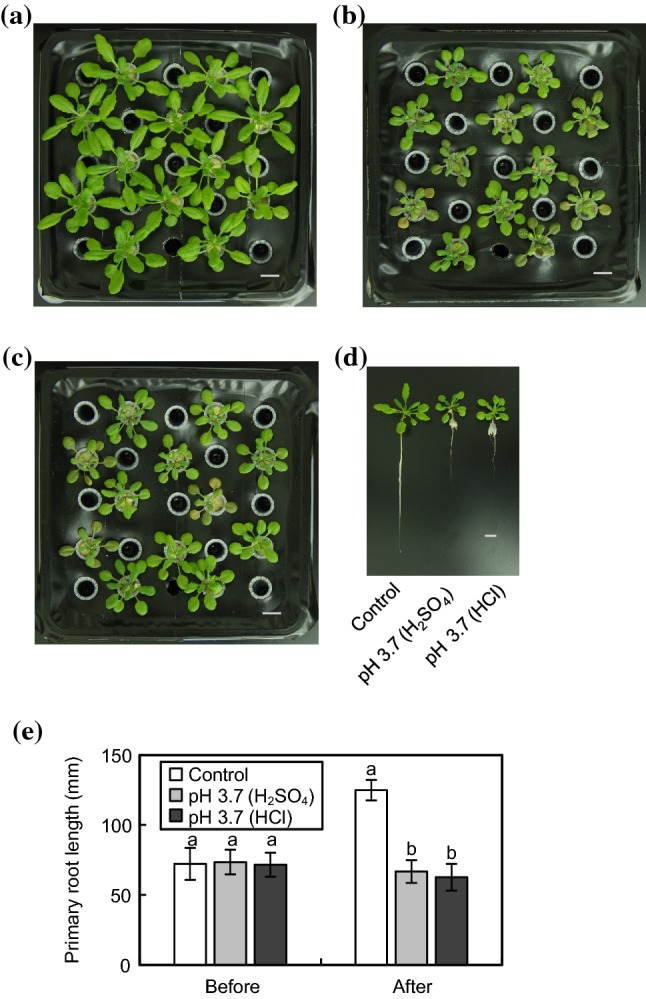
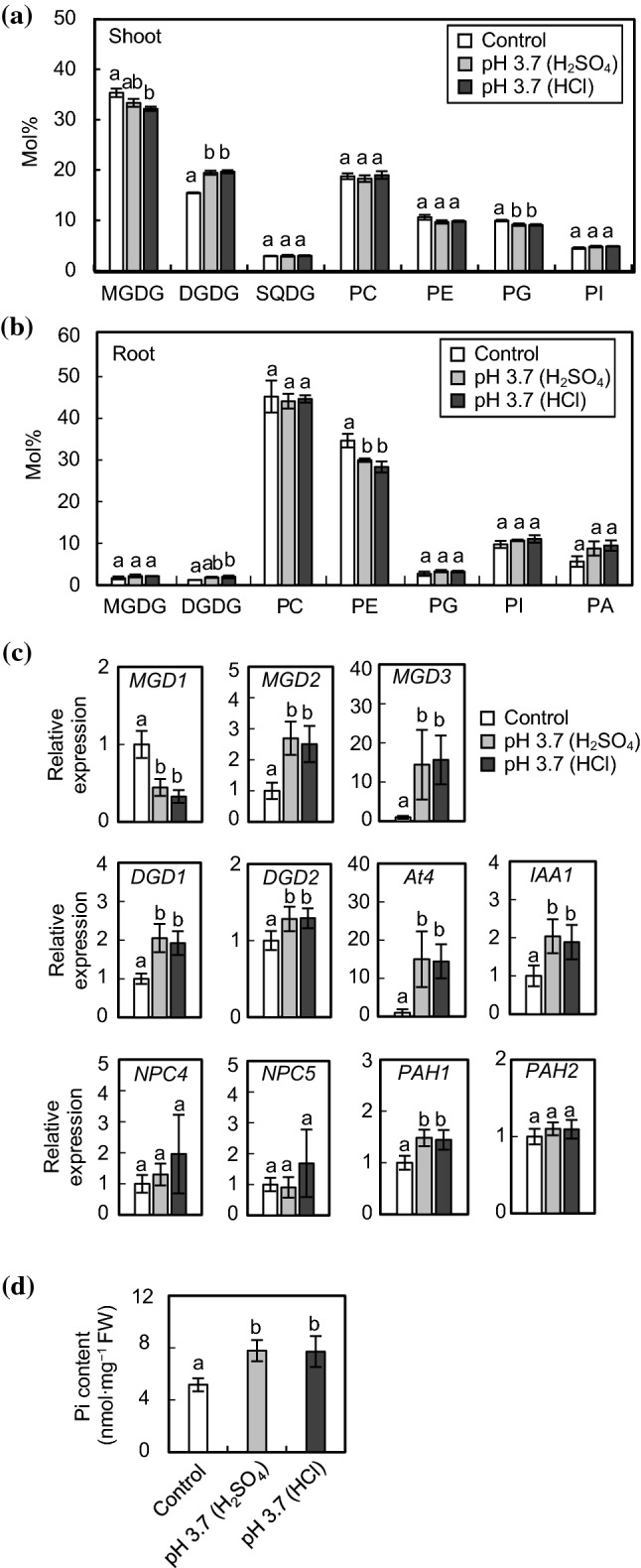
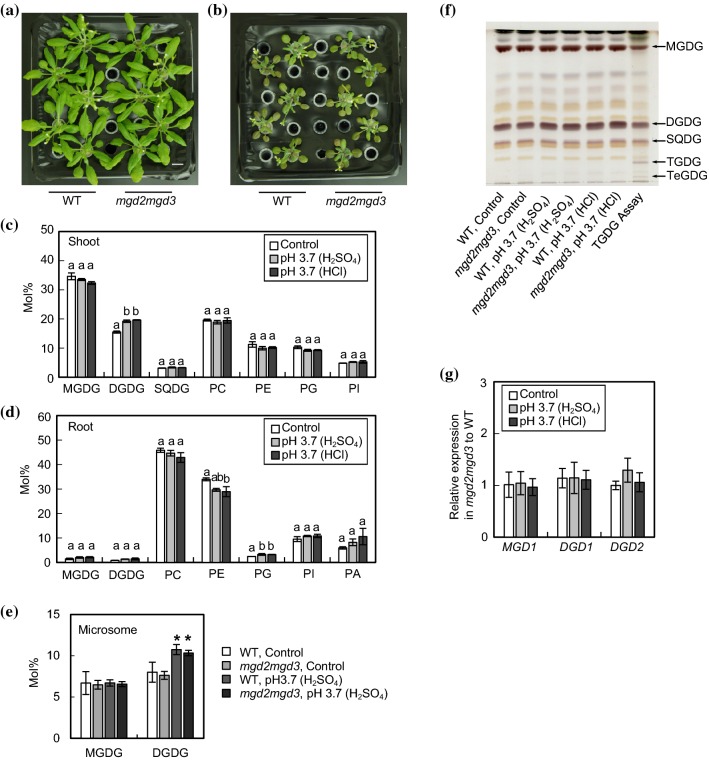
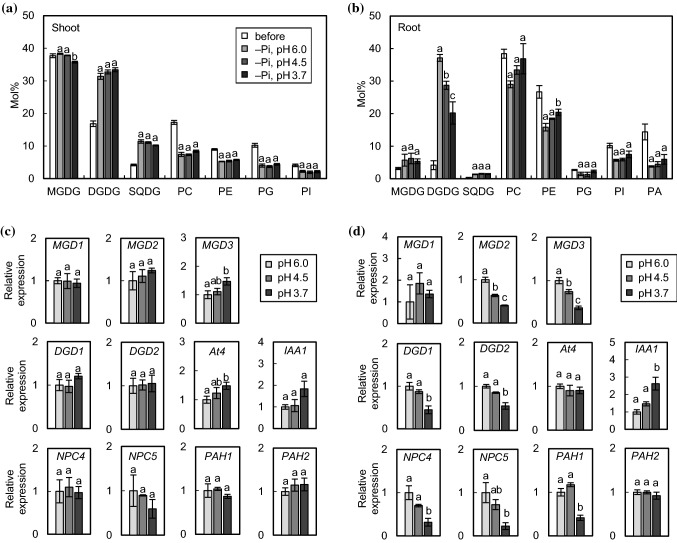
Here we show that accumulation of galactose-containing lipids in plastid membranes in shoots and the other membranes in roots maintains Arabidopsis growth under acidic stress and acidic phosphate deficiency. Soil acidification and phosphate deficiency are closely related to each other in natural environments. In addition to the toxicity of high proton concentrations, acid soil can lead to imbalances of ion availability and nutritional deficiencies, including inorganic phosphate (Pi). Among plants, activation of non-phosphorus-containing galactolipid, digalactosyldiacylglycerol (DGDG), synthesis concomitant with phospholipid degradation, namely membrane lipid remodeling, is crucial for coping with Pi starvation. However, regulation mechanisms of membrane lipid composition during acidic stress have not been clarified. Here, we investigated lipid metabolism in Arabidopsis thaliana grown under acidic stress with or without Pi. Under Pi-sufficient acidic conditions, DGDG was increased in shoot membranes, and some Pi starvation-responsive genes that are involved in lipid remodeling were upregulated without reducing Pi content in leaves. In contrast, under acidic Pi deficiency, membrane lipid remodeling in roots was partially repressed at a lower external pH. Nevertheless, phenotypic comparison between wild type and the double mutant of MGD2/3, which are responsible for DGDG accumulation during Pi starvation, indicated that the complete absence of lipid remodeling in roots resulted in a loss of tolerance to Pi deficiency rather specifically under acidic conditions. This result suggested important physiological roles of galactolipid-enriched membranes under acidic Pi deficiency.
在这里,我们表明,在 shoots 的质体膜和 roots 的其他膜中积累含半乳糖的脂质,可维持拟南芥在酸性胁迫和酸性磷酸盐缺乏下的生长。在自然环境中,土壤酸化和磷酸盐缺乏密切相关。除了高质子浓度的毒性外,酸性土壤还会导致离子可用性和营养缺乏的不平衡,包括无机磷酸盐 (Pi)。在植物中,非含磷半乳糖脂,双半乳糖二酰基甘油 (DGDG) 的激活,与磷脂降解同时发生,即膜脂重塑,对于应对 Pi 饥饿至关重要。然而,酸性胁迫下膜脂组成的调节机制尚未阐明。在这里,我们研究了在有或没有 Pi 的情况下,拟南芥在酸性胁迫下的脂质代谢。在 Pi 充足的酸性条件下,DGDG 在 shoot 膜中增加,并且一些参与脂质重塑的 Pi 饥饿响应基因上调,而叶片中的 Pi 含量没有降低。相比之下,在酸性 Pi 缺乏下,根中的膜脂重塑在较低的外部 pH 下部分受到抑制。然而,野生型和 MGD2/3 双突变体(负责 Pi 饥饿期间 DGDG 积累)之间的表型比较表明,根中的脂质重塑完全缺失导致对 Pi 缺乏的耐受性丧失,特别是在酸性条件下。这一结果表明,在酸性 Pi 缺乏下,富含半乳糖脂的膜具有重要的生理作用。