Wang Kaixuan, Zhou Wei, Meng Peng, Wang Peng, Zhou Chunhua, Yao Yao, Wu Shouxin, Wang Yu, Zhao Jiangman, Zou Duowu, Jin Gang
Department of Gastroenterology, Changhai Hospital, Second Military Medical University, Shanghai, China.
Department of Gastroenterology, Changhai Hospital, Second Military Medical University, Shanghai, China.
Transl Oncol. 2019 Sep;12(9):1147-1154. doi: 10.1016/j.tranon.2019.03.006. Epub 2019 Jun 13.
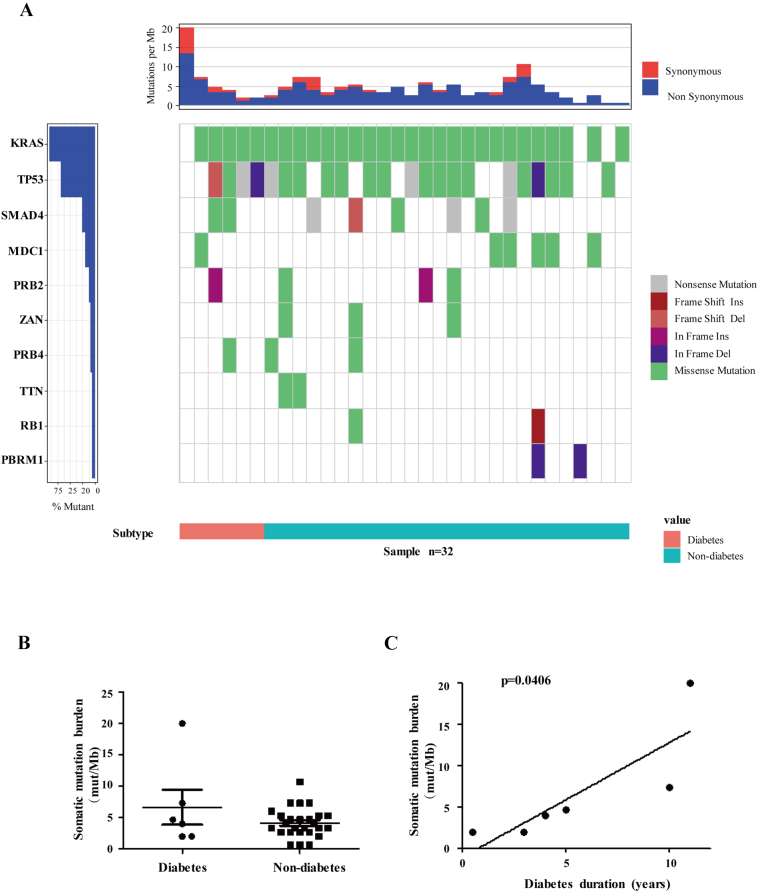
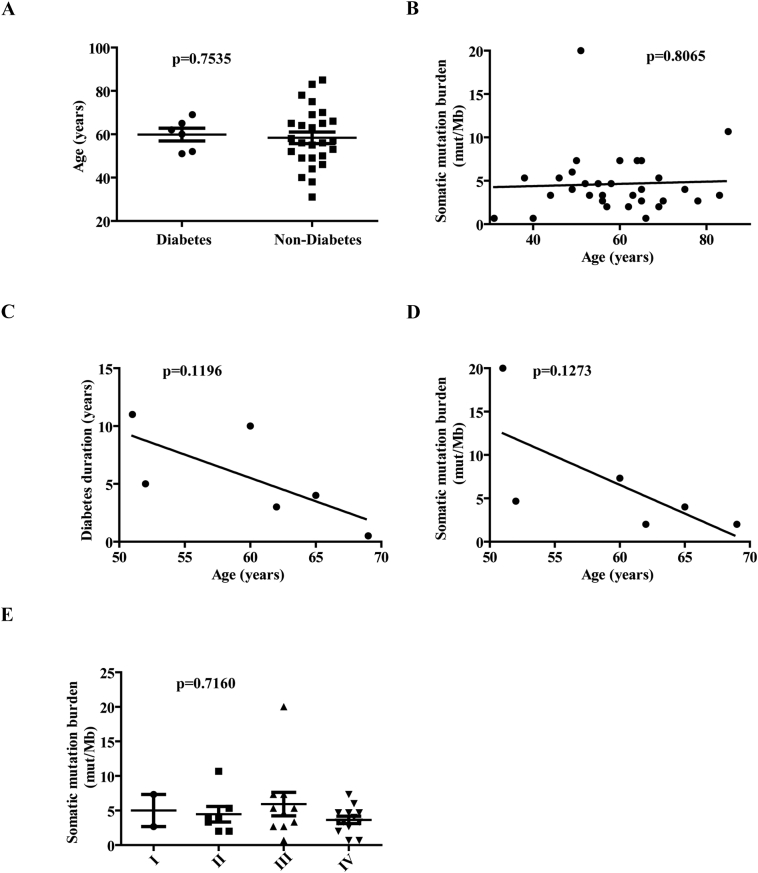
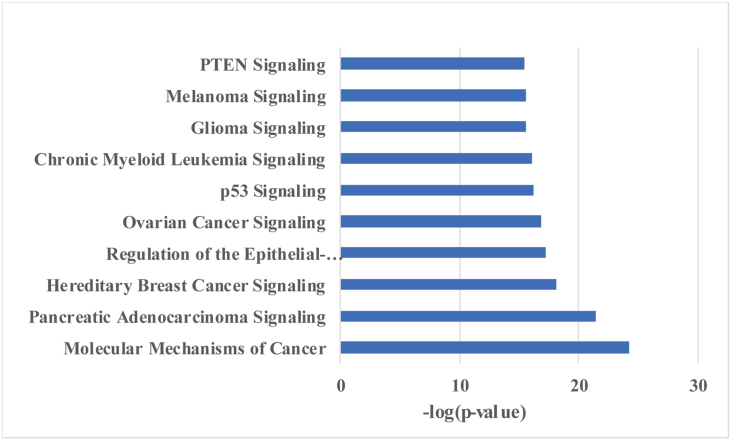
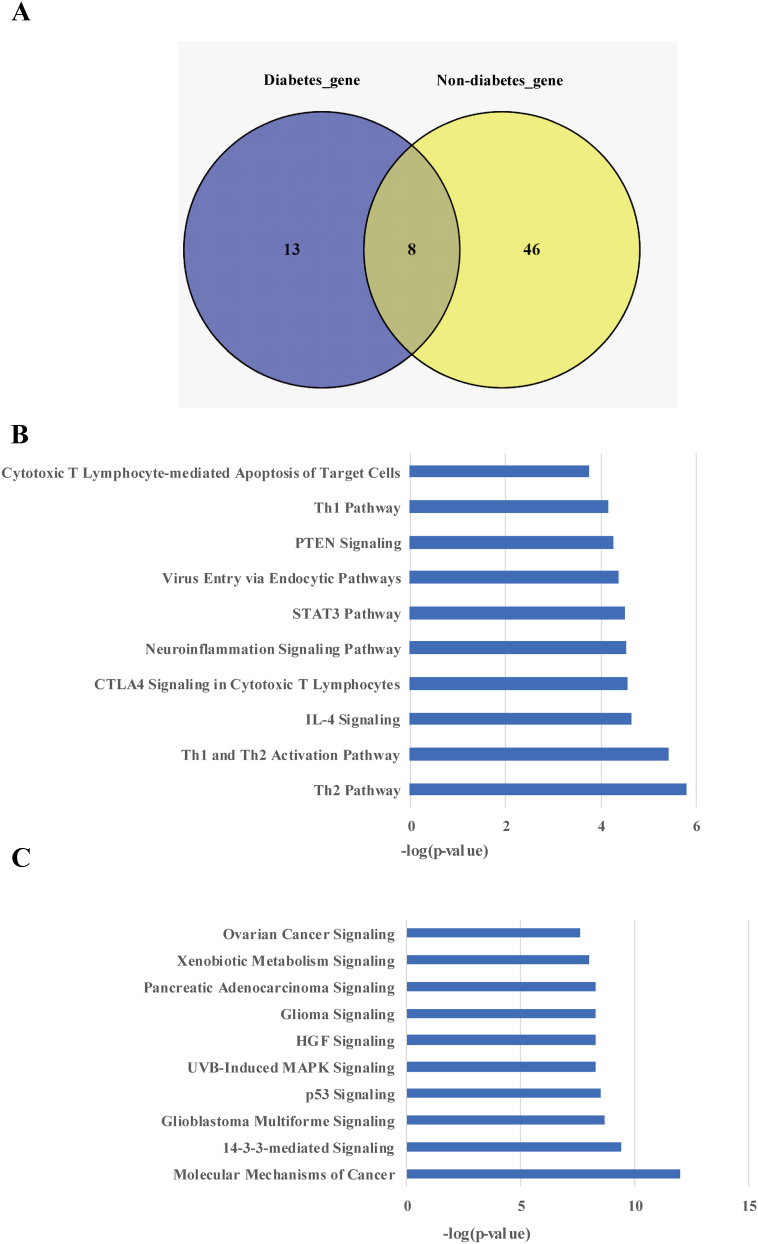
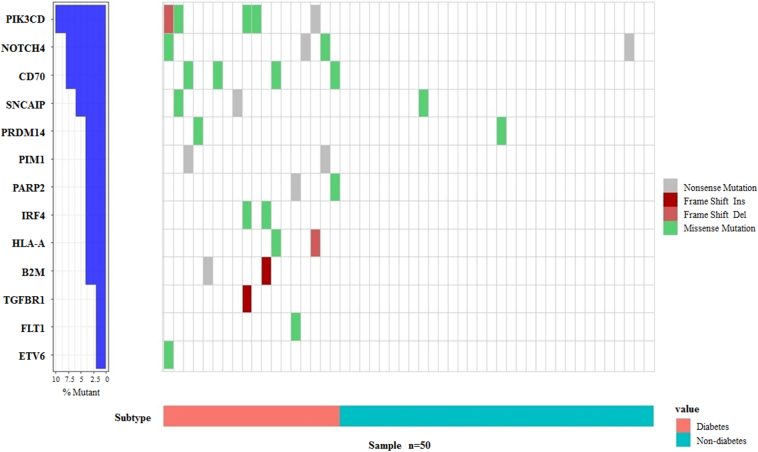
The bidirectional interaction between pancreatic cancer (PanCa) and diabetes has been confirmed by epidemiological studies, but until now, the underlying molecular mechanisms for this connection is not fully understood yet. Here, we analyzed the clinical and genomic data of 26 pancreatic ductal adenocarcinoma (PDAC) patients without diabetes, and six diabetic PDAC patients, whose tumors underwent targeted next-generation sequencing (551 cancer-related genes included). Ingenuity Pathway Analysis (IPA) was performed to investigate genetic alterations and biological consequences associated with PDACs with or without diabetes. We identified 345 somatic mutations of 153 genes in test cohort and a positive association between diabetes duration and somatic mutation burden. KRAS, TP53, and SMAD4 were the top3 commonly mutated genes at a similar frequency compared to the Cancer Genome Atlas (TCGA) data. Several novel but infrequent mutations in other genes (MDC1, PRB2, and PRB4) were also found. Besides, 13 mutated genes (PIK3CD, SNCAIP, IRF4, HLA-A, NOTCH4, PIM1, ETV6, B2M, CD70, PRDM14, TGFBR1, FLT1, and PARP2) were uniquely found in the diabetic group, mainly involved in immune-related pathways. Further targeted sequencing of these genes in an independent validation cohort (n = 50) revealed significant enrichment in the diabetic group (n = 18, P = 2.6964E-08). Long-standing diabetes (≥3-year duration) may induce increasing somatic mutations with time, facilitating tumor initiation. Gene mutants associated with immune-related pathways could be used to distinguish the diabetic PDAC patients from the non-diabetic cases and allow more selective treatment.
胰腺癌(PanCa)与糖尿病之间的双向相互作用已得到流行病学研究的证实,但迄今为止,这种关联的潜在分子机制尚未完全明确。在此,我们分析了26例无糖尿病的胰腺导管腺癌(PDAC)患者以及6例糖尿病性PDAC患者的临床和基因组数据,这些患者的肿瘤均接受了靶向二代测序(涵盖551个癌症相关基因)。运用 Ingenuity 通路分析(IPA)来研究与伴或不伴糖尿病的PDAC相关的基因改变及生物学后果。我们在测试队列中鉴定出153个基因的345个体细胞突变,并发现糖尿病病程与体细胞突变负担之间呈正相关。与癌症基因组图谱(TCGA)数据相比,KRAS、TP53和SMAD4是突变频率最高的前三个常见基因。还发现了其他基因(MDC1、PRB2和PRB4)中的一些新的但罕见的突变。此外,在糖尿病组中独特地发现了13个突变基因(PIK3CD、SNCAIP、IRF4、HLA - A、NOTCH4、PIM1、ETV6、B2M、CD70、PRDM14、TGFBR1、FLT1和PARP2),主要涉及免疫相关通路。在一个独立的验证队列(n = 50)中对这些基因进行进一步的靶向测序显示,糖尿病组(n = 18,P = 2.6964E - 08)有显著富集。长期糖尿病(病程≥3年)可能随时间诱导体细胞突变增加,促进肿瘤发生。与免疫相关通路相关的基因突变可用于区分糖尿病性PDAC患者与非糖尿病患者,并实现更具选择性的治疗。