Li Jie, Harnois Lauren J, Markos Bethelhem, Roberts Keith M, Homoud Salma Al, Liu Jing, Mirza Sara, Vines David
Department of Cardiopulmonary Sciences, Division of Respiratory Care, Rush University Medical Center, Chicago, IL 60130, USA.
Pharmaceutics. 2019 Jun 14;11(6):281. doi: 10.3390/pharmaceutics11060281.
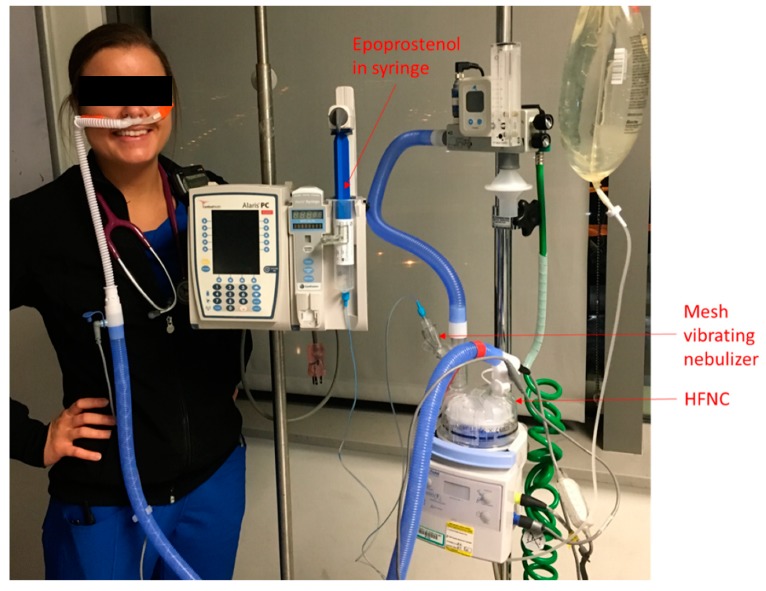
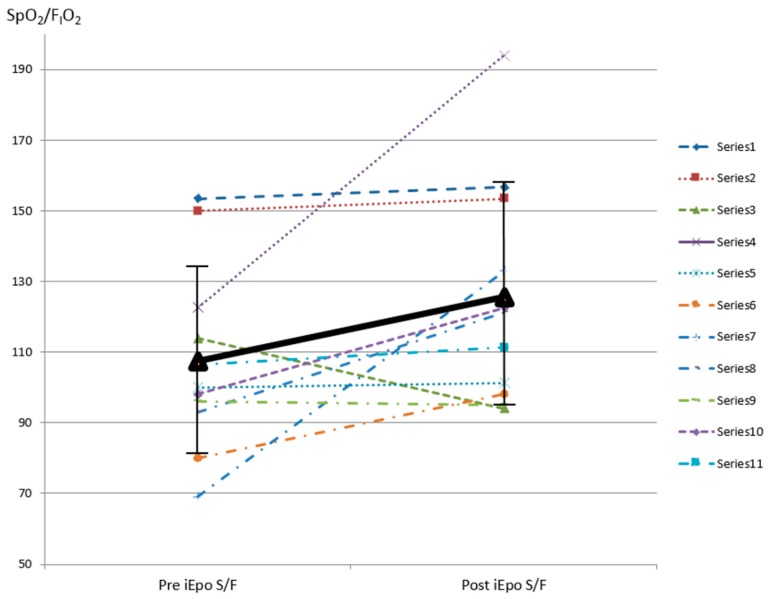
Inhaled epoprostenol (iEPO) has been utilized to improve oxygenation in mechanically ventilated subjects with severe hypoxemia, but the evidence for iEPO via high-flow nasal cannula (HFNC) is rare. Following approval by the institutional review board, this retrospective cohort study evaluated subjects who received iEPO via HFNC for more than 30 min to treat severe hypoxemia comorbid with pulmonary hypertension or right heart dysfunction between July 2015 and April 2018. A total of 11 subjects were enrolled in the study of whom 4 were male (36.4%), age 57.5 ± 22.1 years, and APACHE II score at ICU admission was 18.5 ± 5.7. Ten subjects had more than three chronic heart or lung comorbidities; seven of them used home oxygen. After inhaling epoprostenol, subjects' SpO/FO ratio improved from 107.5 ± 26.3 to 125.5 ± 31.6 ( = 0.026) within 30-60 min. Five subjects (45.5%) had SpO/FO improvement >20%, which was considered as a positive response. Heart rate, blood pressure, and respiratory rate were not significantly different. Seven subjects did not require intubation, and seven subjects were discharged home. This retrospective study demonstrated the feasibility of iEPO via HFNC in improving oxygenation. Careful titration of flow while evaluating subjects' response may help identify responders and avoid delaying other interventions. This study supports the need for a larger prospective randomized control trial to further evaluate the efficacy of iEPO via HFNC in improving outcomes.
吸入依前列醇(iEPO)已被用于改善机械通气的严重低氧血症患者的氧合,但通过高流量鼻导管(HFNC)使用iEPO的证据很少。经机构审查委员会批准,这项回顾性队列研究评估了2015年7月至2018年4月期间通过HFNC接受iEPO治疗超过30分钟以治疗合并肺动脉高压或右心功能不全的严重低氧血症的患者。共有11名患者纳入研究,其中4名男性(36.4%),年龄57.5±22.1岁,入住ICU时的急性生理与慢性健康状况评分系统(APACHE)II评分为18.5±5.7。10名患者有三种以上慢性心肺合并症;其中7名使用家庭氧疗。吸入依前列醇后,患者的血氧饱和度/吸氧分数(SpO₂/FiO₂)比值在30 - 60分钟内从107.5±26.3提高到125.5±31.6(P = 0.026)。5名患者(45.5%)的SpO₂/FiO₂改善>20%,被视为阳性反应。心率、血压和呼吸频率无显著差异。7名患者无需插管,7名患者出院回家。这项回顾性研究证明了通过HFNC使用iEPO改善氧合的可行性。在评估患者反应时仔细滴定流速可能有助于识别反应者并避免延迟其他干预措施。本研究支持需要进行更大规模的前瞻性随机对照试验,以进一步评估通过HFNC使用iEPO改善结局的疗效。