Kim Chingu, Hong Jiyeon, Park Ji-Woong
School of Materials Science and Engineering and Research Institute for Solar and Sustainable Energies (RISE), Gwangju Institute of Science and Technology (GIST), 123, Cheomdan-gwagiro, Buk-gu, Gwangju 61005, Korea.
Polymers (Basel). 2019 Jun 17;11(6):1052. doi: 10.3390/polym11061052.
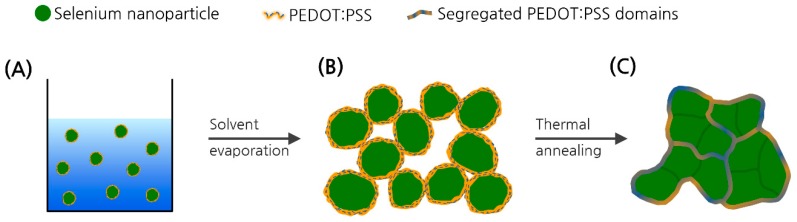
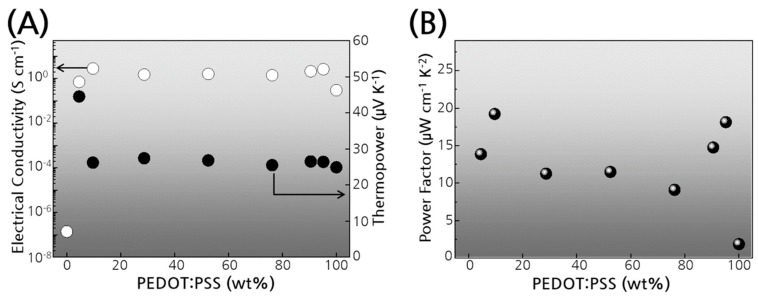
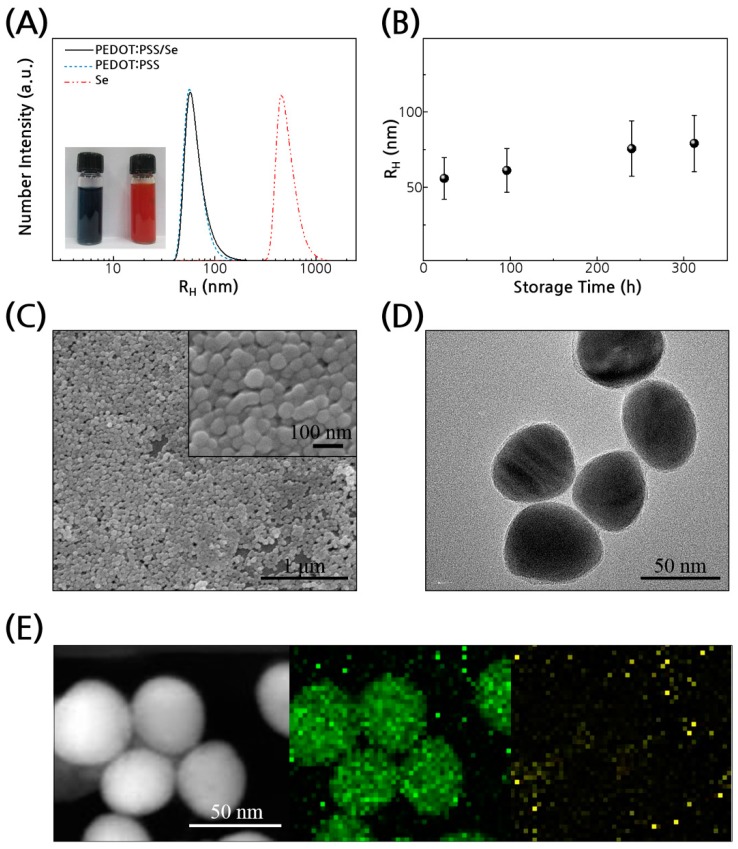
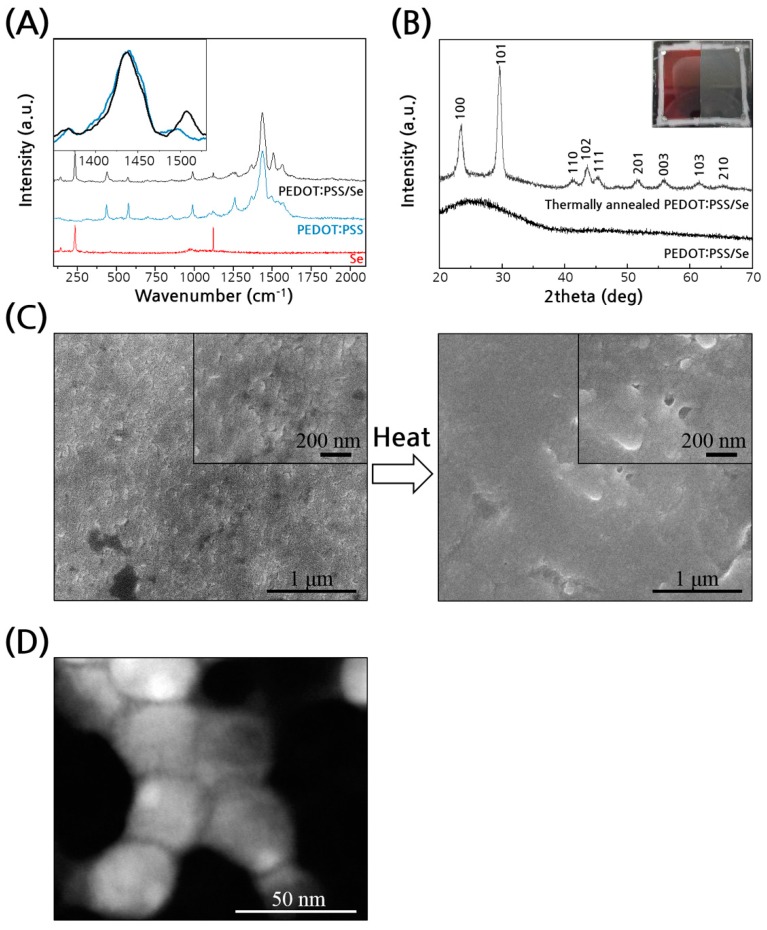
We synthesized a hybrid nanocomposite comprised of selenium nanoparticles coated with a thin layer of a conductive polymer, poly(3,4-ethylenedioxythiophene), and studied its thermoelectric properties. The conductive polymer layer on the surface of nanoparticles in the composites formed a percolating network running between the stacked nanoparticles, exhibiting an electrical conductivity close to or higher than that of pure polymer. The thermoelectric power factor of the resulting composite was higher than that of individual polymer or selenium nanoparticles. We further increased the electrical conductivity of the composite by thermal annealing, thereby improving the power factor to 15 μW/cmK which is nine times higher than that of the polymer.
我们合成了一种混合纳米复合材料,该材料由涂有一层薄导电聚合物聚(3,4-亚乙基二氧噻吩)的硒纳米颗粒组成,并研究了其热电性能。复合材料中纳米颗粒表面的导电聚合物层形成了一个贯穿堆叠纳米颗粒之间的渗流网络,其电导率接近或高于纯聚合物。所得复合材料的热电功率因数高于单个聚合物或硒纳米颗粒。我们通过热退火进一步提高了复合材料的电导率,从而将功率因数提高到15 μW/cmK,这比聚合物高出九倍。