Mostafavi Ebrahim, Medina-Cruz David, Truong Linh B, Kaushik Ajeet, Iravani Siavash
Stanford Cardiovascular Institute, Stanford University School of Medicine Stanford CA 94305 USA
Department of Medicine, Stanford University School of Medicine Stanford CA 94305 USA.
Mater Adv. 2022 Sep 14;3(21):7742-7756. doi: 10.1039/d2ma00756h. eCollection 2022 Oct 31.
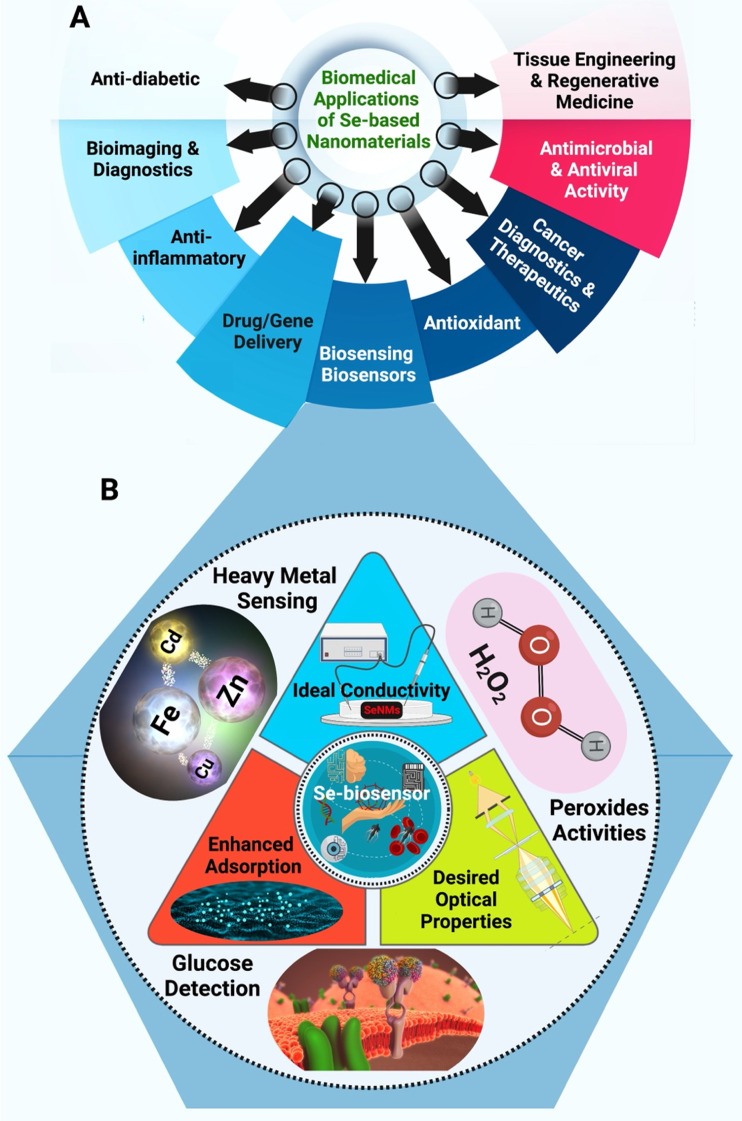
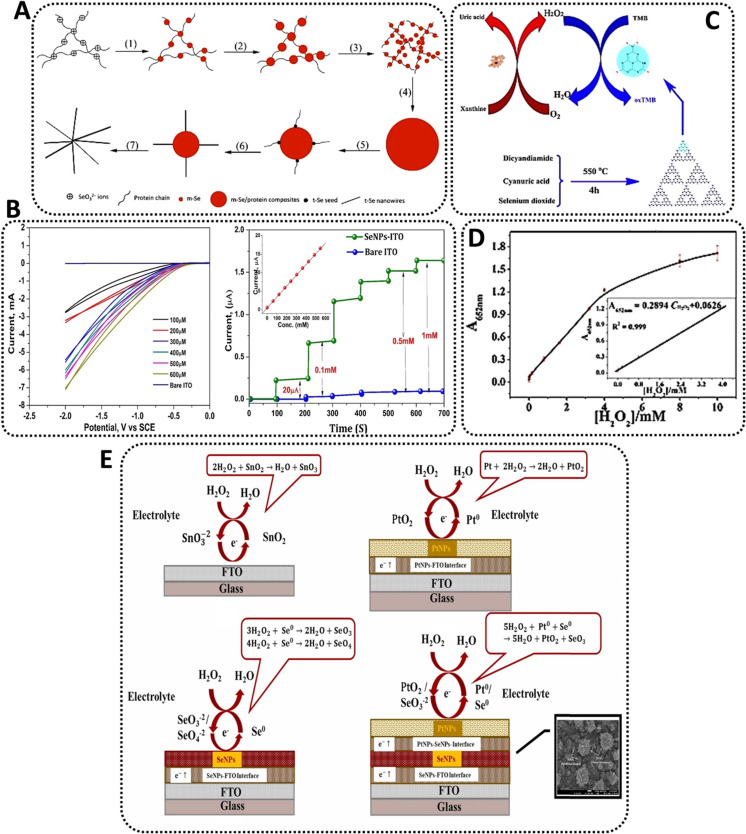
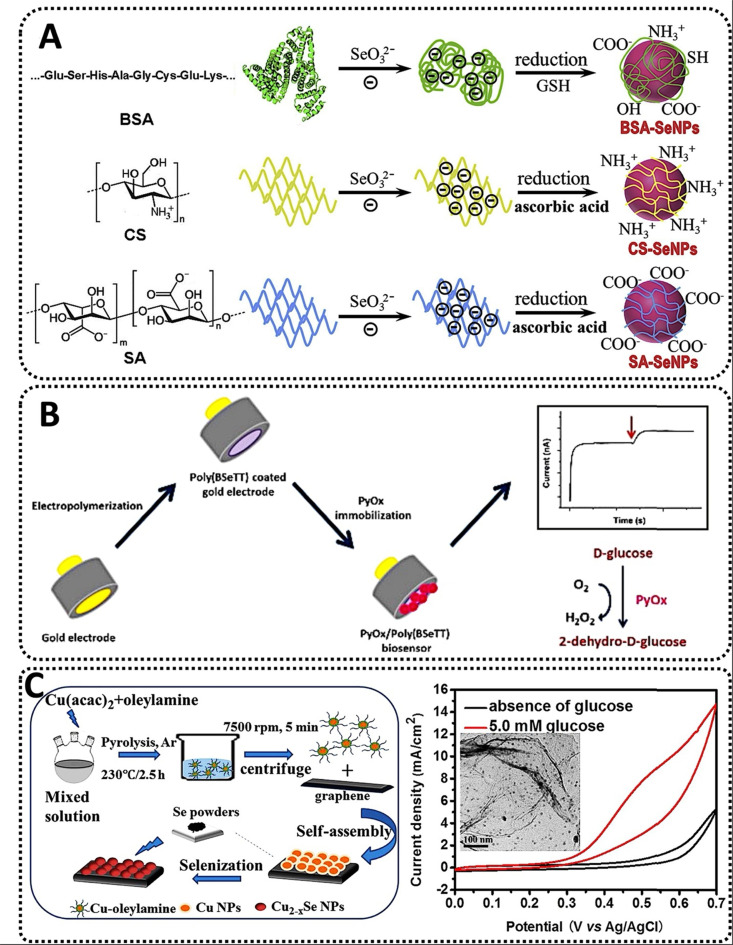
The unique chemical and physical features of nanomaterials make them ideal for developing new and better sensing devices, particularly biosensors. Various types of nanoparticles, including metal, oxide, and semiconductor nanostructures, have been utilized to manufacture biosensors, and each kind of nanoparticle plays a unique role in the sensing system. Nanoparticles provide critical roles such as immobilizing biomolecules, catalyzing electrochemical processes, enhancing electron transport between electrode surfaces and proteins, identifying biomolecules, and even functioning as the reactant for the catalytic reaction. Among all the potential nanosystems to be used in biosensors, selenium nanoparticle (SeNP) features have sparked a growing interest in their use in bridging biological recognition events and signal transduction, as well as in developing biosensing devices with novel applications for identification, quantification, and study of different analytes of biological relevance. The optical, physical, and chemical characteristics of differently shaped SeNPs opened up a world of possibilities for developing biosensors of biomedical interest. The outstanding biocompatibility, conductivity, catalytic characteristics, high surface-to-volume ratio, and high density of SeNPs have enabled their widespread use in developing electrochemical biosensors with superior analytical performance compared to other designs of biosensors. This review summarizes recent and ongoing advances, current challenges, and future research perspectives on real-world applications of Se-based nanobiosensors to detect biologically relevant analytes such as hydrogen peroxide, heavy metals, or glucose. Due to the superior properties and multifunctionality of Se-NPs biosensors, these structures can open up considerable new horizons in the future of healthcare and medicine.
纳米材料独特的化学和物理特性使其成为开发新型、更好的传感设备(尤其是生物传感器)的理想选择。包括金属、氧化物和半导体纳米结构在内的各种类型的纳米颗粒已被用于制造生物传感器,并且每种纳米颗粒在传感系统中都发挥着独特的作用。纳米颗粒发挥着关键作用,如固定生物分子、催化电化学过程、增强电极表面与蛋白质之间的电子传输、识别生物分子,甚至作为催化反应的反应物。在所有可用于生物传感器的潜在纳米系统中,硒纳米颗粒(SeNP)的特性引发了人们越来越浓厚的兴趣,人们希望利用它们来衔接生物识别事件与信号转导,以及开发具有新型应用的生物传感设备,用于识别、定量和研究具有生物学相关性的不同分析物。不同形状的硒纳米颗粒的光学、物理和化学特性为开发具有生物医学意义的生物传感器开辟了一个充满可能性的世界。硒纳米颗粒出色的生物相容性、导电性、催化特性、高比表面积和高密度,使其能够广泛用于开发具有卓越分析性能的电化学生物传感器,相比其他设计的生物传感器具有优势。本综述总结了基于硒的纳米生物传感器在检测过氧化氢、重金属或葡萄糖等具有生物学相关性的分析物的实际应用方面的最新进展、当前挑战和未来研究前景。由于硒纳米颗粒生物传感器的卓越性能和多功能性,这些结构可以在未来的医疗保健和医学领域开拓出相当广阔的新视野。