Papakonstantinou Eleni, Bacopoulou Flora, Brouzas Dimitrios, Megalooikonomou Vasileios, D'Elia Domenica, Bongcam-Rudloff Erik, Vlachakis Dimitrios
Laboratory of Genetics, Department of Biotechnology, School of Food, Biotechnology and Development, Agricultural University of Athens, Athens, Greece.
Lab of Molecular Endocrinology, Center of Clinical, Experimental Surgery and Translational Research, Biomedical Research Foundation of the Academy of Athens, Athens, Greece.
EMBnet J. 2019;24. doi: 10.14806/ej.24.0.921. Epub 2019 May 22.
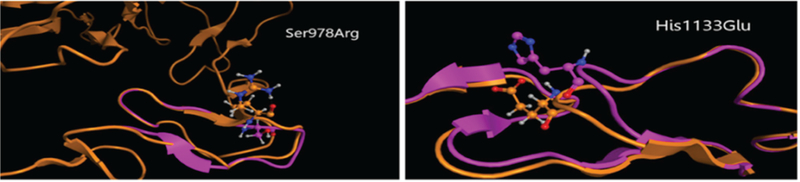
CADASIL syndrome is a rare disease that belongs to a group of disorders called leukodystrophies. It is well established that NOTCH3 gene on chromosome 19 is primarily responsible for the development of the CADASIL syndrome. Herein, an attempt is made to shed light on the actual molecular mechanism underlying CADASIL syndrome, through insights extracted from comprehensive evolutionary studies and in silico modelling on Notch 3 protein. In particular, we suggest the use of optical coherence tomography angiography for the detection of early signs of small vessel diseases, which are the major precursors to a repertoire of neurodegenerative conditions, including CADASIL.
大脑常染色体显性动脉病伴皮质下梗死和白质脑病(CADASIL)综合征是一种罕见疾病,属于一组称为脑白质营养不良的病症。现已明确,19号染色体上的NOTCH3基因是CADASIL综合征发病的主要原因。在此,我们试图通过从全面的进化研究和Notch 3蛋白的计算机模拟中提取的见解,来阐明CADASIL综合征潜在的实际分子机制。特别是,我们建议使用光学相干断层扫描血管造影术来检测小血管疾病的早期迹象,这些疾病是包括CADASIL在内的一系列神经退行性疾病的主要先兆。