Horticulture Centre, Tasmanian Institute of Agriculture, University of Tasmania, Burnie, Tasmania, Australia.
Horticulture Centre, Tasmanian Institute of Agriculture, University of Tasmania, Sandy Bay, Tasmania, Australia.
PLoS One. 2019 Jun 20;14(6):e0218569. doi: 10.1371/journal.pone.0218569. eCollection 2019.
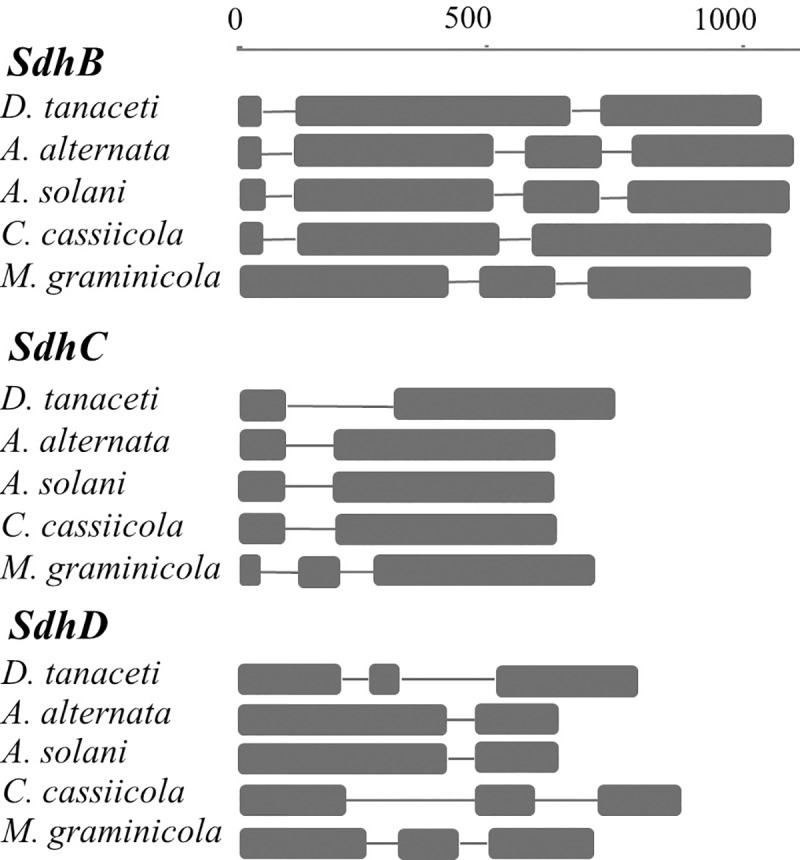
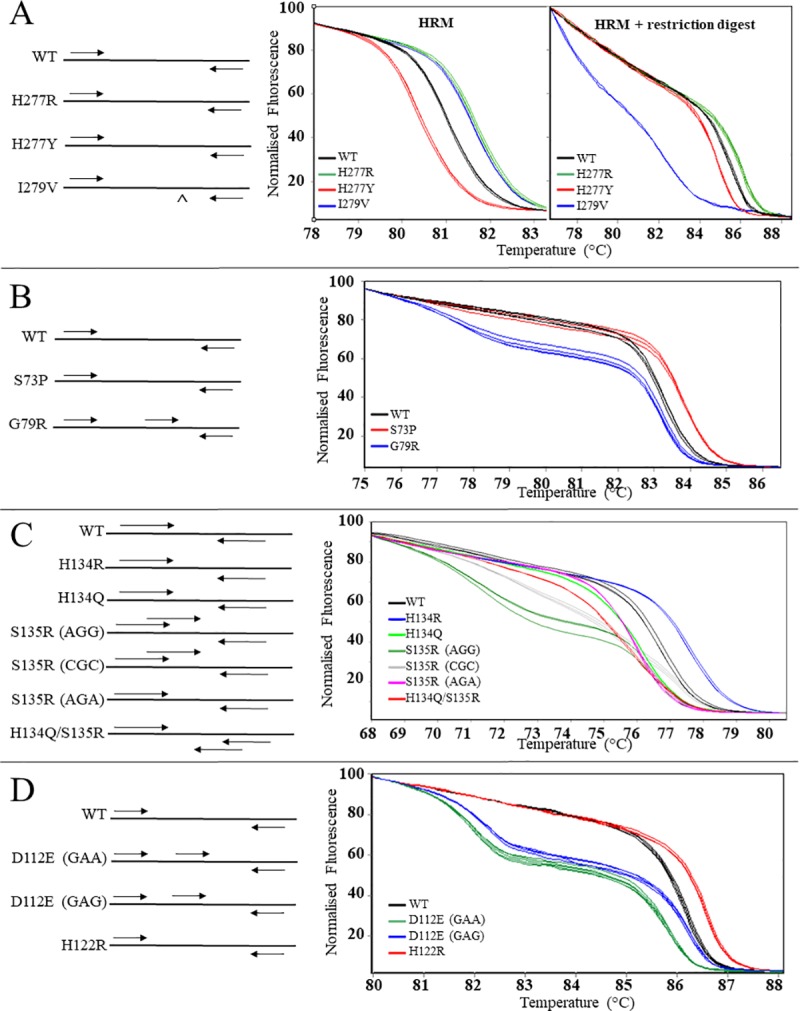
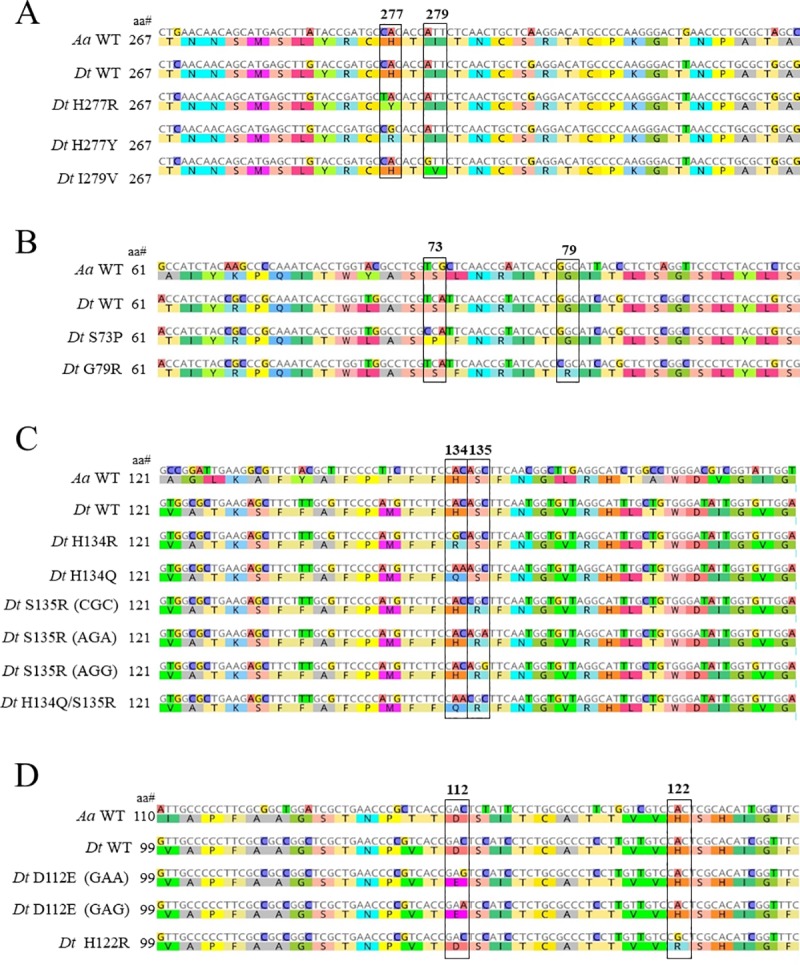
Failures in control of tan spot of pyrethrum, caused by Didymella tanaceti, has been associated with decreased sensitivity within the pathogen population to the succinate dehydrogenase inhibitor (SDHI) fungicide boscalid. Sequencing the SdhB, SdhC, and SdhD subunits of isolates with resistant and sensitive phenotypes identified 15 mutations, resulting in three amino acid substitutions in the SdhB (H277Y/R, I279V), six in the SdhC (S73P, G79R, H134R, H134Q, S135R and combined H134Q/S135R), and two in the SdhD (D112E, H122R). In vitro testing of their boscalid response and estimation of resistance factors (RF) identified isolates with wild-type (WT) Sdh genotypes were sensitive to boscalid. Isolates with SdhB-I279V, SdhC-H134Q and SdhD-D112E exhibited moderate resistance phenotypes (10 ≥ RF < 100) and isolates with SdhC-H134R exhibited very high resistance phenotypes (RF ≥ 1000). All other substitutions were associated with high resistance phenotypes (100 ≥ RF < 1000). High-resolution melt assays were designed and used to estimate the frequencies of substitutions in four field populations (n = 774) collected in August (pre-boscalid application) and November (post-boscalid application) 2012. The SdhB-H277Y, SdhC-H134R and SdhB-H277R genotypes were most frequently observed across populations at 56.7, 19.0, and 10.3%, respectively. In August 92.9% of D. tanaceti contained a substitution associated with decreased sensitivity. Following boscalid application, this increased to 98.9%, with no WT isolates detected in three fields. Overlaying previously obtained microsatellite and mating-type data revealed that all ten recurrent substitutions were associated with multiple genotypes. Thus, boscalid insensitivity in D. tanaceti appears widespread and not associated with clonal spread of a limited pool of individuals.
白背青枯菌导致除虫菊炭角斑病防治失败的原因是病原菌对琥珀酸脱氢酶抑制剂(SDHI)类杀菌剂啶酰菌胺的敏感性降低。对具有抗性和敏感表型的分离物进行 SdhB、SdhC 和 SdhD 亚基测序,发现了 15 个突变,导致 SdhB 中 3 个氨基酸取代(H277Y/R、I279V)、SdhC 中 6 个(S73P、G79R、H134R、H134Q、S135R 和 H134Q/S135R 联合)和 SdhD 中 2 个(D112E、H122R)。体外测试其啶酰菌胺反应并估计抗性因子(RF),发现具有野生型(WT)Sdh 基因型的分离物对啶酰菌胺敏感。具有 SdhB-I279V、SdhC-H134Q 和 SdhD-D112E 的分离物表现出中度抗性表型(10 ≥ RF < 100),而具有 SdhC-H134R 的分离物表现出非常高的抗性表型(RF ≥ 1000)。所有其他取代均与高抗性表型相关(100 ≥ RF < 1000)。设计了高分辨率熔解曲线分析,并用于估计 2012 年 8 月(啶酰菌胺施用前)和 11 月(啶酰菌胺施用后)收集的四个田间种群(n = 774)中四个基因座的取代频率。在所有种群中,SdhB-H277Y、SdhC-H134R 和 SdhB-H277R 基因型的出现频率最高,分别为 56.7%、19.0%和 10.3%。8 月,92.9%的 D. tanaceti 含有与敏感性降低相关的取代。啶酰菌胺处理后,这一比例增加到 98.9%,在三个田间没有检测到 WT 分离物。将之前获得的微卫星和交配型数据叠加,发现所有 10 个反复出现的取代均与多个基因型相关。因此,白背青枯菌对啶酰菌胺的不敏感性似乎很普遍,并且与有限个体群体的无性繁殖传播无关。