Department of Surgery, Beth Israel Deaconess Medical Center, Harvard Medical School, Boston, MA, USA.
Glycomics Core, Beth Israel Deaconess Medical Center, Harvard Medical School, Boston, MA, USA.
Sci Rep. 2019 Jun 20;9(1):8920. doi: 10.1038/s41598-019-45514-3.
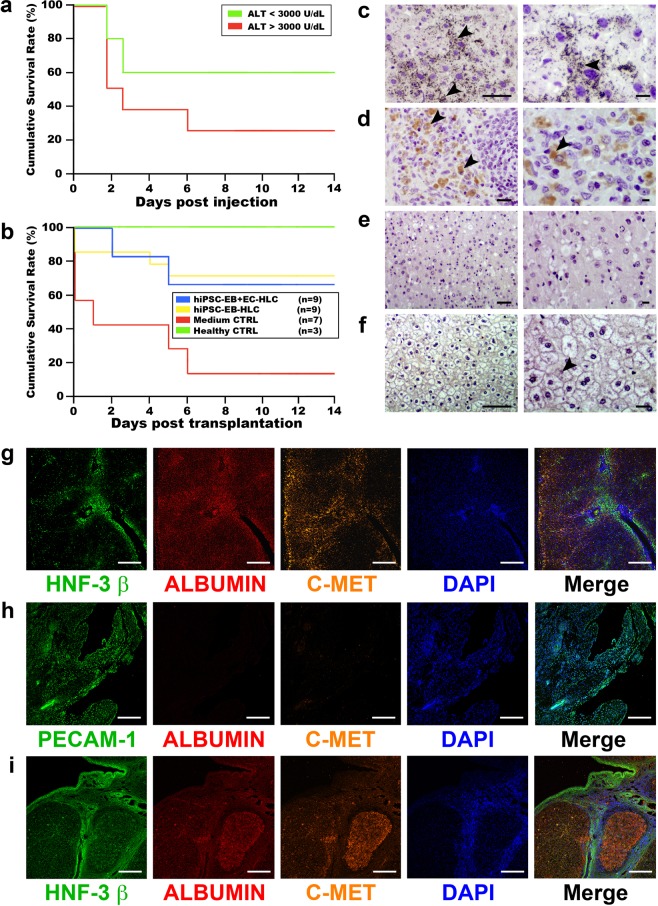
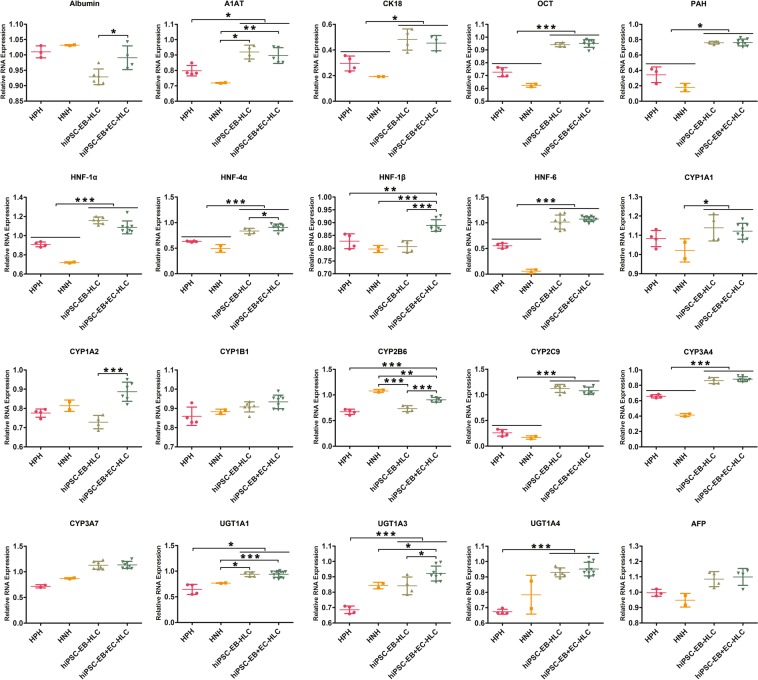
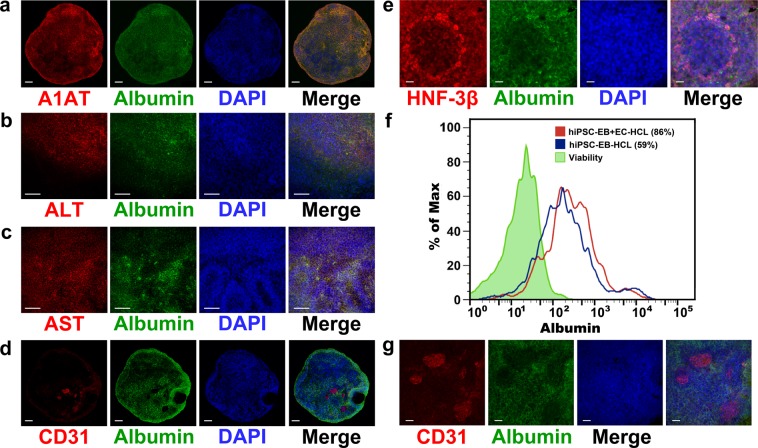
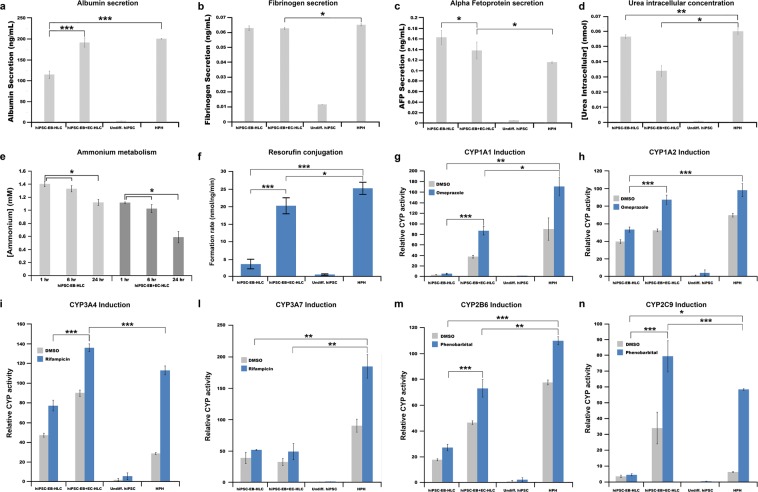
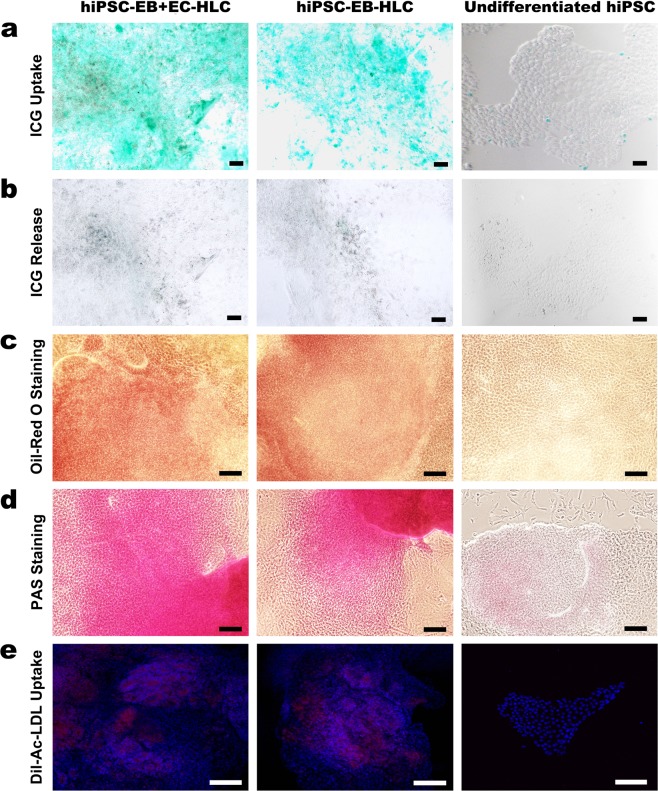
Despite advances in stem cell research, cell transplantation therapy for liver failure is impeded by a shortage of human primary hepatocytes (HPH), along with current differentiation protocol limitations. Several studies have examined the concept of co-culture of human induced pluripotent cells (hiPSCs) with various types of supporting non-parenchymal cells to attain a higher differentiation yield and to improve hepatocyte-like cell functions both in vitro and in vivo. Co-culturing hiPSCs with human endothelial cells (hECs) is a relatively new technique that requires more detailed studies. Using our 3D human embryoid bodies (hEBs) formation technology, we interlaced Human Adipose Microvascular Endothelial Cells (HAMEC) with hiPSCs, leading to a higher differentiation yield and notable improvements across a wide range of hepatic functions. We conducted a comprehensive gene and protein secretion analysis of our HLCs coagulation factors profile, showing promising results in comparison with HPH. Furthermore, a stage-specific glycomic analysis revealed that the differentiated hepatocyte-like clusters (HLCs) resemble the glycan features of a mature tissue rather than cells in culture. We tested our HLCs in animal models, where the presence of HAMEC in the clusters showed a consistently better performance compared to the hiPSCs only group in regard to persistent albumin secretion post-transplantation.
尽管干细胞研究取得了进展,但由于人类原代肝细胞 (HPH) 的短缺,以及当前分化方案的限制,肝衰竭的细胞移植治疗仍然受到阻碍。有几项研究探讨了将人类诱导多能干细胞 (hiPSC) 与各种类型的支持非实质细胞共培养的概念,以提高体外和体内的分化产量,并改善肝样细胞的功能。将 hiPSC 与人内皮细胞 (hEC) 共培养是一种相对较新的技术,需要更详细的研究。我们使用 3D 人类胚状体 (hEB) 形成技术,将人脂肪微血管内皮细胞 (HAMEC) 与 hiPSC 交织在一起,从而提高了分化产量,并显著改善了广泛的肝功能。我们对我们的 HLCs 凝血因子谱进行了全面的基因和蛋白质分泌分析,与 HPH 相比,结果令人鼓舞。此外,阶段特异性糖组学分析表明,分化的肝样细胞簇 (HLC) 具有类似于成熟组织的聚糖特征,而不是培养中的细胞。我们在动物模型中测试了我们的 HLCs,其中在簇中的 HAMEC 的存在与 hiPSC 仅组相比,在移植后持续白蛋白分泌方面表现出更好的性能。