Department of Internal Medicine, Division of Hematology/Oncology, Henry Ford Health System, Henry Ford Cancer Institute, Detroit, Michigan.
Prostate. 2019 Aug;79(11):1347-1359. doi: 10.1002/pros.23843. Epub 2019 Jun 22.
Prostate cancer that recurs after initial treatment inevitably progresses to castration-resistant prostate cancer (CRPC), the lethal stage of the disease. Despite improvements in outcomes from next generation androgen receptor (AR)-axis inhibitors, CRPC remains incurable. Therapeutic strategies to target AR antagonist resistance are urgently needed to improve outcomes for men with this lethal form of prostate cancer.
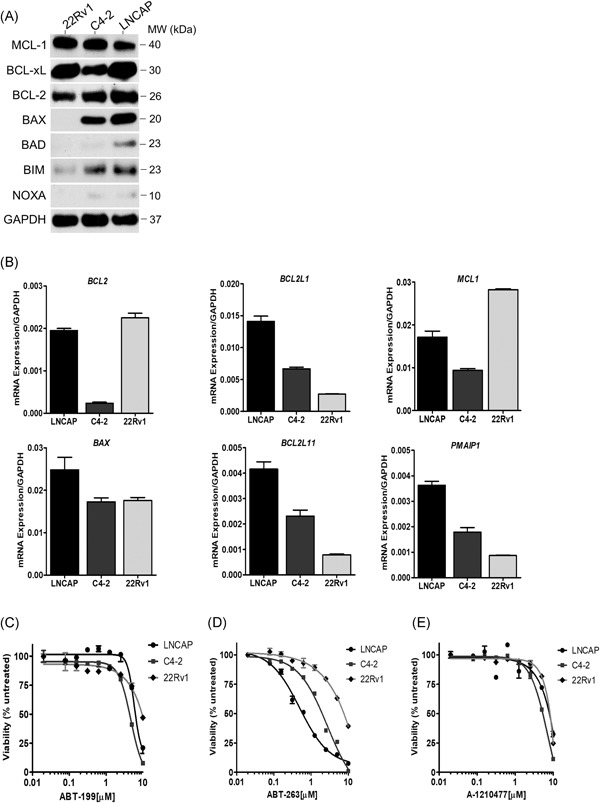
Apoptosis and BCL2 family signaling were characterized in cell line models of CRPC. Quantitative real-time polymerase chain reaction and Western blot analysis were used to determine BCL2 expression levels. Drug sensitivity was determined by proliferation, survival and apoptosis analysis. Protein-protein interactions were evaluated by coimmunoprecipitation followed by Western blot detection.
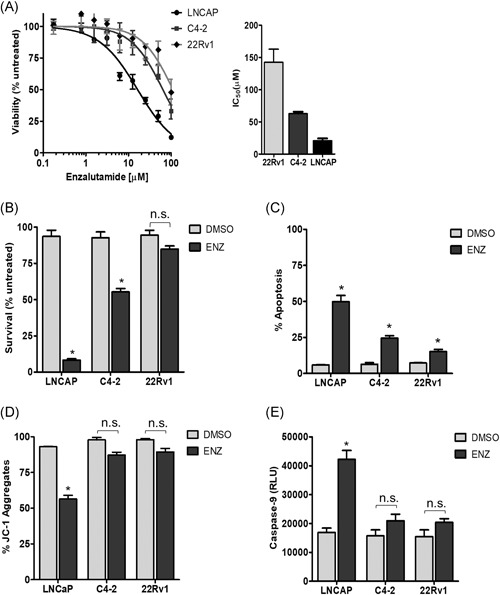
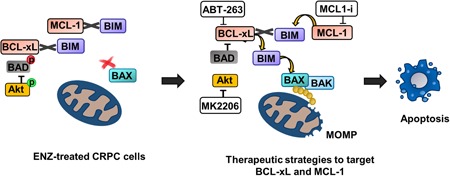
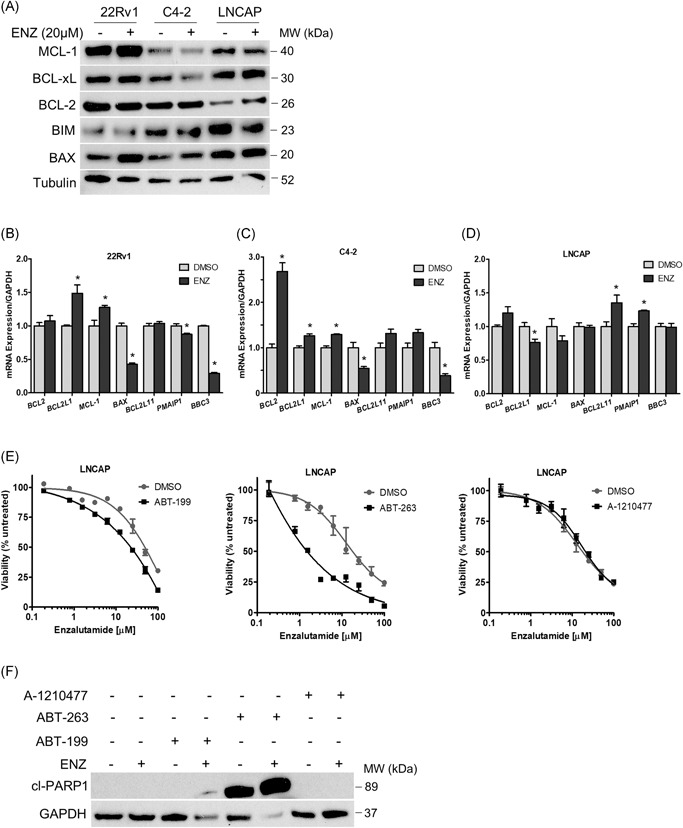
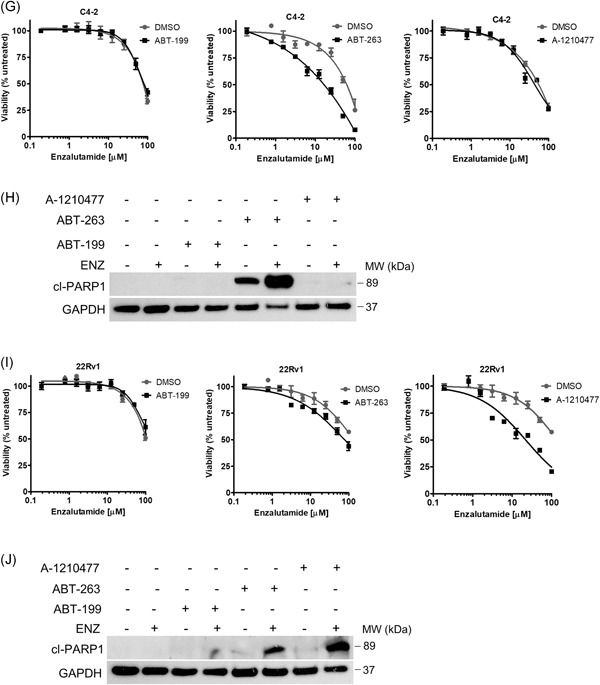
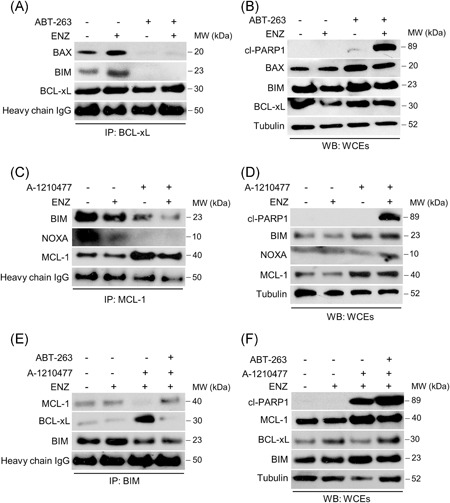
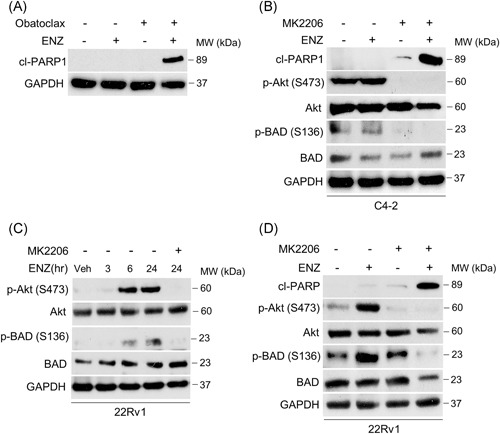
In the present study, we identify antiapoptotic BCL2 protein signaling as a mechanism of resistance to AR antagonist enzalutamide. In CRPC cell line models, we found that BCL-xL and MCL-1 proteins block apoptosis through binding and sequestering proapoptotic proteins BIM and BAX, resulting in cell survival in response to enzalutamide. Treatment with BH3-mimetics targeting BCL-xL or MCL-1 disrupts these interactions and activates apoptosis, sensitizing CRPC cells to enzalutamide. Importantly, we demonstrate that PI3K/Akt signaling is activated in response to enzalutamide and mediates apoptosis evasion through inactivation of BAD, a BH3-only protein that activates proapoptotic signlaing through inhbition of BCL-xL. Inhibition of Akt activates BAD, resulting in increased apoptosis and sensitivity to enzalutamide, demonstrating an alternative therapeutic strategy to target drug resistance.
These results demonstrate that CRPC cells employ multiple mechanisms to mediate apoptosis evasion through BCL2 signaling, suggesting this pathway is critical for survival. This study provides a strong preclinical rationale for developing therapeutic strategies to target antiapoptotic BCL2 signaling in combination with AR antagonists to improve treatment options for patients with advanced prostate cancer.
初始治疗后复发的前列腺癌不可避免地会发展为去势抵抗性前列腺癌(CRPC),这是疾病的致命阶段。尽管下一代雄激素受体(AR)轴抑制剂的疗效有所改善,但 CRPC 仍然无法治愈。迫切需要针对 AR 拮抗剂耐药性的治疗策略,以改善这种致命形式的前列腺癌患者的预后。
在 CRPC 的细胞系模型中对细胞凋亡和 BCL2 家族信号进行了特征描述。使用定量实时聚合酶链反应和 Western blot 分析来确定 BCL2 表达水平。通过增殖、存活和凋亡分析来确定药物敏感性。通过免疫沉淀结合 Western blot 检测评估蛋白质-蛋白质相互作用。
在本研究中,我们确定了抗凋亡 BCL2 蛋白信号是对 AR 拮抗剂恩杂鲁胺耐药的一种机制。在 CRPC 细胞系模型中,我们发现 BCL-xL 和 MCL-1 蛋白通过结合和隔离促凋亡蛋白 BIM 和 BAX 来阻止细胞凋亡,从而使细胞在恩杂鲁胺的作用下存活。用针对 BCL-xL 或 MCL-1 的 BH3 模拟物治疗会破坏这些相互作用并激活凋亡,从而使 CRPC 细胞对恩杂鲁胺敏感。重要的是,我们证明 PI3K/Akt 信号通路在恩杂鲁胺作用下被激活,并通过失活 BAD 来逃避凋亡,BAD 是一种 BH3 仅有蛋白,通过抑制 BCL-xL 来激活促凋亡信号。Akt 的抑制激活了 BAD,导致凋亡增加和对恩杂鲁胺的敏感性增加,证明了靶向药物耐药性的另一种治疗策略。
这些结果表明,CRPC 细胞通过 BCL2 信号介导多种机制来逃避细胞凋亡,表明该途径对生存至关重要。这项研究为开发针对抗凋亡 BCL2 信号的治疗策略提供了强有力的临床前依据,以联合 AR 拮抗剂改善晚期前列腺癌患者的治疗选择。