Dalla Lana School of Public Health, Toronto, Canada.
Population Council, Abuja, Nigeria.
BMC Health Serv Res. 2019 Jun 24;19(1):411. doi: 10.1186/s12913-019-4217-8.
Nigeria has one of the highest rates of maternal mortality in the world (576/100,000 births), with a significant proportion of death attributed to hypertensive disorders in pregnancy (HDPs). High quality antenatal care (ANC) plays a crucial role in early detection and management of HDPs. We conducted an assessment of quality of antenatal care, and its capacity to detect and manage HDPs, in two tiers of Nigerian facilities, with the aim of describing the state of service delivery and identifying the most urgent gaps.
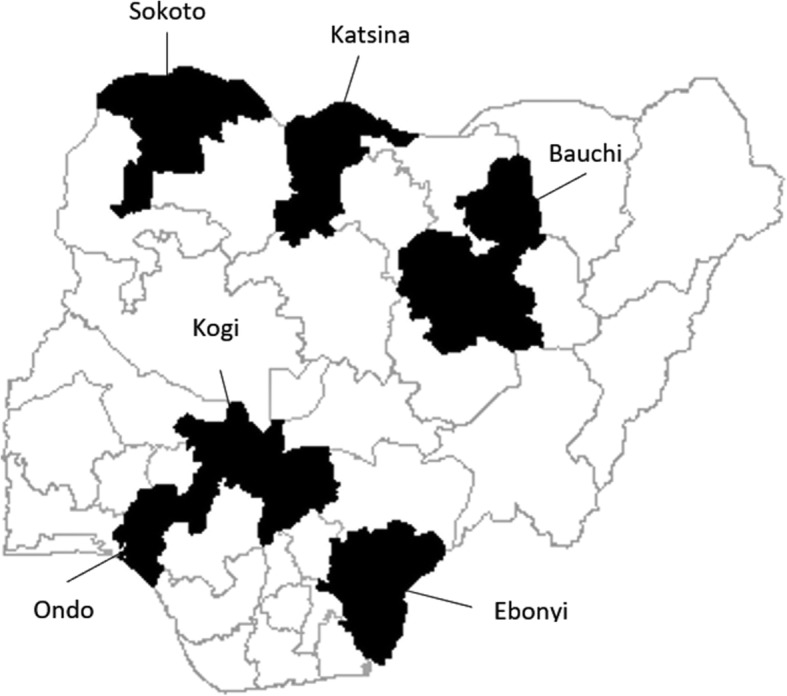
Quality of antenatal care was assessed and compared between primary healthcare centers (PHCs) (n = 56) and hospitals (secondary + tertiary facilities, n = 39) in seven states of Nigeria. A cross-sectional design captured quality of care using facility inventory checklists, semi-structured interviews with healthcare providers and clients, and observations of ANC consultations. A quality of care framework and scoring system was established based on aspects of structure, process, and outcome. Average scores were compared using independent sample t-tests and measures of effect were assessed by multivariate linear regression.
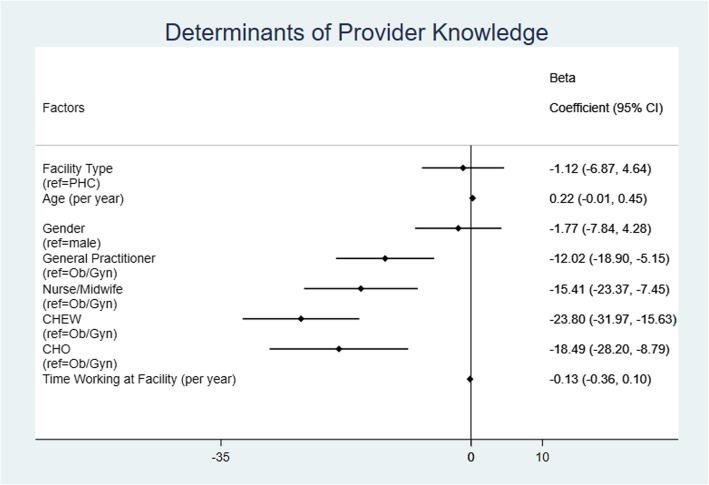
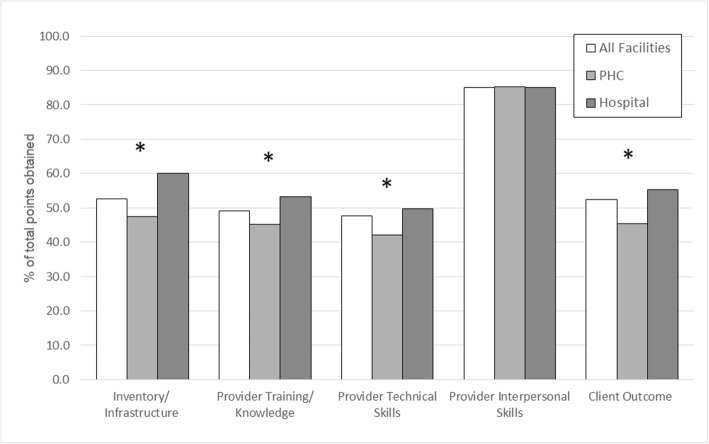
All domains of quality except provider interpersonal skills scored below 55%. The lowest overall scores were observed in provider knowledge (49.9%) and provider technical skill (47.7%). PHCs performed significantly worse than hospitals in all elements of quality except for provider interpersonal skills. Provider knowledge was significantly associated with their level of designation (i.e., obstetrician vs. other providers).
In order to provide high quality care, ANC in Nigeria must experience massive improvements to inventory, infrastructure and provider knowledge and training. In particular, ANC programs in PHCs must be revitalized to minimize the disparity in quality of care provided between PHCs and hospitals. The relatively low quality of care observed may be contributing to Nigeria's high rate of maternal mortality and burden of disease attributed to HDPs.
尼日利亚是世界上孕产妇死亡率最高的国家之一(每 10 万例活产中有 576 例死亡),其中很大一部分死亡归因于妊娠高血压疾病(HDP)。高质量的产前保健(ANC)在早期发现和管理 HDP 中起着至关重要的作用。我们对尼日利亚两个级别的医疗机构进行了 ANC 质量评估及其发现和管理 HDP 的能力评估,旨在描述服务提供的现状并确定最紧迫的差距。
在尼日利亚的七个州,我们评估了初级保健中心(PHC)(n=56)和医院(二级和三级设施,n=39)的 ANC 质量,并对其进行了比较。采用横断面设计,使用设施清单检查表、医疗保健提供者和客户的半结构化访谈以及 ANC 咨询观察来捕捉护理质量。根据结构、过程和结果的各个方面建立了护理质量框架和评分系统。使用独立样本 t 检验比较平均得分,并通过多变量线性回归评估效应度量。
除了提供者的人际技能外,所有质量领域的得分均低于 55%。总体得分最低的是提供者的知识(49.9%)和提供者的技术技能(47.7%)。除了提供者的人际技能外,PHC 在质量的各个要素上的表现均明显劣于医院。提供者的知识与其指定级别显著相关(即产科医生与其他提供者)。
为了提供高质量的护理,尼日利亚的 ANC 必须在库存、基础设施和提供者的知识和培训方面进行大规模改进。特别是,必须振兴 PHC 中的 ANC 计划,以最大程度地缩小 PHC 和医院之间提供的护理质量差距。观察到的相对较低的护理质量可能是导致尼日利亚孕产妇死亡率高和 HDP 疾病负担的原因之一。