Center for Reproductive Medicine, Department of Obstetrics and Gynecology, Peking University Third Hospital, Beijing, 100191, China.
National Clinical Research Center for Obstetrics and Gynecology, Beijing, 100191, China.
Reprod Biol Endocrinol. 2019 Jun 24;17(1):49. doi: 10.1186/s12958-019-0489-4.
Superovulation treatment had some adverse effects on maturity and development of oocytes. Can superovulation dose of gonadotropins (Gns) affect the transcriptome of granulosa cells and follicular fluid (FF) hormone levels?
One leading pre-ovulatory follicle per subject was used from three natural-cycle and four Gn-stimulated patients. Granulosa cells and FF samples were collected from the same leading follicle of each patient. RNA was extracted from granulosa cells and subjected to deep sequencing and analysis. Follicle-stimulating hormone (FSH), estradiol (E2), androstenedione (AND), testosterone (T), luteinizing hormone (LH), and progesterone (P4) levels in FF were measured by immunoassays. Student's t test was used for statistical analysis.
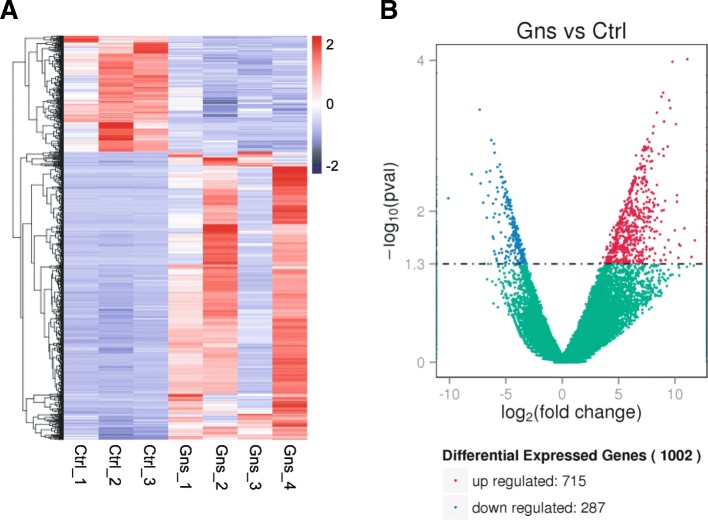
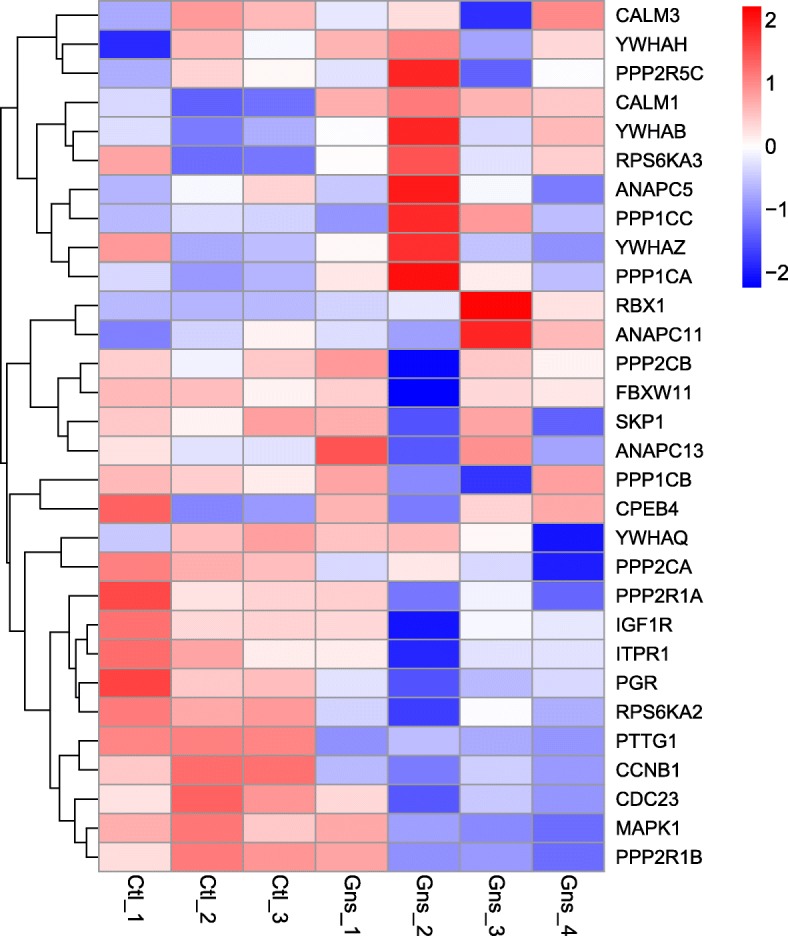
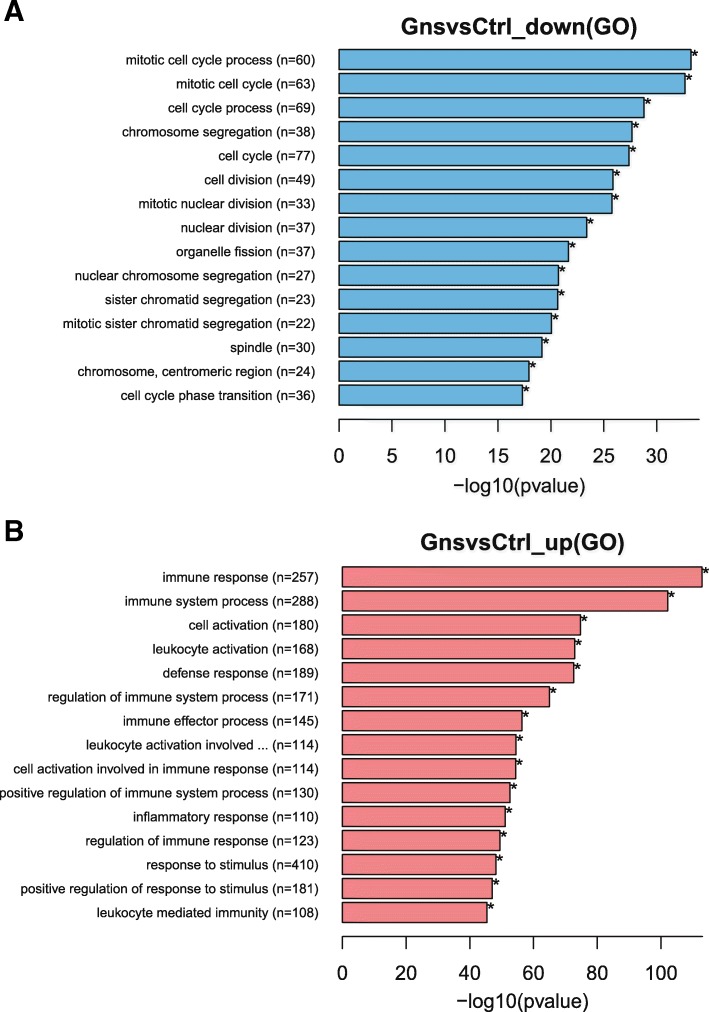
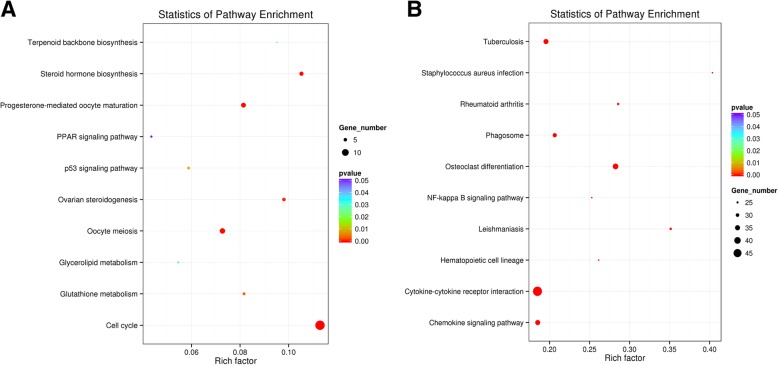
A total of 715 genes were up-regulated, and 287 genes were down-regulated, in the Gn-stimulated group relative to the control group. Gene Ontology analysis revealed that the down-regulated genes were enriched in cell cycle and meiosis pathways, primarily those associated with follicle or oocyte maturation and quality. On the other hand, the up-regulated genes were enriched in functions related to immunity and cytokine-cytokine receptor interactions. Compared to the follicles of natural cycle, the E2 and LH concentrations were significantly reduced (P < 0.001), the P4 concentration was significantly increased (P = 0.003), and the concentrations of FSH, T and AND had no difference in the follicles of Gn-stimulated cycle.
Cell cycle- and meiosis-associated genes were down-regulated by Gns stimulation, whereas immune- and cytokine-associated genes were up-regulated. Hormone levels were also affected by Gns stimulation. Compared with natural-cycle follicles,putative markers associated with oocyte quality and follicle maturation were significantly different from those in Gn-stimulated follicles. Hormone levels in follicles were compatible with the steroidogenic patterns of granulosa cell, which reflects the follicle maturation and oocyte quality.
超排卵治疗对卵母细胞的成熟和发育有一些不良影响。促性腺激素(Gn)的超排卵剂量是否会影响颗粒细胞的转录组和卵泡液(FF)中的激素水平?
从 3 名自然周期和 4 名 Gn 刺激患者中使用每个患者的一个主导的排卵前卵泡。从每个患者的同一个主导卵泡中采集颗粒细胞和 FF 样本。从颗粒细胞中提取 RNA ,进行深度测序和分析。FF 中的卵泡刺激素(FSH)、雌二醇(E2)、雄烯二酮(AND)、睾酮(T)、促黄体生成素(LH)和孕酮(P4)水平通过免疫测定法测量。使用 Student's t 检验进行统计分析。
Gn 刺激组相对于对照组有 715 个基因上调,287 个基因下调。GO 分析表明下调基因主要富集在细胞周期和减数分裂途径中,主要与卵泡或卵母细胞成熟和质量有关。另一方面,上调基因主要富集在与免疫和细胞因子-细胞因子受体相互作用相关的功能中。与自然周期的卵泡相比,Gn 刺激周期的卵泡中 E2 和 LH 浓度显著降低(P<0.001),P4 浓度显著升高(P=0.003),而 FSH、T 和 AND 的浓度在 Gn 刺激周期的卵泡中没有差异。
Gn 刺激下调了与细胞周期和减数分裂相关的基因,而上调了与免疫和细胞因子相关的基因。激素水平也受到 Gn 刺激的影响。与自然周期卵泡相比,Gn 刺激卵泡中与卵母细胞质量和卵泡成熟相关的假定标记物与 Gn 刺激卵泡中的标记物有显著差异。卵泡中的激素水平与颗粒细胞的甾体生成模式相匹配,反映了卵泡的成熟和卵母细胞的质量。