David H. Koch Institute for Integrative Cancer Research, Massachusetts Institute of Technology, Cambridge, MA, USA.
Department of Chemical Engineering, Massachusetts Institute of Technology, Cambridge, MA, USA.
Nat Mater. 2019 Aug;18(8):892-904. doi: 10.1038/s41563-019-0377-5. Epub 2019 Jun 24.
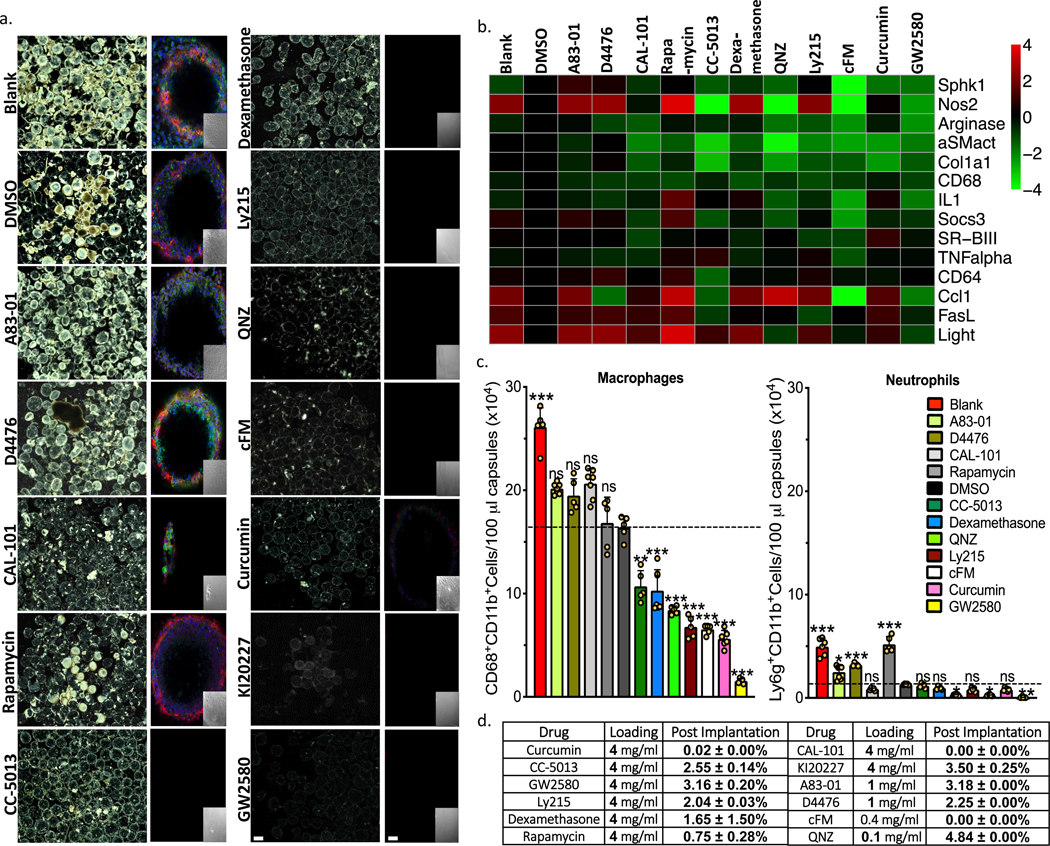
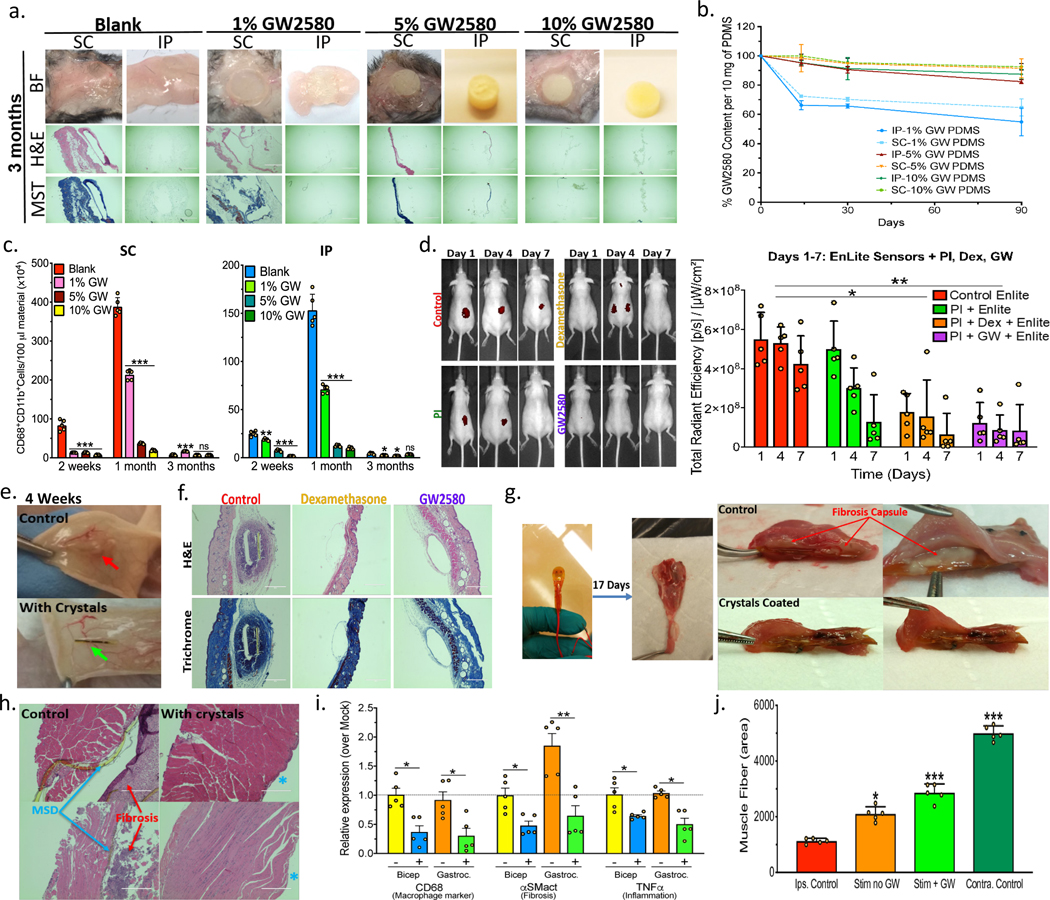
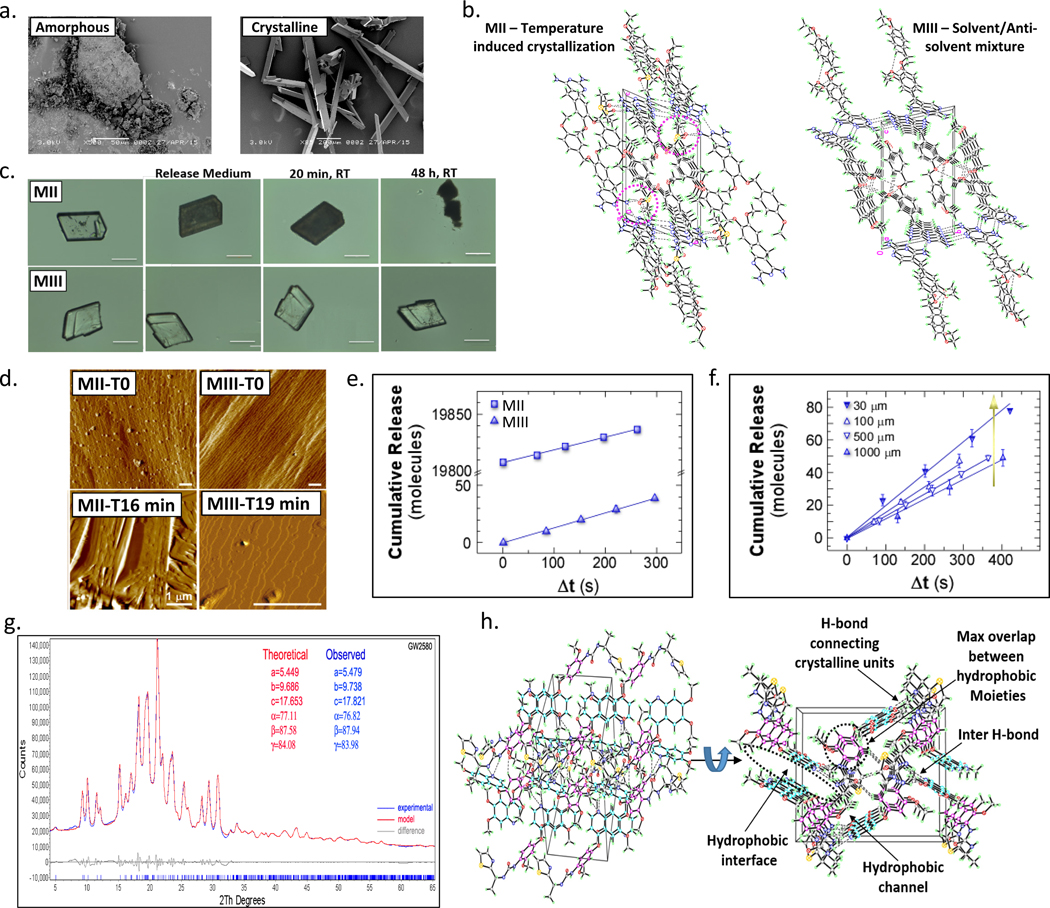
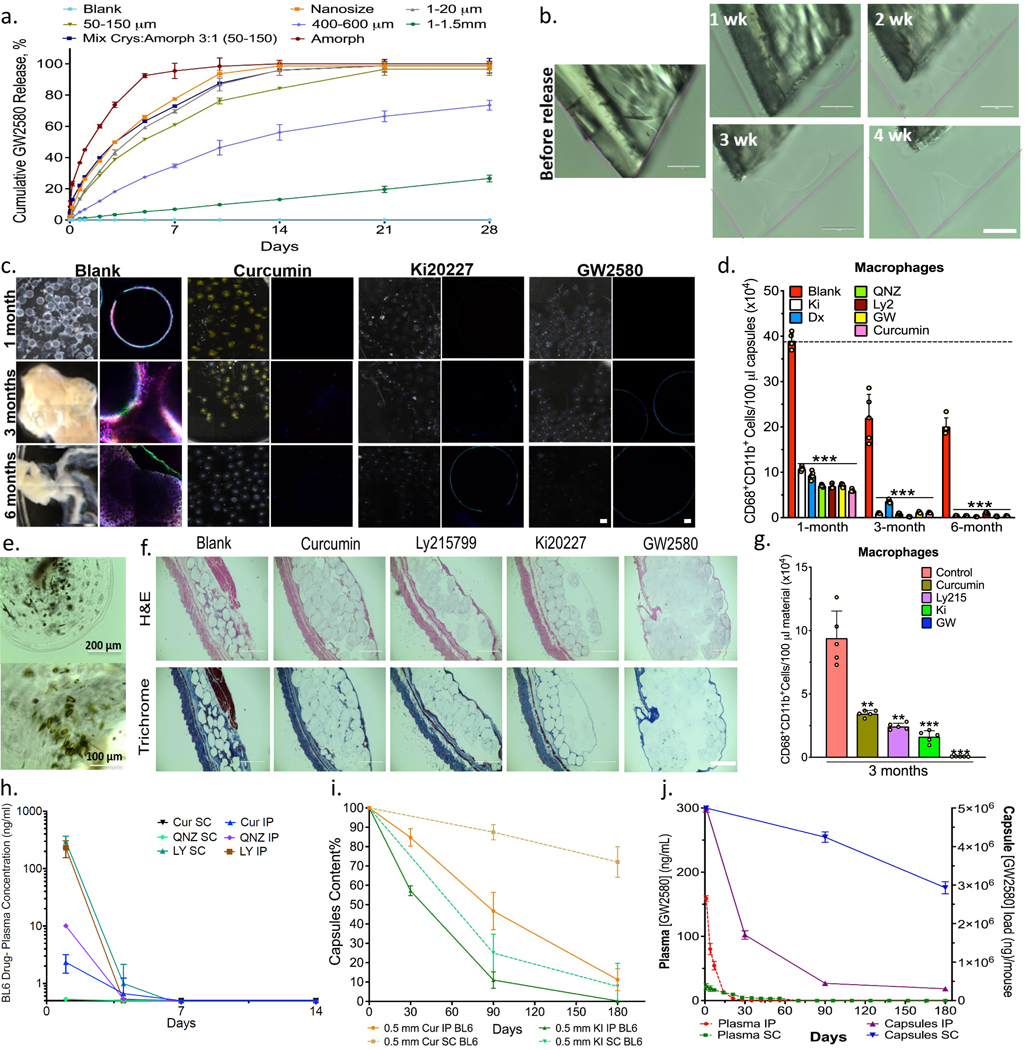
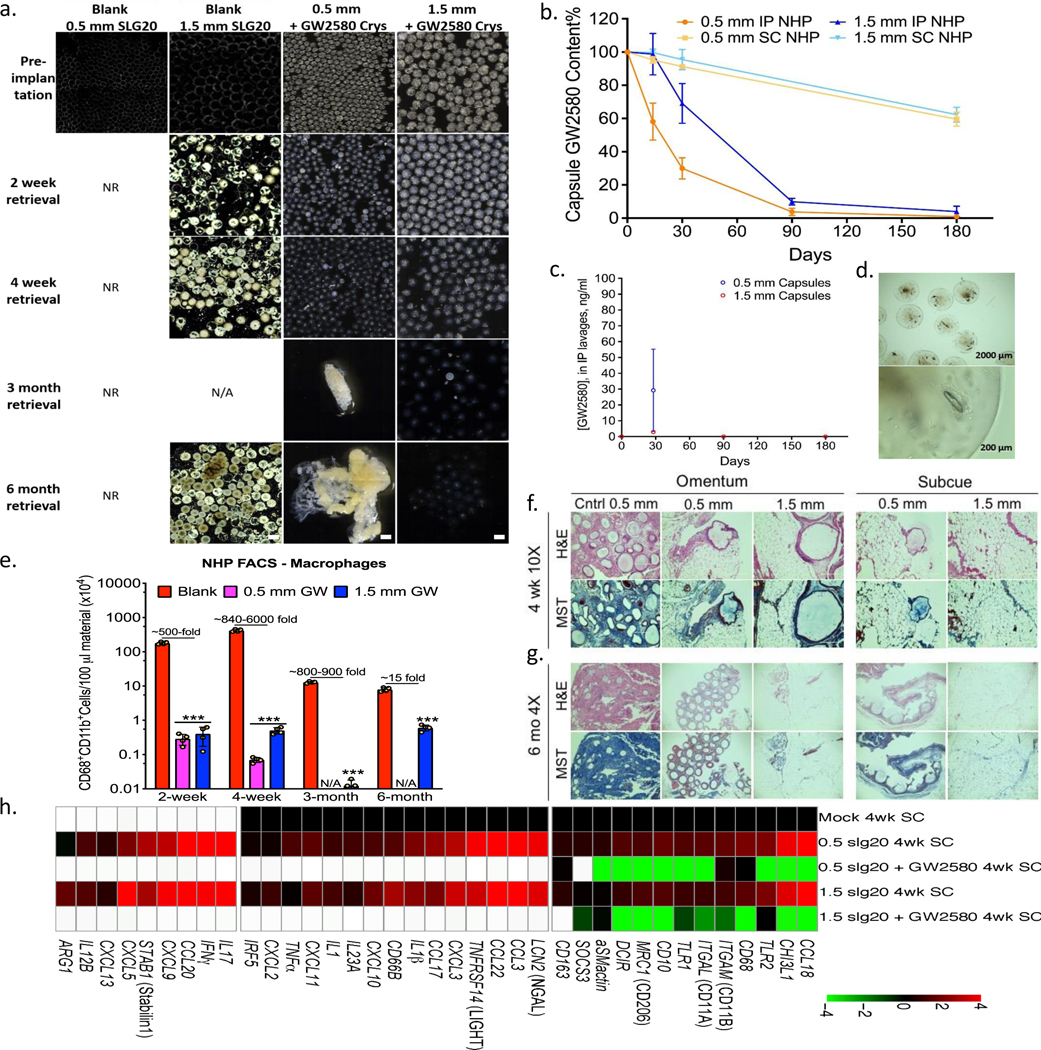
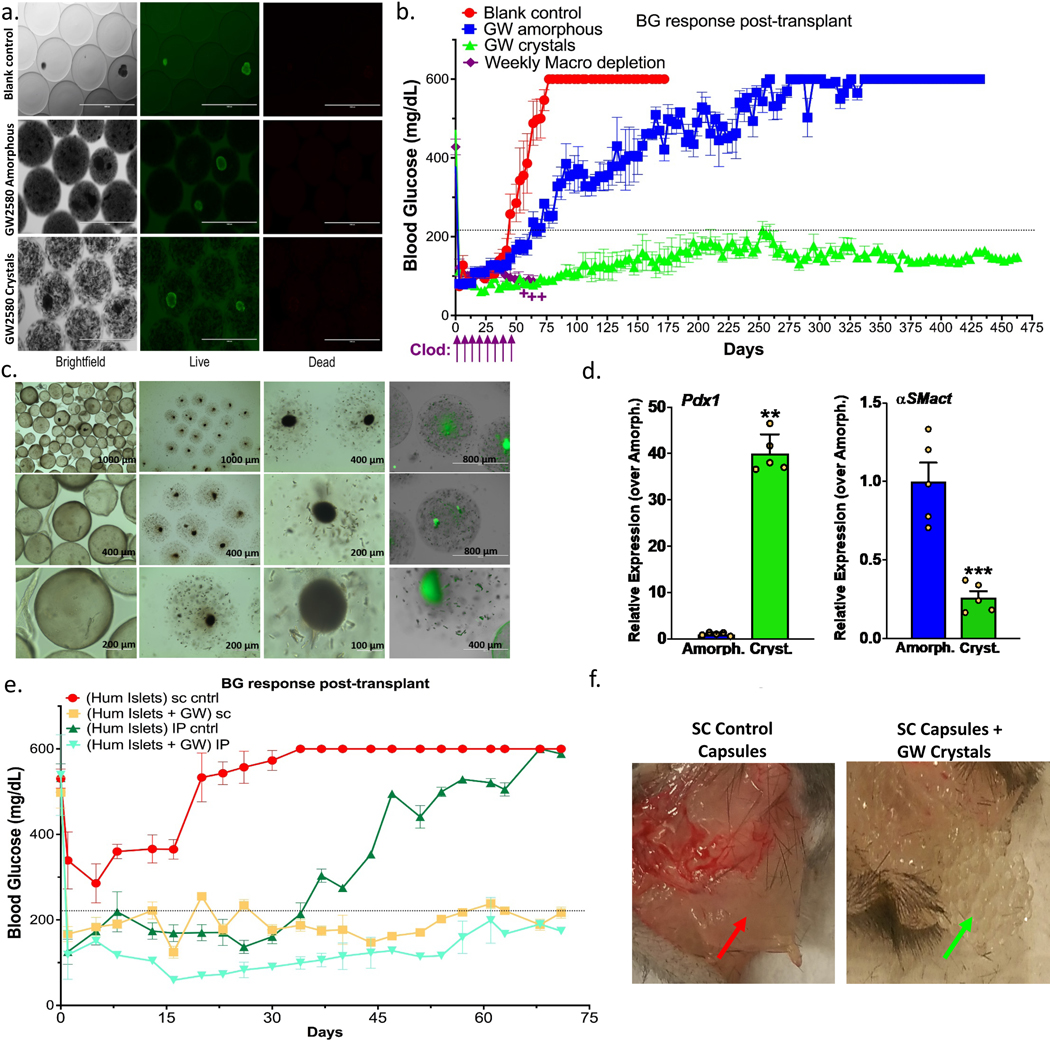
Implantable medical devices have revolutionized modern medicine. However, immune-mediated foreign body response (FBR) to the materials of these devices can limit their function or even induce failure. Here we describe long-term controlled-release formulations for local anti-inflammatory release through the development of compact, solvent-free crystals. The compact lattice structure of these crystals allows for very slow, surface dissolution and high drug density. These formulations suppress FBR in both rodents and non-human primates for at least 1.3 years and 6 months, respectively. Formulations inhibited fibrosis across multiple implant sites-subcutaneous, intraperitoneal and intramuscular. In particular, incorporation of GW2580, a colony stimulating factor 1 receptor inhibitor, into a range of devices, including human islet microencapsulation systems, electrode-based continuous glucose-sensing monitors and muscle-stimulating devices, inhibits fibrosis, thereby allowing for extended function. We believe that local, long-term controlled release with the crystal formulations described here enhances and extends function in a range of medical devices and provides a generalized solution to the local immune response to implanted biomaterials.
植入式医疗器械已经彻底改变了现代医学。然而,这些设备材料引起的免疫介导的异物反应(FBR)会限制其功能,甚至导致其失效。在这里,我们通过开发无溶剂的紧凑型晶体来描述通过局部抗炎释放的长期控制释放制剂。这些晶体的紧凑型晶格结构允许非常缓慢的表面溶解和高药物密度。这些制剂分别在啮齿动物和非人类灵长类动物中抑制 FBR 至少 1.3 年和 6 个月。制剂抑制了多个植入部位(皮下、腹腔和肌肉内)的纤维化。特别是,将集落刺激因子 1 受体抑制剂 GW2580 掺入一系列设备中,包括人胰岛微囊化系统、基于电极的连续葡萄糖传感监测器和肌肉刺激设备,抑制了纤维化,从而延长了其功能。我们相信,这里描述的晶体制剂的局部、长期控制释放可以增强和延长一系列医疗器械的功能,并为植入生物材料的局部免疫反应提供一种通用的解决方案。