Affiliated BaYi Brain Hospital, Army General Hospital of PLA, Beijing, People's Republic of China.
Neurology Department, Army General Hospital of PLA, Beijing, People's Republic of China.
Stem Cells Transl Med. 2019 Oct;8(10):999-1007. doi: 10.1002/sctm.18-0220. Epub 2019 Jun 26.
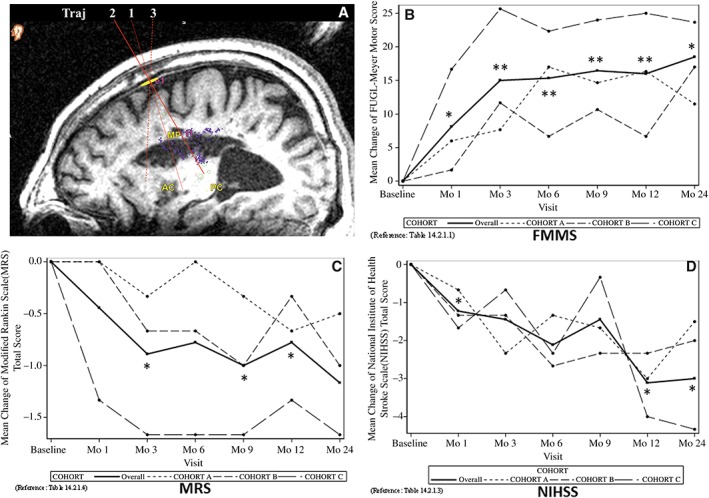
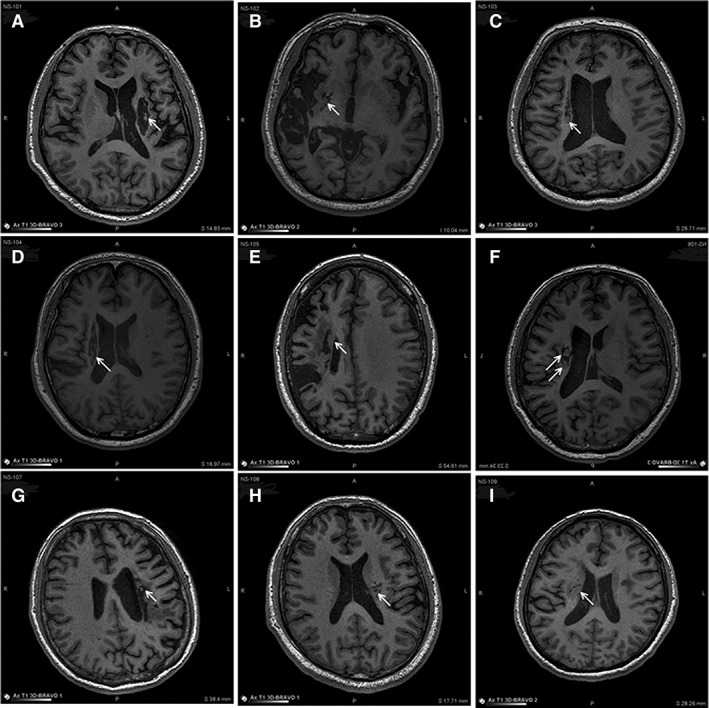
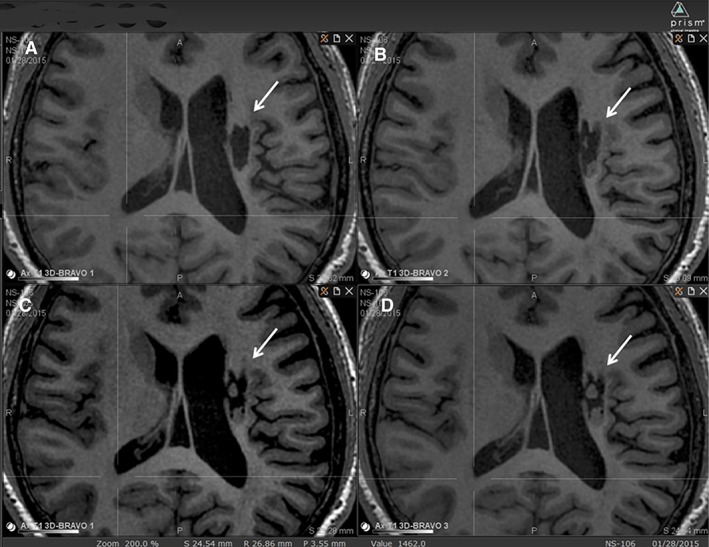
NSI-566 is a stable, primary adherent neural stem cell line derived from a single human fetal spinal cord and expanded epigenetically with no genetic modification. This cell line is being tested in clinical trials in the U.S. for treatment of amyotrophic lateral sclerosis and spinal cord injury. In a single-site, phase I study, we evaluated the feasibility and safety of NSI-566 transplantation for the treatment of hemiparesis due to chronic motor stroke and determined the maximum tolerated dose for future trials. Three cohorts (n = 3 per cohort) were transplanted with one-time intracerebral injections of 1.2 × 10 , 2.4 × 10 , or 7.2 × 10 cells. Immunosuppression therapy with tacrolimus was maintained for 28 days. All subjects had sustained chronic motor strokes, verified by magnetic resonance imaging (MRI), initiated between 5 and 24 months prior to surgery with modified Rankin Scores [MRSs] of 2, 3, or 4 and Fugl-Meyer Motor Scores of 55 or less. At the 12-month visit, the mean Fugl-Meyer Motor Score (FMMS, total score of 100) for the nine participants showed 16 points of improvement (p = .0078), the mean MRS showed 0.8 points of improvement (p = .031), and the mean National Institutes of Health Stroke Scale showed 3.1 points of improvement (p = .020). For six participants who were followed up for 24 months, these mean changes remained stable. The treatment was well tolerated at all doses. Longitudinal MRI studies showed evidence indicating cavity-filling by new neural tissue formation in all nine patients. Although this was a small, one-arm study of feasibility, the results are encouraging to warrant further studies. Stem Cells Translational Medicine 2019;8:999-1007.
NSI-566 是一种稳定的、原代贴壁神经干细胞系,源自单个人类胎儿脊髓,通过表观遗传扩增,没有遗传修饰。该细胞系正在美国进行临床试验,用于治疗肌萎缩侧索硬化症和脊髓损伤。在一项单中心、I 期研究中,我们评估了 NSI-566 移植治疗慢性运动性中风引起的偏瘫的可行性和安全性,并确定了未来试验的最大耐受剂量。三个队列(每组 3 人)接受了一次性脑内注射 1.2×10 、2.4×10 或 7.2×10 细胞。用他克莫司维持 28 天免疫抑制治疗。所有患者均有持续的慢性运动性中风,经磁共振成像(MRI)证实,在手术前 5 至 24 个月发生,改良 Rankin 评分[MRS]为 2、3 或 4,Fugl-Meyer 运动评分[FMMS]为 55 或更低。在 12 个月的随访中,9 名参与者的平均 FMMS(总分 100)提高了 16 分(p=0.0078),平均 MRS 提高了 0.8 分(p=0.031),平均 NIH 中风量表提高了 3.1 分(p=0.020)。对于 6 名随访 24 个月的参与者,这些平均变化保持稳定。所有剂量均耐受良好。纵向 MRI 研究表明,所有 9 名患者均有新的神经组织形成填充空洞的证据。尽管这是一项小型的、单臂可行性研究,但结果令人鼓舞,值得进一步研究。《干细胞转化医学》2019;8:999-1007。