Vural Unsal, Kizilay Mehmet, Aglar Ahmet Arif
Doktor Siyami Ersek Gogus Kalp ve Damar Cerrahisi Egitim ve Arastirma Hastanesi Cardiovascular Surgery Istanbul Turkey Doktor Siyami Ersek Gogus Kalp ve Damar Cerrahisi Egitim ve Arastirma Hastanesi - Cardiovascular Surgery, Istanbul, Turkey.
Braz J Cardiovasc Surg. 2019 Dec 1;34(6):749-758. doi: 10.21470/1678-9741-2019-0003.
In our clinic, we aimed to investigate the effect of preoperative risk factors and postoperative complications on reoperation and mortality in cases with Behçet's disease which presents very rare coronary artery involvement.
Thirteen patients with Behçet's Disease who had undergone coronary artery bypass grafting in our center between 2003 and 2015 were analyzed. We evaluated the clinical and laboratory findings, complications and mortality rates of our patients in light of the literature.
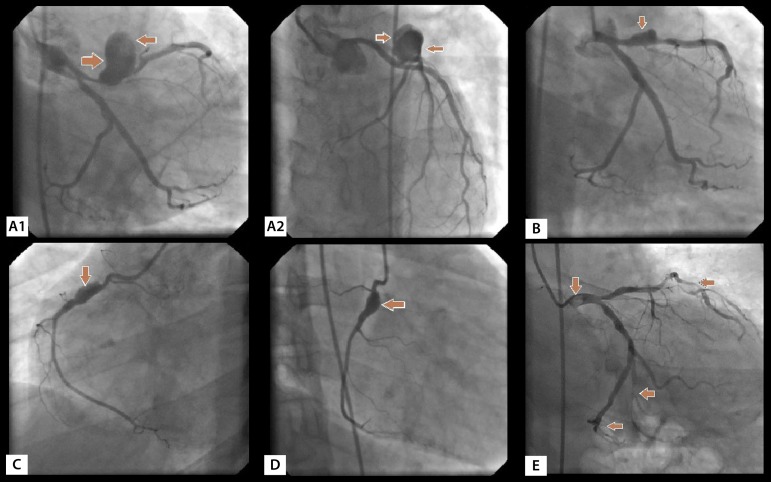
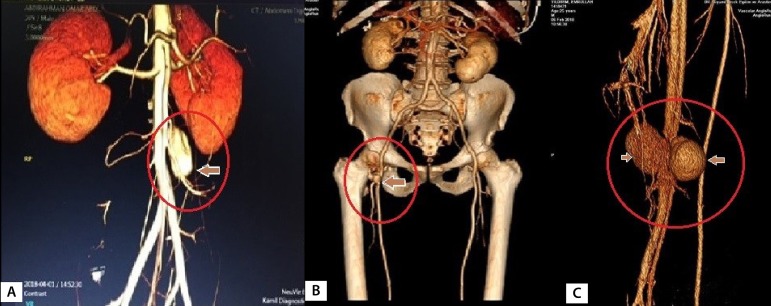
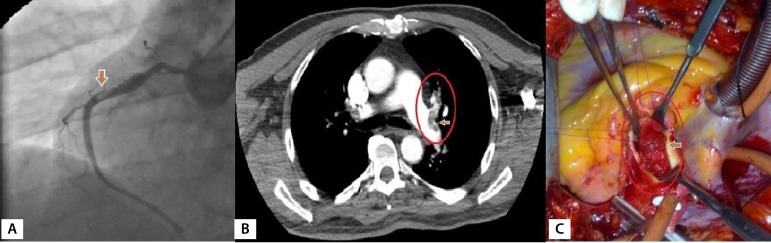
The mean age was 38.5 (30-55; 3 women). The mean time from onset of Behçet's disease to coronary artery disease was 4,7 (3-11) years. Fifty-four percent of the patients were asymptomatic. Coronary artery disease of these was exposed while peripheral vascular surgery was planned due to complications of Behçet's disease. Symptomatic patients presented angina pectoris (31%), acute coronary syndrome (8%) and arrhythmia (8%). In coronary pathology of patients, distal type obstruction (31%), aneurysm and pseudoaneurysm (31%), proximal segment thrombus (15%), chronic type stenosis and occlusions (31%) were present. Early mortality (15%) was due to acute myocardial infarction while the late mortality (15%) was due to cerebral and gastrointestinal bleeding. Reoperation was due to bleeding in one case on the 1st postoperative day and due to acute pulmonary embolism in another case in the 3rdpostoperative year.
In Behçet's disease, coronary artery bypass grafting is a procedure with high mortality, especially in the acute period. The on-pump surgery technique in these cases can be safely performed for multiple bypasses and in patients above 40 years old.
在我们的诊所,我们旨在研究术前危险因素和术后并发症对白塞病患者再次手术及死亡率的影响,白塞病患者冠状动脉受累情况非常罕见。
分析了2003年至2015年间在我们中心接受冠状动脉搭桥手术的13例白塞病患者。我们根据文献评估了患者的临床和实验室检查结果、并发症及死亡率。
平均年龄为38.5岁(30 - 55岁;3名女性)。从白塞病发病到冠状动脉疾病的平均时间为4.7年(3 - 11年)。54%的患者无症状。这些患者的冠状动脉疾病是在因白塞病并发症计划进行外周血管手术时被发现的。有症状的患者表现为心绞痛(31%)、急性冠状动脉综合征(8%)和心律失常(8%)。在患者的冠状动脉病变中,存在远端型阻塞(31%)、动脉瘤和假性动脉瘤(31%)、近端节段血栓(15%)、慢性型狭窄和闭塞(31%)。早期死亡率(15%)是由于急性心肌梗死,而晚期死亡率(15%)是由于脑和胃肠道出血。再次手术1例是由于术后第1天出血,另1例是由于术后第3年急性肺栓塞。
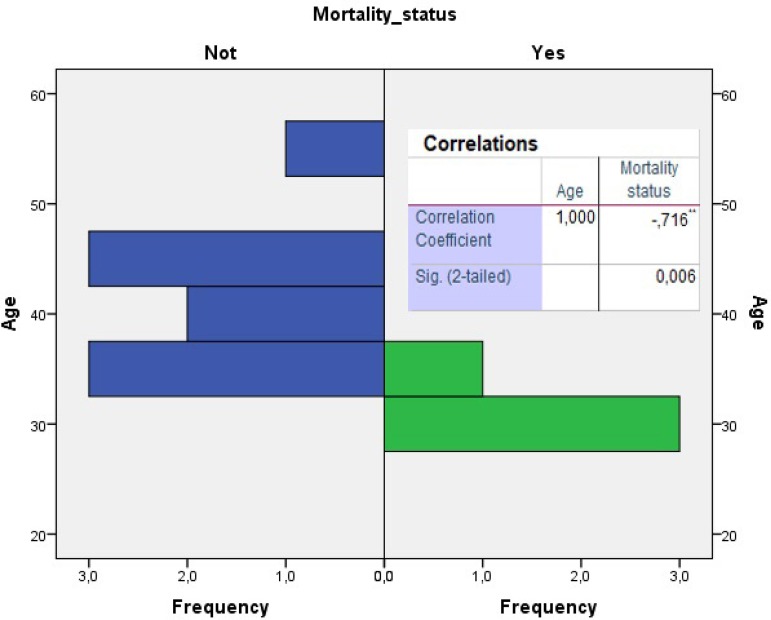
在白塞病中,冠状动脉搭桥手术是一种死亡率较高的手术,尤其是在急性期。在这些病例中,体外循环手术技术可安全地用于多支血管搭桥以及40岁以上的患者。