Shen Chenyang, Li Weihao, Zhang Yongbao, Li Qingle, Jiao Yang, Zhang Tao, Zhang Xiaoming
Chinese Academy of Medical Sciences and Peking Union Medical College, Fuwai Hospital, National Center for Cardiovascular Diseases, Center of Vascular Surgery, Beijing, China.
Peking University People's Hospital, Department of Vascular Surgery, Beijing, China.
Clinics (Sao Paulo). 2016 Jul;71(6):302-10. doi: 10.6061/clinics/2016(06)03.
Behcet's disease is a form of systematic vasculitis that affects vessels of various sizes. Aortic pseudoaneurysm is one of the most important causes of death among patients with Behcet's disease due to its high risk of rupture and associated mortality. Our study aimed to investigate the outcomes of Behcet's disease patients with aortic pseudoaneurysms undergoing open surgery and endovascular aortic repair.
From January 2003 to September 2014, ten consecutive patients undergoing surgery for aortic pseudoaneurysm met the diagnostic criteria for Behcet's disease. Endovascular repair was the preferred modality and open surgery was performed as an alternative. Systemic immunosuppressive medication was administered after Behcet's disease was definitively diagnosed.
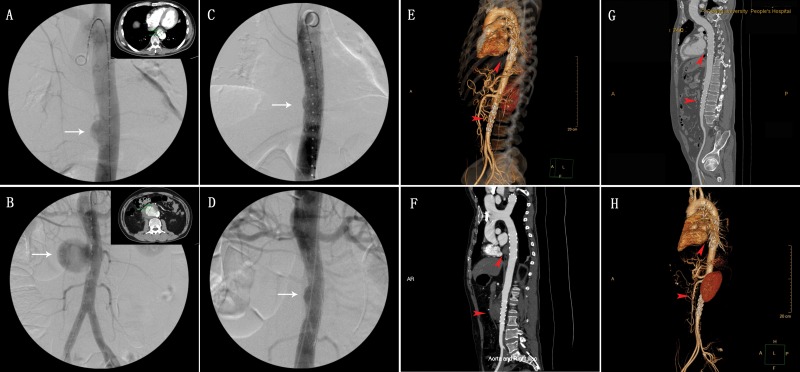
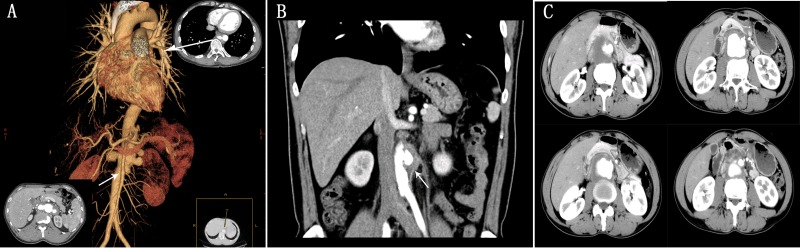
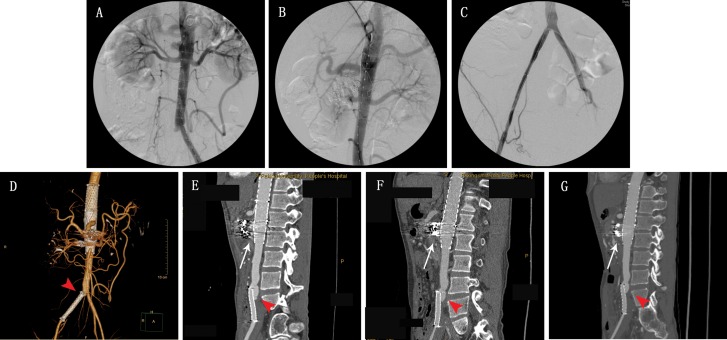
Eight patients initially underwent endovascular repair and two patients initially underwent open surgery. The overall success rate was 90% and the only failed case involved the use of the chimney technique to reach a suprarenal location. The median follow-up duration was 23 months. There were 7 recurrences in 5 patients. The median interval between operation and recurrence was 13 months. No significant risk factors for recurrence were identified, but a difference in recurrence between treatment and non-treatment with preoperative immunosuppressive medication preoperatively was notable. Four aneurysm-related deaths occurred within the follow-up period. The overall 1-year, 3-year and 5-year survival rates were 80%, 64% and 48%, respectively.
Both open surgery and endovascular repair are safe and effective for treating aortic pseudoaneurysm in Behcet's disease patients. The results from our retrospective study indicated that immunosuppressive medication was essential to defer the occurrence and development of recurrent aneurysms.
白塞病是一种系统性血管炎,可累及各种大小的血管。主动脉假性动脉瘤是白塞病患者最重要的死亡原因之一,因其破裂风险高且伴有死亡率。我们的研究旨在调查接受开放手术和血管腔内主动脉修复的白塞病合并主动脉假性动脉瘤患者的治疗结果。
2003年1月至2014年9月,连续10例接受主动脉假性动脉瘤手术的患者符合白塞病诊断标准。血管腔内修复是首选方式,开放手术作为替代方案。在白塞病确诊后给予全身免疫抑制药物治疗。
8例患者最初接受血管腔内修复,2例患者最初接受开放手术。总体成功率为90%,唯一失败的病例涉及使用烟囱技术到达肾上腺上方位置。中位随访时间为23个月。5例患者出现7次复发。手术与复发之间的中位间隔时间为13个月。未发现复发的显著危险因素,但术前使用免疫抑制药物治疗与未治疗之间的复发差异显著。随访期间发生4例与动脉瘤相关的死亡。总体1年、3年和5年生存率分别为80%、64%和48%。
开放手术和血管腔内修复治疗白塞病患者的主动脉假性动脉瘤均安全有效。我们的回顾性研究结果表明,免疫抑制药物对于延缓复发性动脉瘤的发生和发展至关重要。