Division of Science, Yale-NUS College, Singapore, Singapore.
MTA TK "Lendület" Research Center for Educational and Network Studies (RECENS), Hungarian Academy of Sciences, Budapest, Hungary.
PLoS One. 2019 Jun 26;14(6):e0218729. doi: 10.1371/journal.pone.0218729. eCollection 2019.
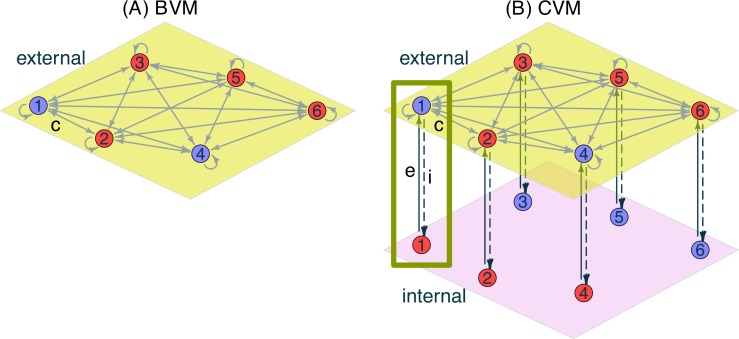
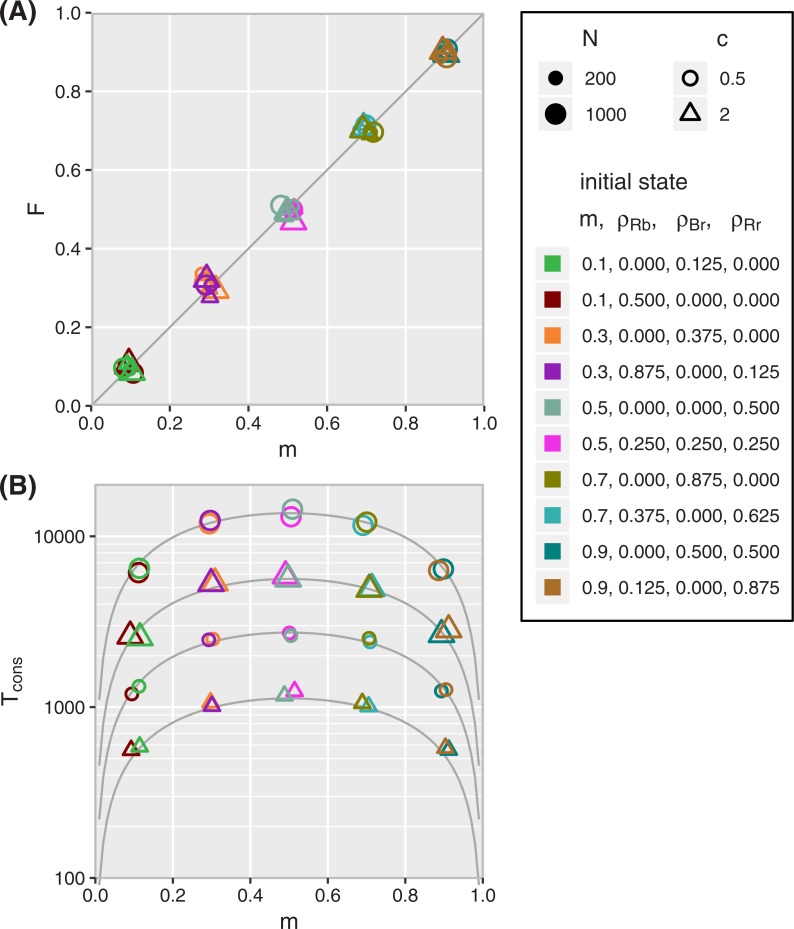
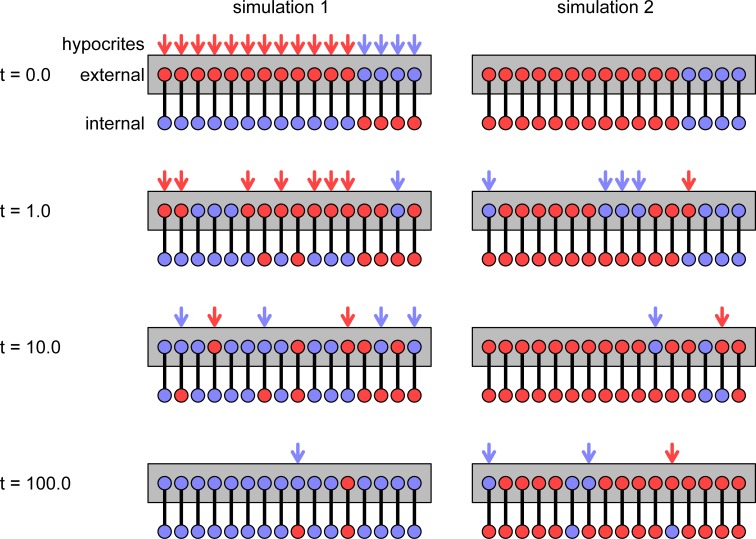
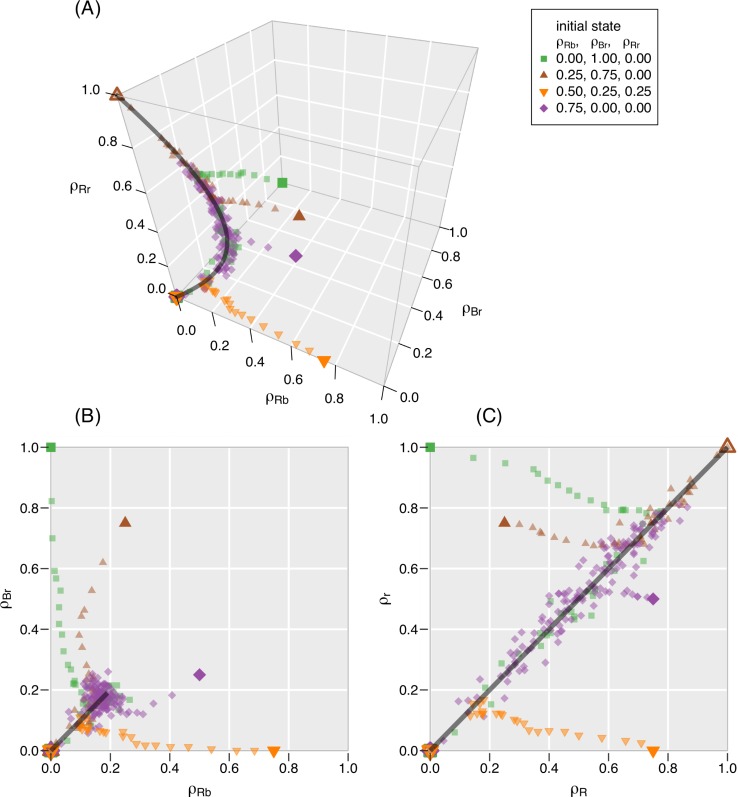
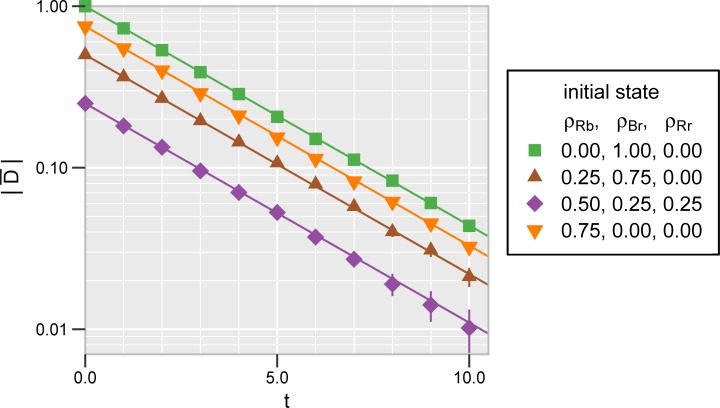
Humans have a demonstrated tendency to copy or imitate the behavior and attitude of others and actively influence each other's opinions. In plenty of empirical contexts, publicly revealed opinions are not necessarily in line with internal opinions, causing complex social influence dynamics. We study to what extent hypocrisy is sustained during opinion formation and how hidden opinions change the convergence to consensus in a group. We build and analyze a modified version of the voter model with hypocrisy in a complete graph with a neutral competition between two alternatives. We compare the process from various initial conditions, varying the proportions between the two opinions in the external (revealed) and internal (hidden) layer. According to our results, hypocrisy always prolongs the time needed for reaching a consensus. In a complete graph, this time span increases linearly with group size. We find that the group-level opinion emerges in two steps: (1) a fast and directional process, during which the number of the two kinds of hypocrites equalizes; and (2) a slower, random drift of opinions. During stage (2), the ratio of opinions in the external layer is approximately equal to the ratio in the internal layer; that is, the hidden opinions do not differ significantly from the revealed ones at the group level. We furthermore find that the initial abundances of opinions, but not the initial prevalence of hypocrisy, predicts the mean consensus time and determines the opinions' probabilities of winning. These insights highlight the unimportance of hypocrisy in consensus formation under neutral conditions. Our results have important societal implications in relation to hidden voter preferences in polls and improve our understanding of opinion formation in a more realistic setting than that of conventional voter models.
人类表现出模仿他人行为和态度的倾向,并积极影响彼此的观点。在大量的实证情境中,公开表达的观点并不一定与内在观点一致,从而导致了复杂的社会影响动态。我们研究在多大程度上,虚伪在观点形成过程中得以维持,以及隐藏的观点如何改变群体中对共识的趋同。我们构建并分析了一个带有虚伪的选民模型的修改版本,在一个完全图中,两种替代方案之间存在中性竞争。我们从各种初始条件出发,比较了外部(公开)和内部(隐藏)层中两种观点之间的比例变化对收敛到共识的影响。根据我们的结果,虚伪总是会延长达成共识所需的时间。在完全图中,这个时间跨度随着群体规模的增加呈线性增长。我们发现群体观点的形成分为两个步骤:(1)快速且有方向性的过程,在此过程中,两种虚伪者的数量趋于相等;(2)意见的缓慢随机漂移。在第二阶段,外部层的意见比例大致等于内部层的比例;也就是说,在群体层面上,隐藏的意见与公开的意见没有显著差异。我们还发现,初始意见的丰度,而不是虚伪的初始流行程度,预测了平均共识时间,并决定了意见的获胜概率。这些见解突出表明,在中性条件下,虚伪在共识形成中并不重要。我们的结果对于民意调查中隐藏的投票者偏好具有重要的社会意义,并提高了我们对更现实的选民模型环境中观点形成的理解。