Epigenetics & Cellular Senescence Group, Blizard Institute, Barts and the London School of Medicine and Dentistry, Queen Mary University of London, 4 Newark Street, London E1 2AT, UK; Centre for Genomics and Child Health, Blizard Institute, Barts and the London School of Medicine and Dentistry, Queen Mary University of London, London E1 2AT, UK.
CRUK Cambridge Centre Early Detection Programme, Department of Oncology, Hutchison/MRC Research Centre, University of Cambridge, Cambridge CB2 0XZ, UK.
Cell Rep. 2019 Jun 25;27(13):3956-3971.e6. doi: 10.1016/j.celrep.2019.05.095.
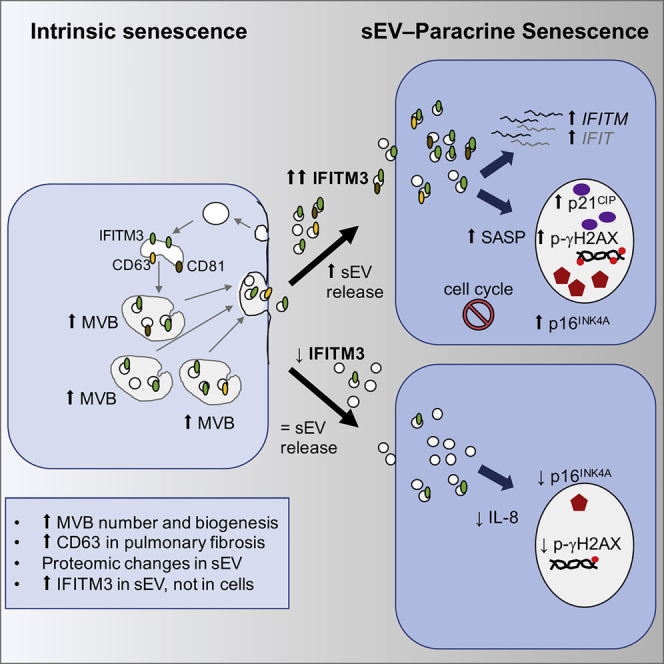
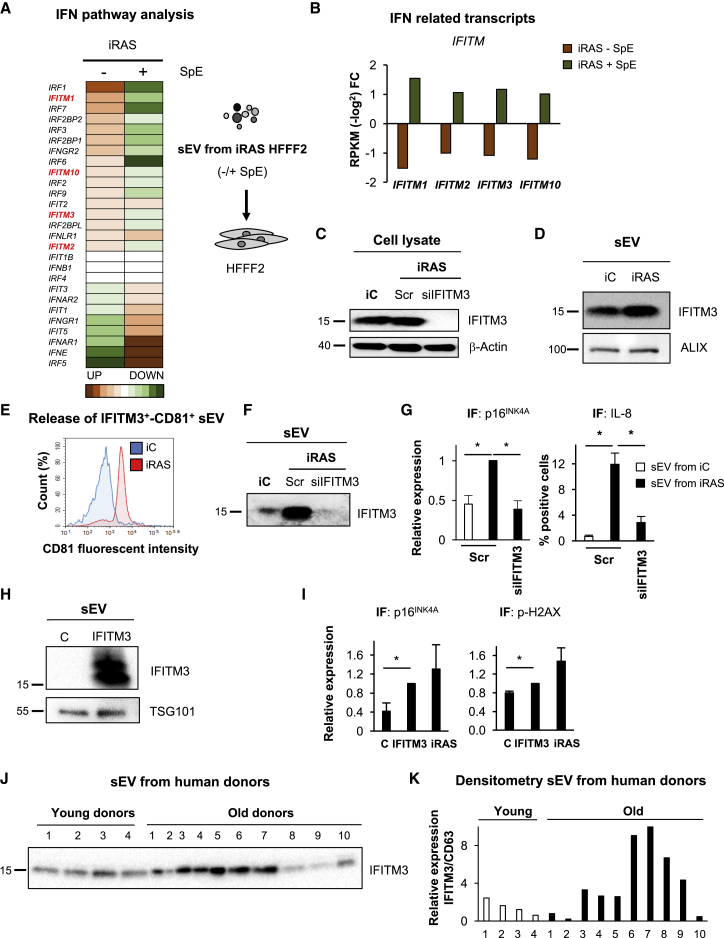
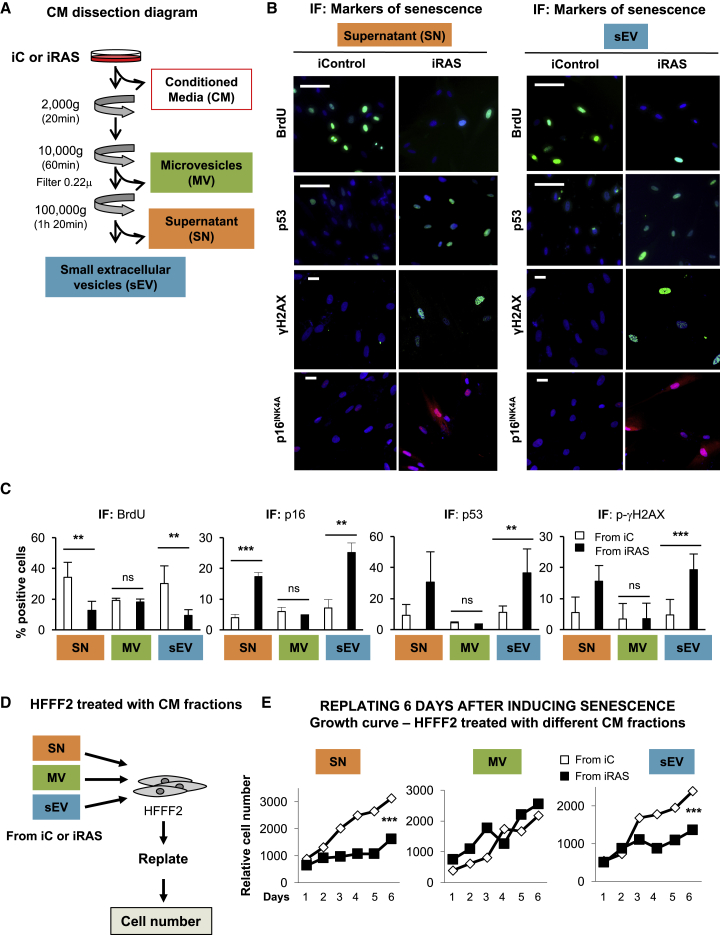
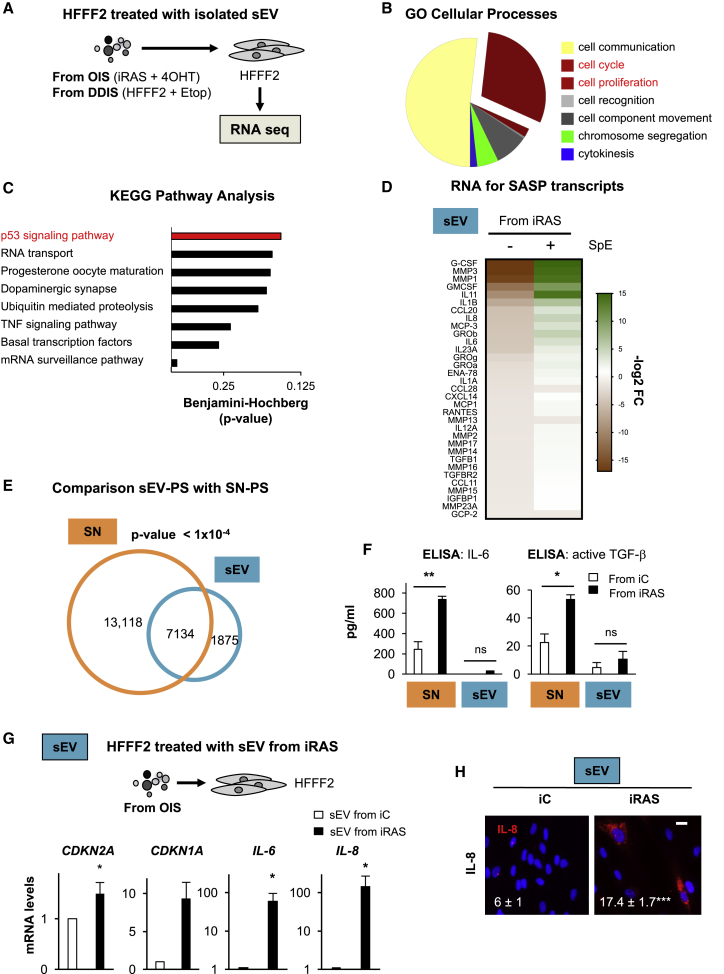
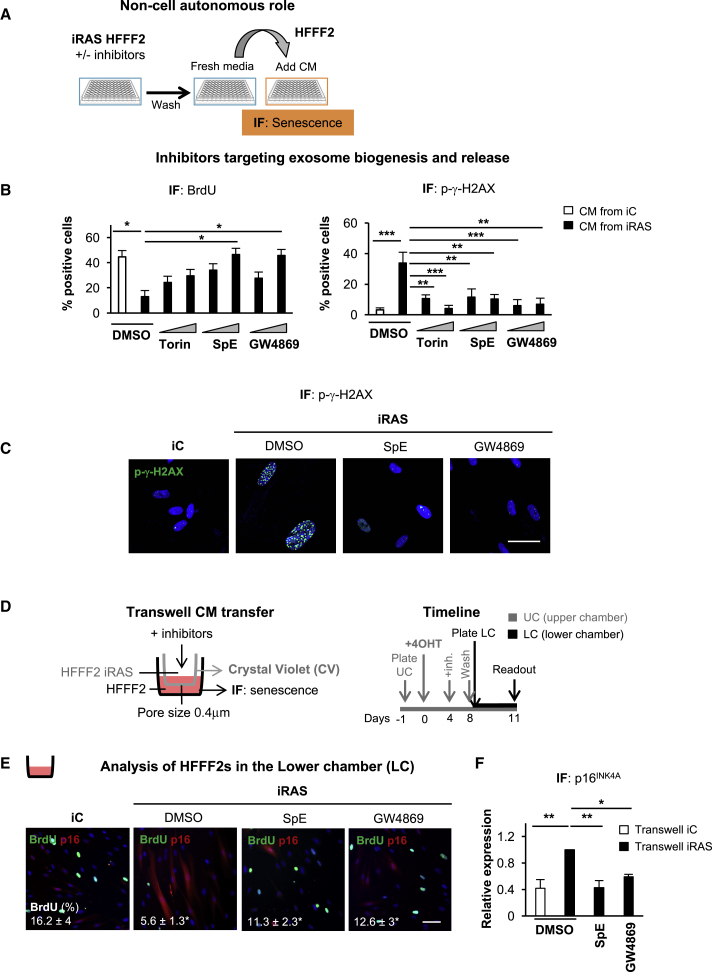
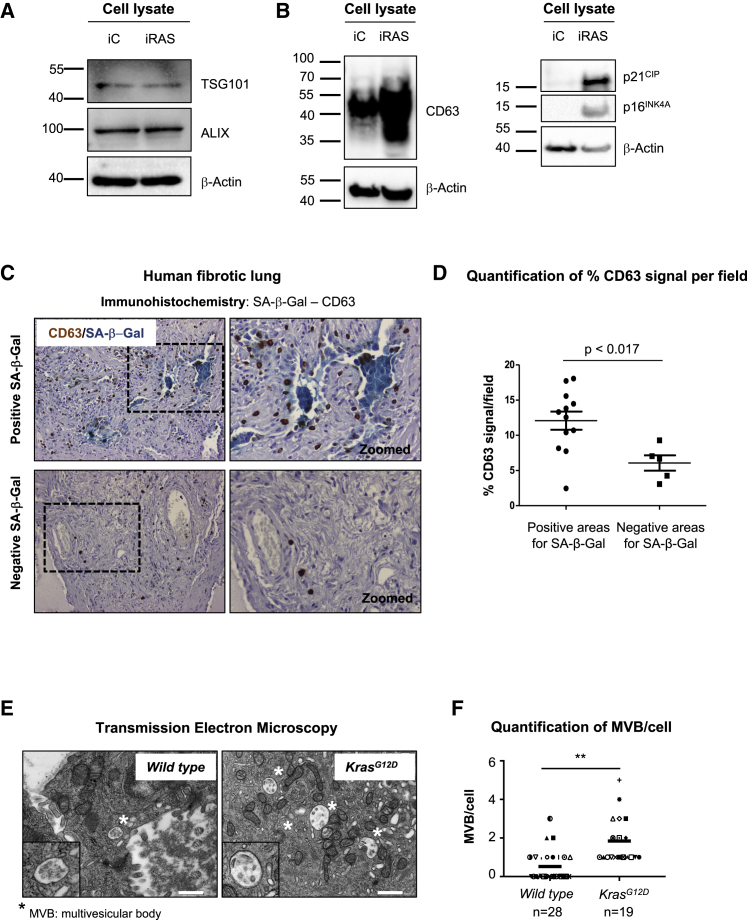
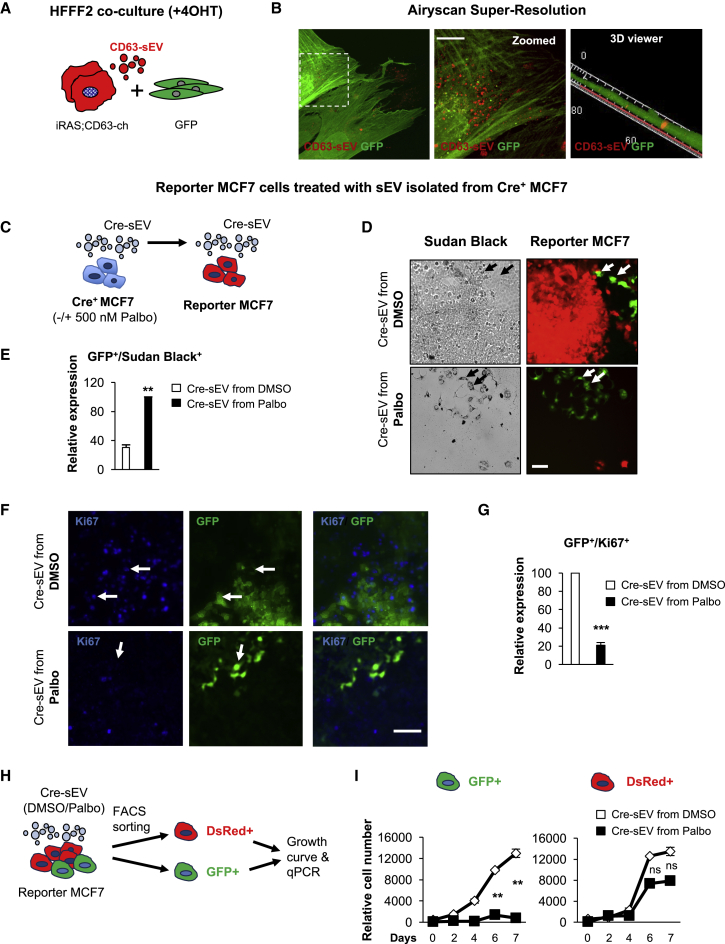
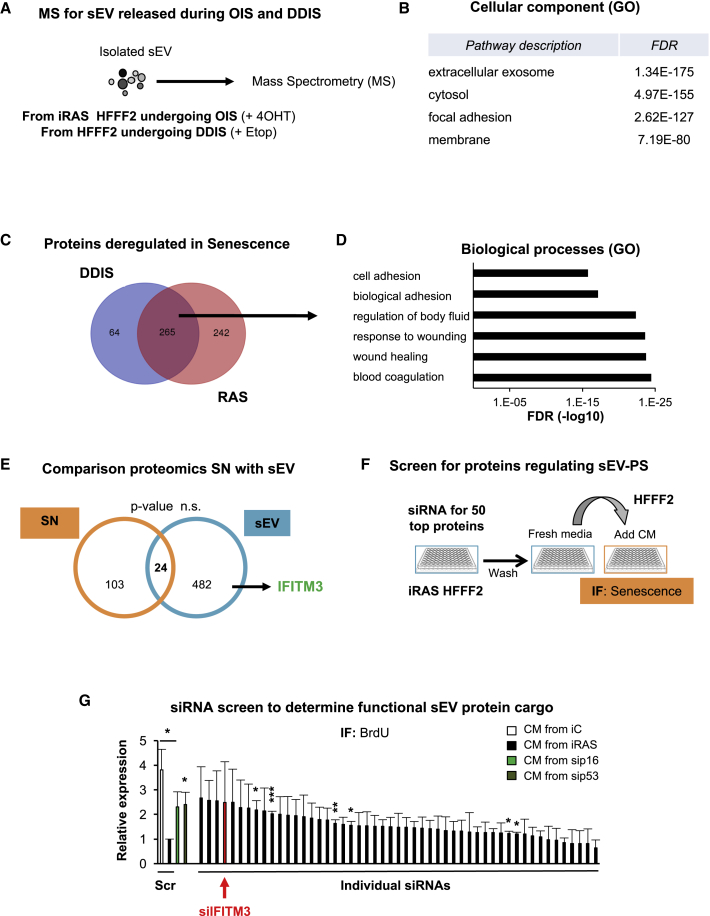
Senescence is a cellular phenotype present in health and disease, characterized by a stable cell-cycle arrest and an inflammatory response called senescence-associated secretory phenotype (SASP). The SASP is important in influencing the behavior of neighboring cells and altering the microenvironment; yet, this role has been mainly attributed to soluble factors. Here, we show that both the soluble factors and small extracellular vesicles (sEVs) are capable of transmitting paracrine senescence to nearby cells. Analysis of individual cells internalizing sEVs, using a Cre-reporter system, show a positive correlation between sEV uptake and senescence activation. We find an increase in the number of multivesicular bodies during senescence in vivo. sEV protein characterization by mass spectrometry (MS) followed by a functional siRNA screen identify interferon-induced transmembrane protein 3 (IFITM3) as being partially responsible for transmitting senescence to normal cells. We find that sEVs contribute to paracrine senescence.
衰老(senescence)是一种存在于健康和疾病中的细胞表型,其特征是细胞周期稳定停滞和炎症反应,即衰老相关分泌表型(SASP)。SASP 对于影响邻近细胞的行为和改变微环境非常重要;然而,这一作用主要归因于可溶性因子。在这里,我们表明,可溶性因子和小细胞外囊泡(sEVs)都能够将旁分泌衰老传递给附近的细胞。使用 Cre 报告系统分析内化 sEV 的单个细胞,表明 sEV 摄取与衰老激活之间存在正相关。我们发现在体内衰老过程中多泡体(multivesicular bodies)的数量增加。通过质谱(MS)对 sEV 蛋白进行表征,然后进行功能 siRNA 筛选,发现干扰素诱导跨膜蛋白 3(IFITM3)部分负责将衰老传递给正常细胞。我们发现 sEVs 有助于旁分泌衰老。