Institute of Pathophysiology, University Medical Center of the Johannes Gutenberg University Mainz, 55131 Mainz, Germany.
Int J Mol Sci. 2019 Jun 25;20(12):3098. doi: 10.3390/ijms20123098.
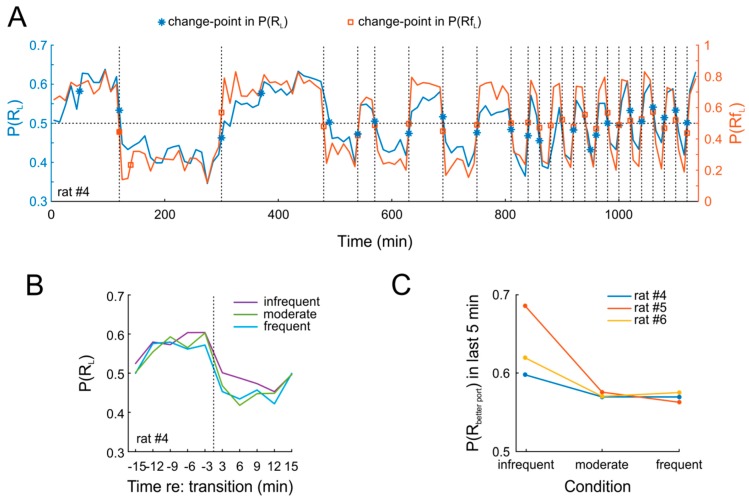
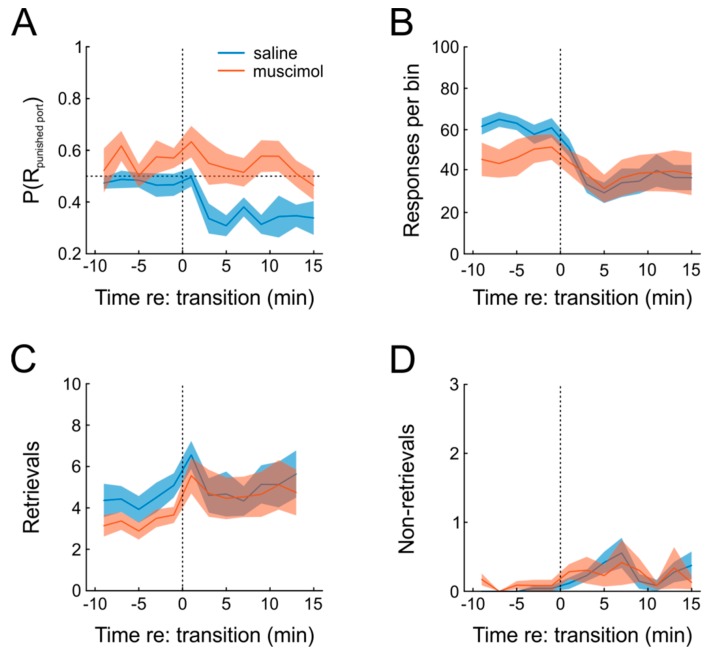
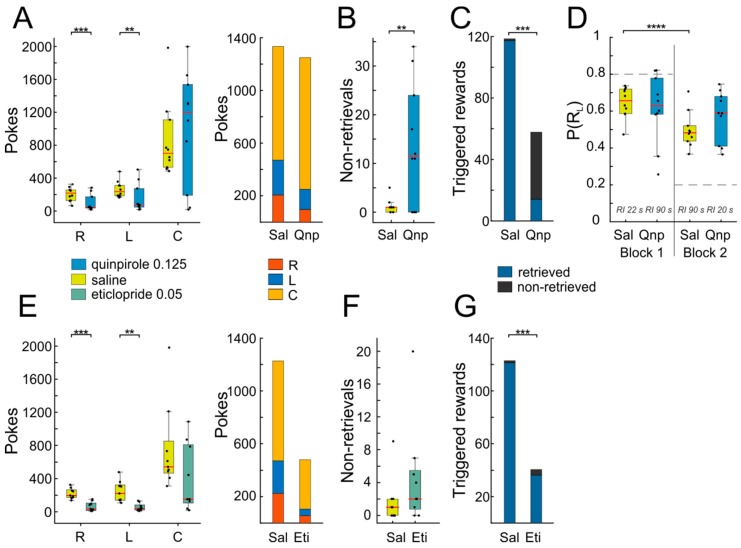
The ability to respond flexibly to changing environmental circumstances is a hallmark of goal-directed behavior, and compromised flexibility is associated with a wide range of psychiatric conditions in humans, such as addiction and stress-related disorders. To identify neural circuits and transmitter systems implicated in the provision of cognitive flexibility, suitable animal paradigms are needed. Ideally, such models should be easy to implement, allow for rapid task acquisition, provide multiple behavioral readouts, and permit combination with physiological and pharmacological testing and manipulation. Here, we describe a paradigm meeting these requirements and employ it to investigate the neural substrates and neurochemical modulation of adaptive behavior. Water-restricted rats learned to emit operant responses for positive reinforcement (water reward) within minutes in a free-operant conditioning environment. Without further training, animals were able to track changes in the reward schedule. Given prior evidence that the medial prefrontal cortex (mPFC) and the dopaminergic system are required for flexible behavior, we aimed to assess both in more detail. Silencing of mPFC compromised flexible behavior when avoidance of punishment was required. Systemic injections of the D2-receptor agonist quinpirole and the D2-receptor antagonist eticlopride had complex, differential impacts on reward seeking and adaptive behavior.
能够灵活应对环境变化是目标导向行为的一个标志,而灵活性受损与人类的许多精神疾病有关,如成瘾和与压力相关的障碍。为了确定涉及认知灵活性的神经回路和递质系统,需要合适的动物模型。理想情况下,此类模型应该易于实施,允许快速获取任务,提供多种行为读数,并允许与生理和药理学测试和操作相结合。在这里,我们描述了一个符合这些要求的范例,并利用它来研究适应性行为的神经基质和神经化学调节。在自由操作条件环境中,缺水的大鼠在几分钟内学会发出操作性反应以获得正强化(水奖励)。在没有进一步训练的情况下,动物能够跟踪奖励计划的变化。鉴于内侧前额叶皮层(mPFC)和多巴胺能系统对于灵活行为是必需的,我们旨在更详细地评估两者。当需要避免惩罚时,mPFC 的沉默会损害灵活行为。系统注射 D2 受体激动剂喹吡罗和 D2 受体拮抗剂 eticlopride 对寻求奖励和适应性行为有复杂的、不同的影响。