Ma Zhi Jie, Wang Yun Hong, Li Zhi Gang, Wang Ying, Li Bing Yao, Kang Hui Yan, Wu Xiao Yun
Department of Pharmacy, Beijing Friendship Hospital, Capital Medical University, Beijing, China.
Department of Technology, Stem Cell Medicine Engineering & Technology Research Center of Inner Mongolia, Huhhot, Inner Mongolia, China.
Int J Stem Cells. 2019 Nov 30;12(3):440-448. doi: 10.15283/ijsc18139.
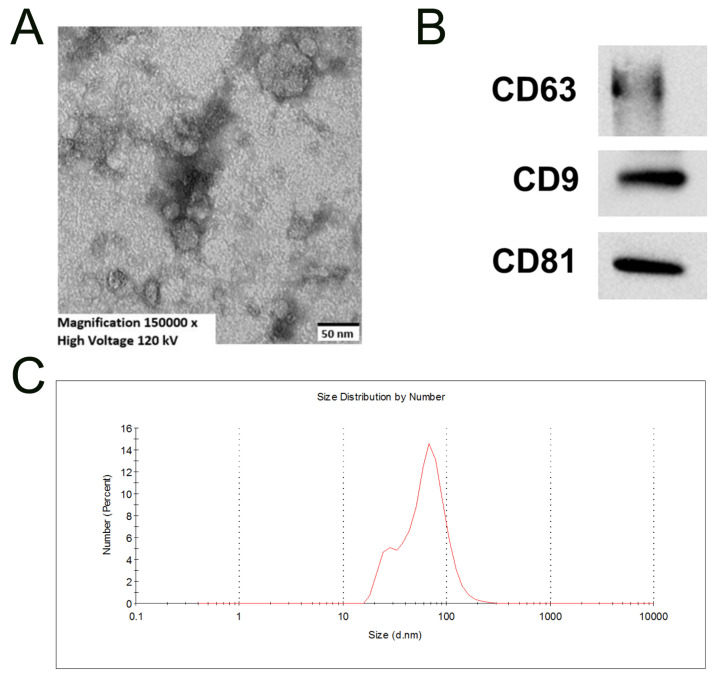
The exosomes released by mesenchymal stromal cells (MSCs) in classical FBS-containing media have been demonstrated as an alternative, cell-free therapy in various diseases including inflammatory bowel disease (IBD). It has been found that the function of exosomes is affected by culture condition. We previously developed a serum-free, xeno-free and chemically defined medium, and umbilical cord-derived MSCs in this medium retained the immunosuppressive capability.
In this study, we evaluated the immunosuppressive function of exosomes from MSCs (MSC-Exo) in defined medium and their therapeutic effect on treating colitis.
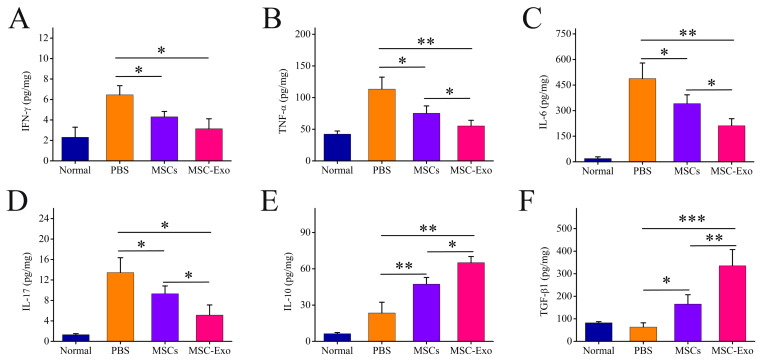
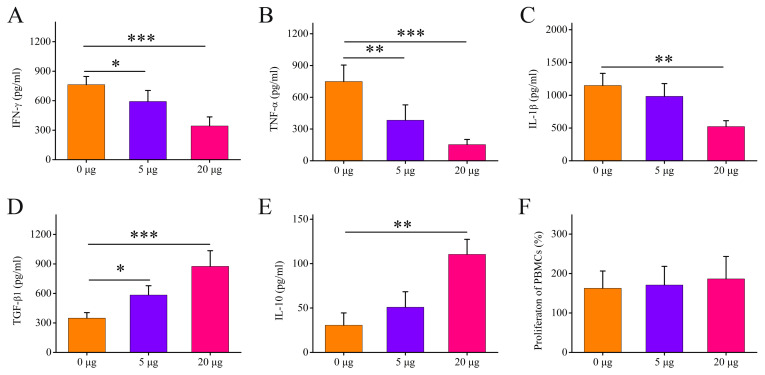
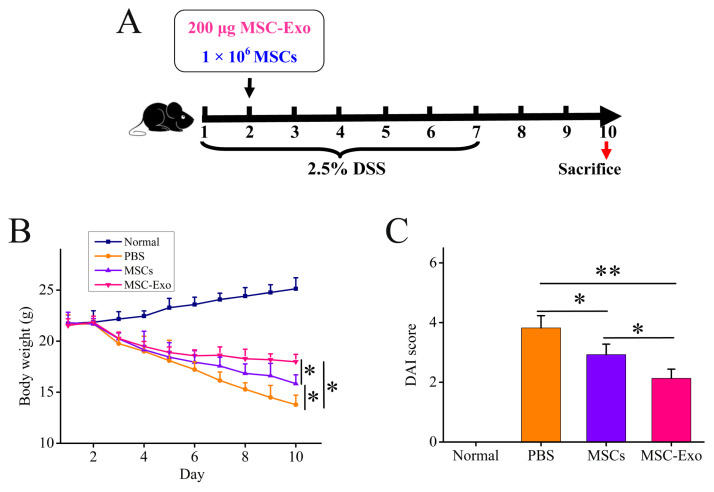
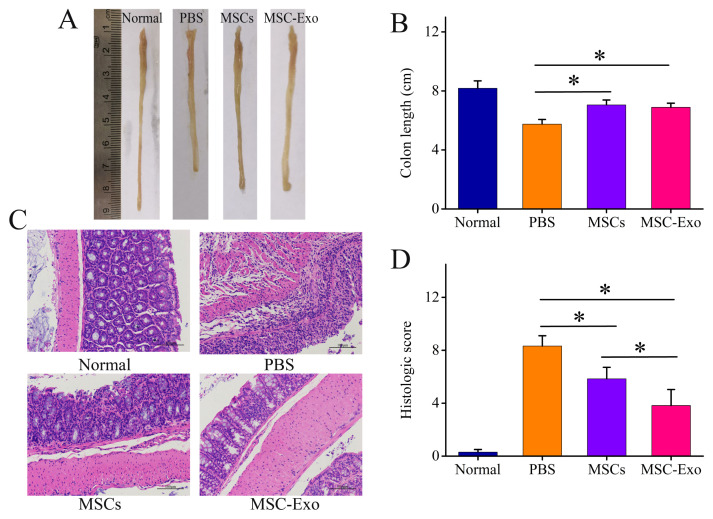
In vitro studies indicated that MSC-Exo reduced the concentration of pro-inflammatory cytokines IFN-, TNF- and IL-1, and increased the secretion of anti-inflammatory cytokines TGF-1 and IL-10, but no significant change of inhibitory effect on peripheral blood mononuclear cells proliferation was shown. In vivo experimental colitis showed that administration of MSC-Exo was able to significantly ameliorate the disease activity index score, weight loss, colon shortening, and the histological colitis score through up-regulation anti-inflammatory responses and down-regulation of inflammatory responses. Moreover, the use of MSC-Exo (200 g) led to an improved therapeutic efficacy when compared with MSCs at a dose of 1×10 cells. Our findings indicate that the exosomes from MSCs in defined medium possess a certain degree of immunosuppressive effect in vitro and exhibit a therapeutic capability in a mouse model of DSS-induced colitis through suppressing inflammation mechanism.
间充质基质细胞(MSCs)在含经典胎牛血清(FBS)的培养基中释放的外泌体已被证明是包括炎症性肠病(IBD)在内的多种疾病的一种替代性无细胞疗法。已发现外泌体的功能受培养条件影响。我们先前开发了一种无血清、无异种成分且化学成分明确的培养基,在此培养基中脐带间充质干细胞保留了免疫抑制能力。
在本研究中,我们评估了在化学成分明确的培养基中MSCs来源的外泌体(MSC-Exo)的免疫抑制功能及其对治疗结肠炎的疗效。
体外研究表明,MSC-Exo降低了促炎细胞因子IFN-、TNF-和IL-1的浓度,并增加了抗炎细胞因子TGF-1和IL-10的分泌,但对外周血单个核细胞增殖的抑制作用无显著变化。体内实验性结肠炎显示,给予MSC-Exo能够通过上调抗炎反应和下调炎症反应,显著改善疾病活动指数评分、体重减轻、结肠缩短和组织学结肠炎评分。此外,与1×10⁶个细胞剂量的MSCs相比,使用200μg的MSC-Exo导致治疗效果得到改善。我们的研究结果表明,在化学成分明确的培养基中MSCs来源的外泌体在体外具有一定程度的免疫抑制作用,并通过抑制炎症机制在DSS诱导的结肠炎小鼠模型中表现出治疗能力。