Barker Pierre, Quick Timothy, Agins Bruce, Rollins Nigel, Sint Tin Tin, Stern Amy F
1 Institute for Healthcare Improvement, Boston, MA, USA.
2 Gillings School of Global Public Health, University of North Carolina at Chapel Hill, Chapel Hill, NC, USA.
J Int Assoc Provid AIDS Care. 2019 Jan-Dec;18:2325958219855625. doi: 10.1177/2325958219855625.
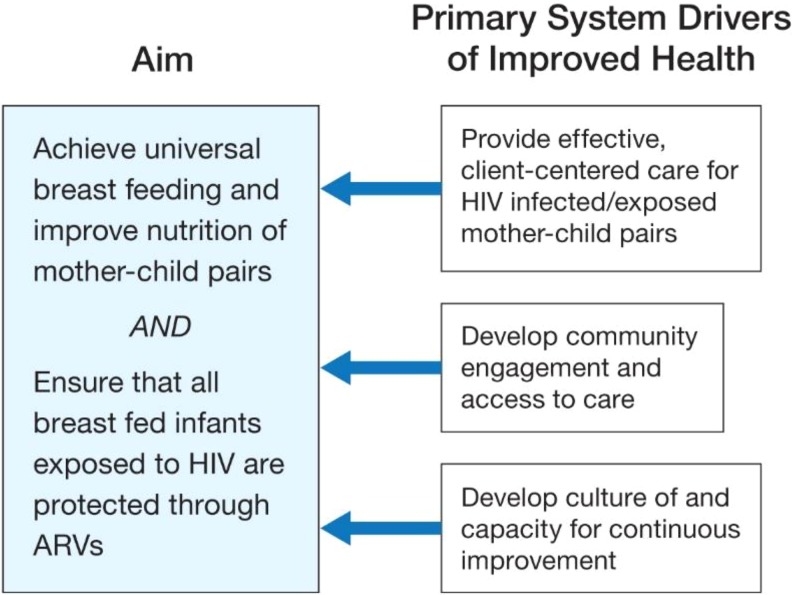
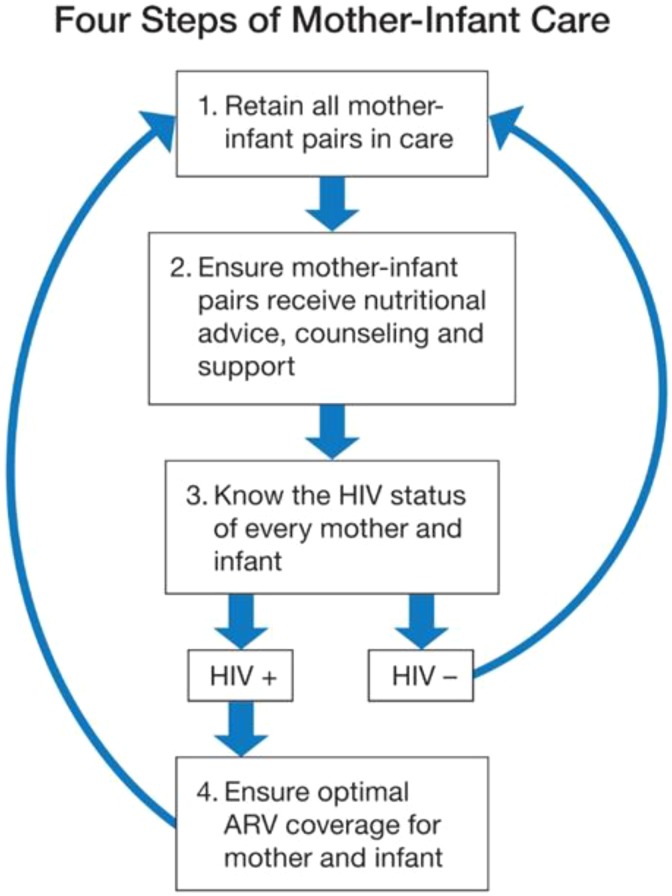
Despite advances in coverage and quality of prevention of mother-to-child transmission (PMTCT) programs, infant protection from postnatal HIV infection remains an issue in high HIV-burdened countries. We designed a quality improvement (QI) intervention-the Partnership for HIV-Free Survival (PHFS)-to improve infant survival. PHFS convened leaders in 6 sub-Saharan African nations to discover together the best strategies for implementing and scaling up existing PMTCT protocols to ensure optimal health of mother-baby pairs and HIV-free infant survival. We used 3 core technical components-rapid adaptive design, collaborative learning, and scale-up/sustainability designs-to test strategies for accelerating effective PMTCT programming in complex, resource-poor settings. Learning generated included the need for increased ownership and codesign of improvement initiatives with Ministries of Health, better integration of initiatives into existing programs, and the need to sustain QI capability throughout the system. PHFS can serve as a design prototype for future global networks aiming to accelerate improvement, learning, and results.
尽管预防母婴传播(PMTCT)项目在覆盖范围和质量方面取得了进展,但在艾滋病负担较重的国家,保护婴儿免受产后艾滋病毒感染仍是一个问题。我们设计了一项质量改进(QI)干预措施——无艾滋生存伙伴关系(PHFS),以提高婴儿存活率。PHFS召集了撒哈拉以南非洲6个国家的领导人,共同探索实施和扩大现有PMTCT方案的最佳策略,以确保母婴的最佳健康状况和婴儿无艾滋生存。我们使用了3个核心技术组件——快速适应性设计、协作学习和扩大规模/可持续性设计,来测试在复杂、资源匮乏环境中加速有效PMTCT规划的策略。所产生的经验教训包括需要加强卫生部对改进举措的自主权和共同设计,更好地将举措纳入现有项目,以及在整个系统中维持QI能力的必要性。PHFS可以作为未来旨在加速改进、学习和成果的全球网络的设计原型。