Karey Emma, Pan Shiyue, Morris Amber N, Bruun Donald A, Lein Pamela J, Chen Chao-Yin
Department of Pharmacology, School of Medicine, University of California, Davis, Davis, CA, United States.
Department of Molecular Biosciences, School of Veterinary Medicine, University of California, Davis, Davis, CA, United States.
Front Physiol. 2019 Jun 6;10:693. doi: 10.3389/fphys.2019.00693. eCollection 2019.
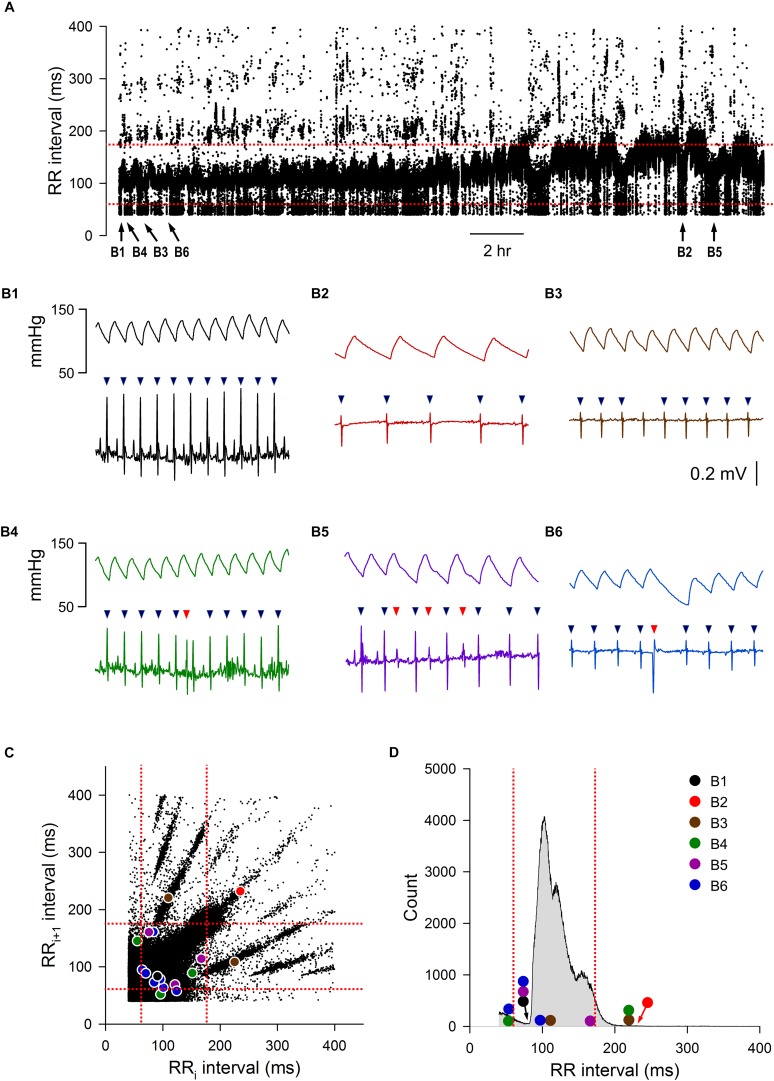
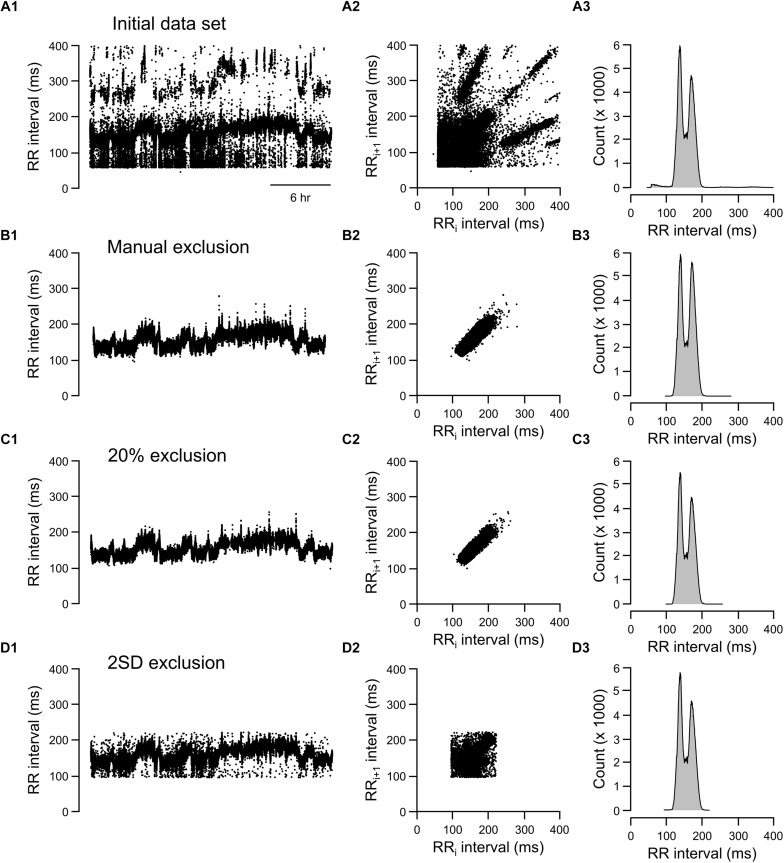
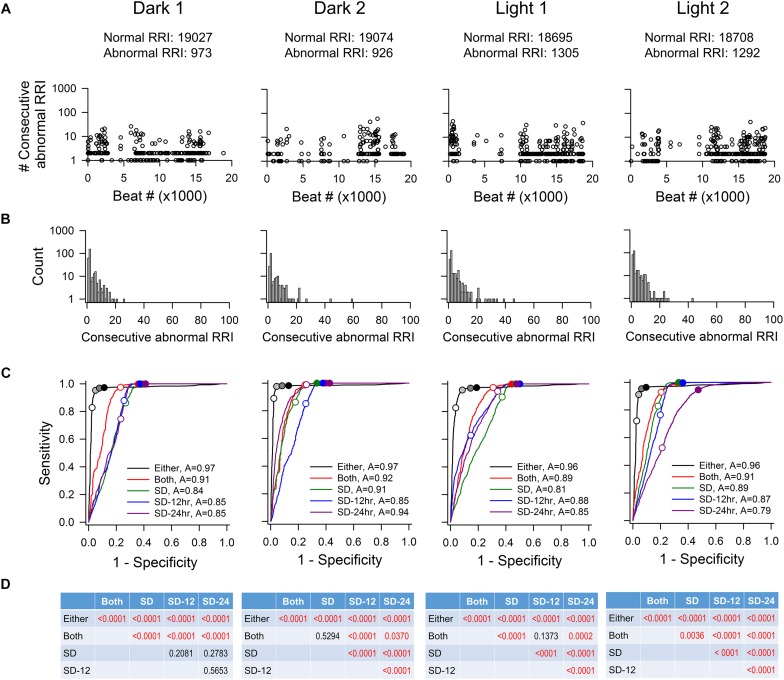
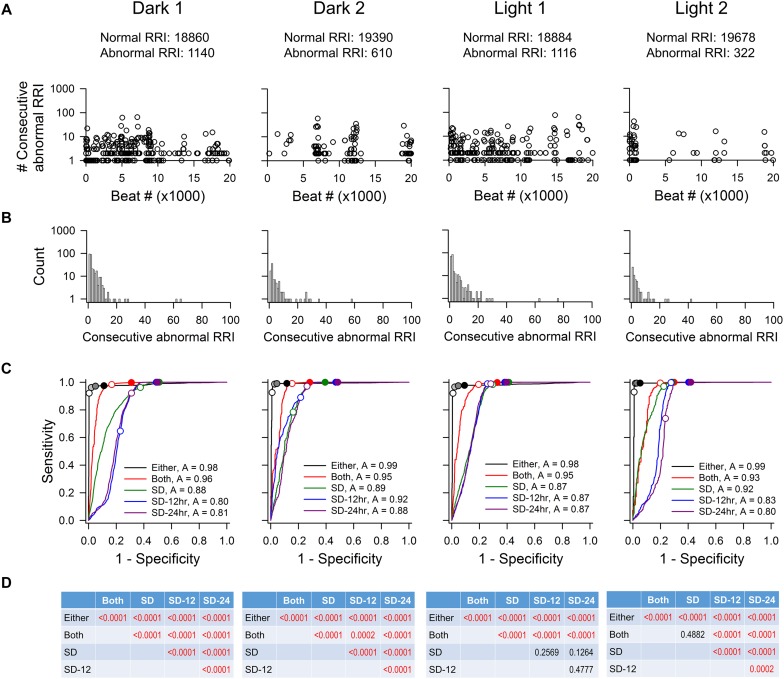
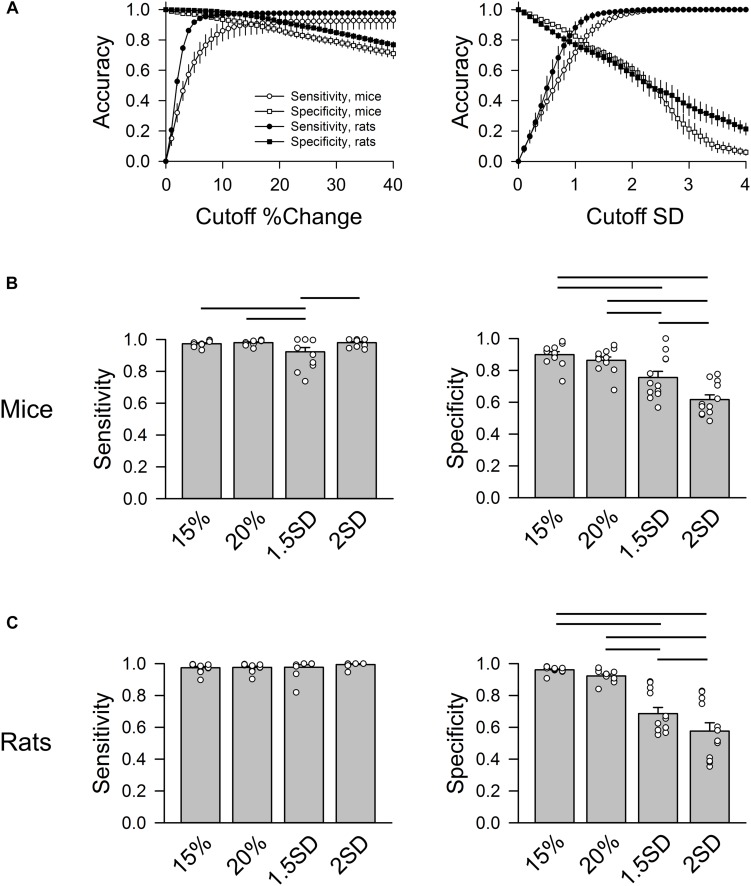
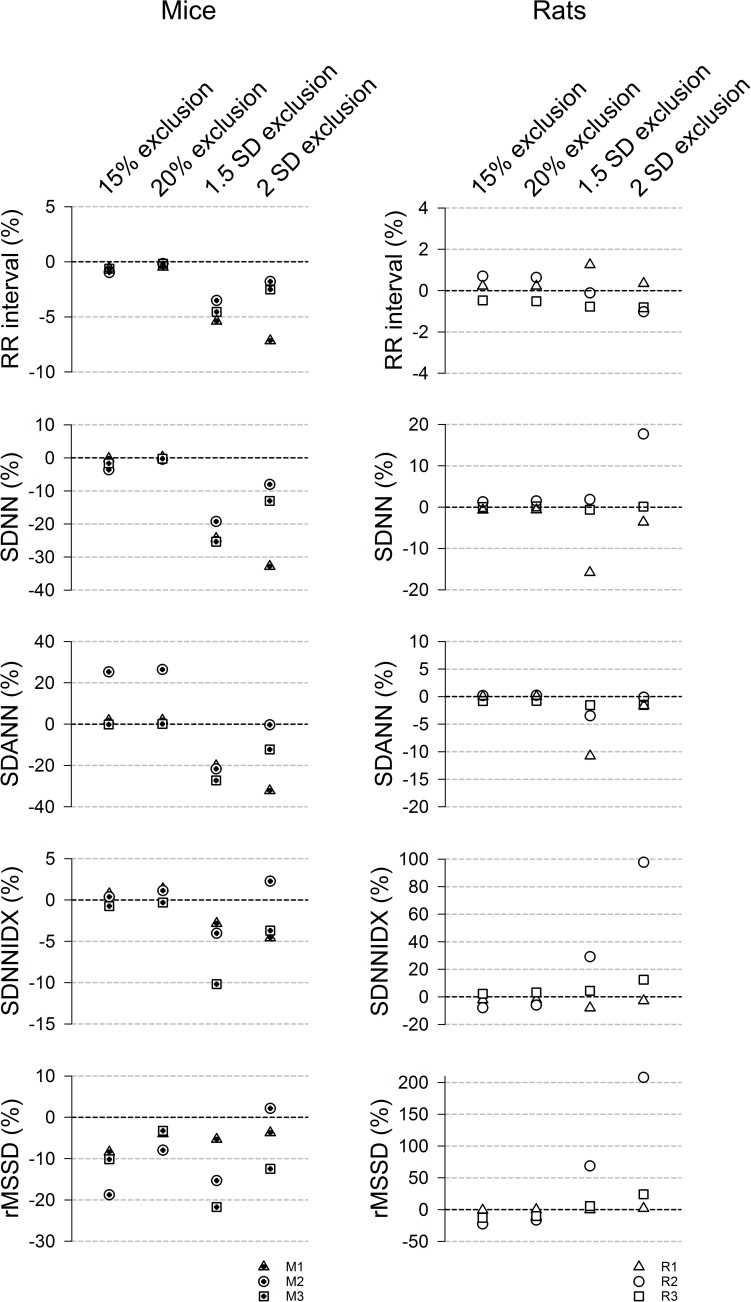
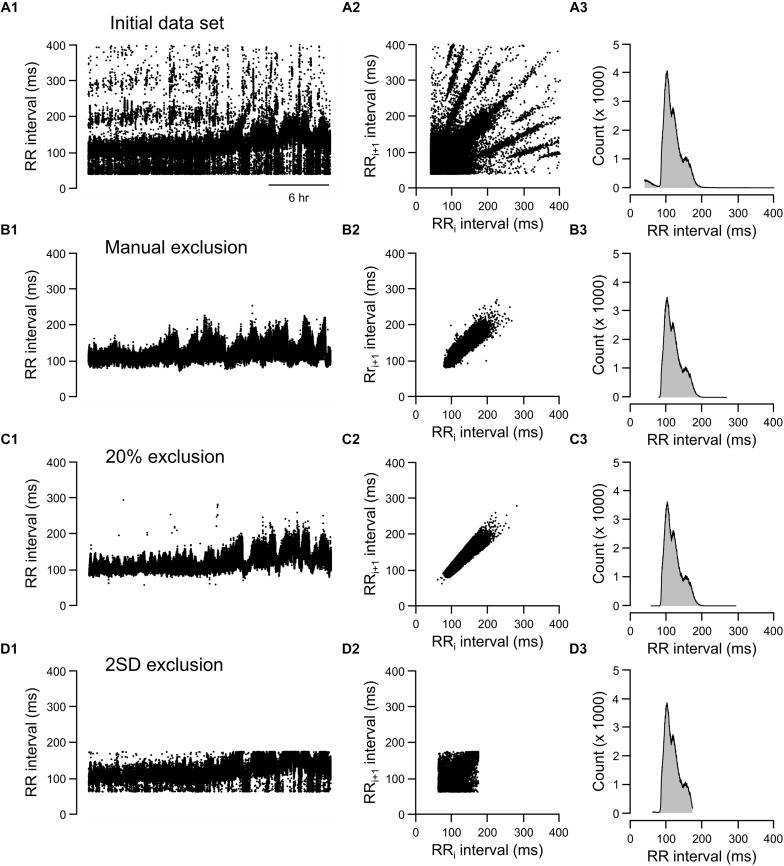
While epidemiological data support the link between reduced heart rate variability (HRV) and a multitude of pathologies, the mechanisms underlying changes in HRV and disease progression are poorly understood. Even though we have numerous rodent models of disease for mechanistic studies, not being able to reliably measure HRV in conscious, freely moving rodents has hindered our ability to extrapolate the role of HRV in the progression from normal physiology to pathology. The sheer number of heart beats per day (>800,000 in mice) makes data exclusion both time consuming and daunting. We sought to evaluate an RR interval exclusion method based on percent (%) change of adjacent RR intervals. Two approaches were evaluated: % change from "either" and "both" adjacent RR intervals. The data exclusion method based on standard deviation (SD) was also evaluated for comparison. Receiver operating characteristic (ROC) curves were generated to determine the performance of each method. Results showed that exclusion based on % change from "either" adjacent RR intervals was the most accurate method in identifying normal and abnormal RR intervals, with an overall accuracy of 0.92-0.99. As the exclusion value increased (% change or SD), the sensitivity (correctly including normal RR intervals) increased exponentially while the specificity (correctly rejecting abnormal RR intervals) decreased linearly. Compared to the SD method, the "either" approach had a steeper rise in sensitivity and a more gradual decrease in specificity. The intersection of sensitivity and specificity where the exclusion criterion had the same accuracy in identifying normal and abnormal RR intervals was 10-20% change for the "either" approach and ∼ 1 SD for the SD-based exclusion method. Graphically (tachogram and Lorenz plot), 20% change from either adjacent RR interval resembled the data after manual exclusion. Finally, overall (SDNN) and short-term (rMSSD) indices of HRV generated using 20% change from "either" adjacent RR intervals as the exclusion criterion were closer to the manual exclusion method with lower subject-to-subject variability than those generated using the 2 SD exclusion criterion. Thus, 20% change from "either" adjacent RR intervals is a good criterion for data exclusion for reliable 24-h time domain HRV analysis in rodents.
虽然流行病学数据支持心率变异性(HRV)降低与多种病理状况之间的联系,但HRV变化和疾病进展背后的机制仍知之甚少。尽管我们有众多用于机制研究的疾病啮齿动物模型,但无法在清醒、自由活动的啮齿动物中可靠地测量HRV,这阻碍了我们推断HRV在从正常生理到病理进展过程中作用的能力。每天心跳次数众多(小鼠超过800,000次)使得数据排除既耗时又艰巨。我们试图评估一种基于相邻RR间期百分比(%)变化的RR间期排除方法。评估了两种方法:来自“任一”和“两者”相邻RR间期的%变化。还评估了基于标准差(SD)的数据排除方法以作比较。生成了受试者工作特征(ROC)曲线来确定每种方法的性能。结果表明,基于来自“任一”相邻RR间期%变化的排除是识别正常和异常RR间期最准确的方法,总体准确率为0.92 - 0.99。随着排除值增加(%变化或SD),敏感性(正确纳入正常RR间期)呈指数增加,而特异性(正确排除异常RR间期)呈线性下降。与SD方法相比,“任一”方法的敏感性上升更陡峭,特异性下降更平缓。在识别正常和异常RR间期时排除标准具有相同准确性的敏感性和特异性的交点,对于“任一”方法是10 - 20%变化,对于基于SD的排除方法约为1个SD。从图形上看(心动周期图和洛伦兹图),来自任一相邻RR间期20%的变化类似于手动排除后的数据。最后,使用来自“任一”相邻RR间期20%变化作为排除标准生成的HRV总体(SDNN)和短期(rMSSD)指标比使用2个SD排除标准生成的指标更接近手动排除方法,且个体间变异性更低。因此,来自“任一”相邻RR间期20%的变化是用于啮齿动物可靠的24小时时域HRV分析的数据排除的良好标准。