Chen Hongxia, Wang Bingwu, Geng Sisi, Arellano Consuelo, Chen Sixue, Qu Rongda
Department of Crop and Soil Sciences North Carolina State University Raleigh NC USA.
Yunnan Academy of Tobacco Agricultural Sciences Kunming China.
Plant Direct. 2018 Jan 25;2(1):e00036. doi: 10.1002/pld3.36. eCollection 2018 Jan.
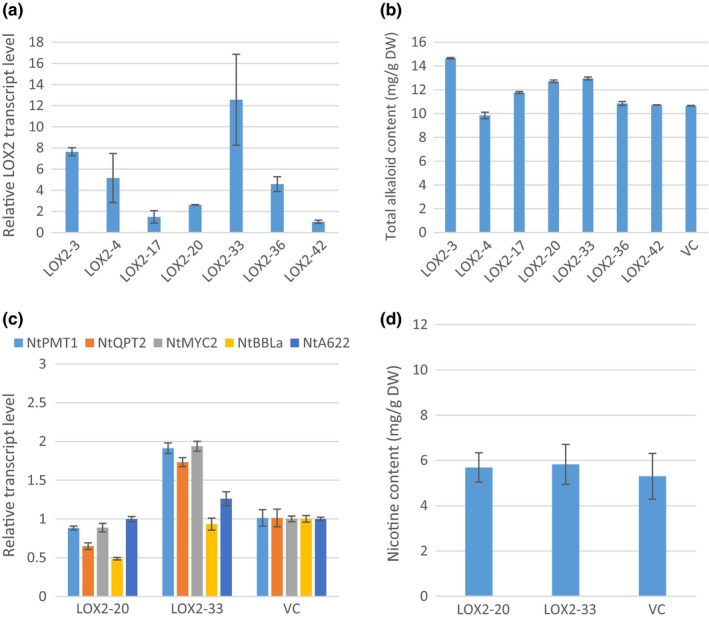
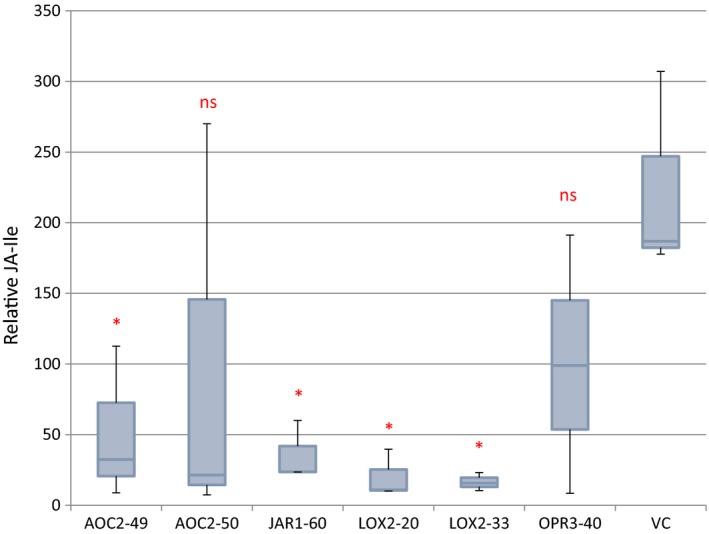
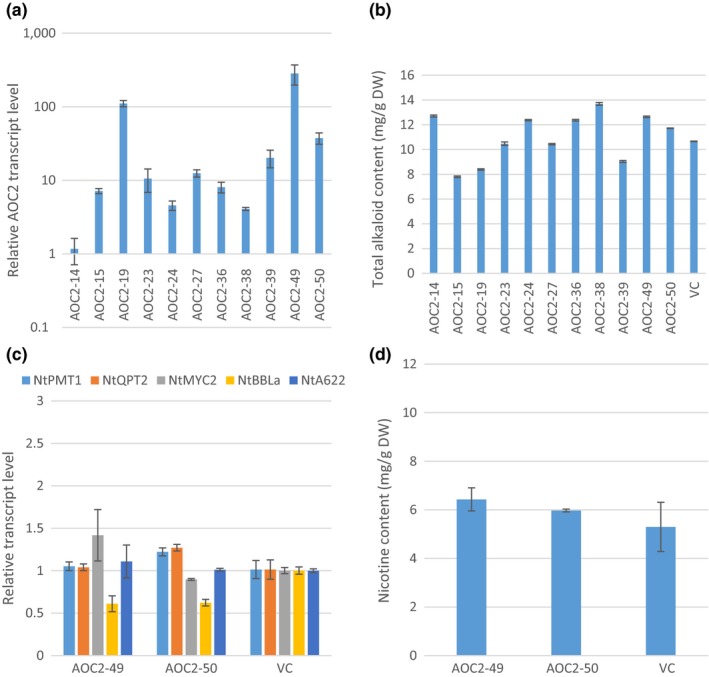
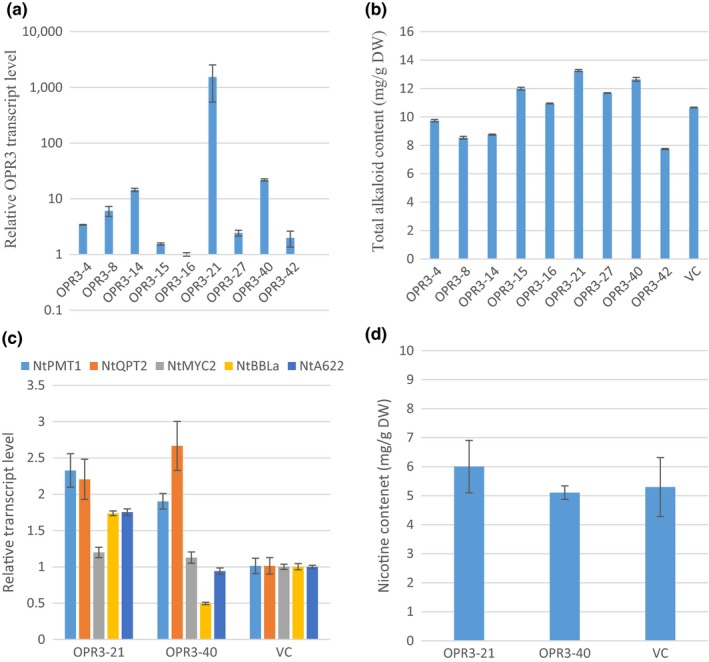
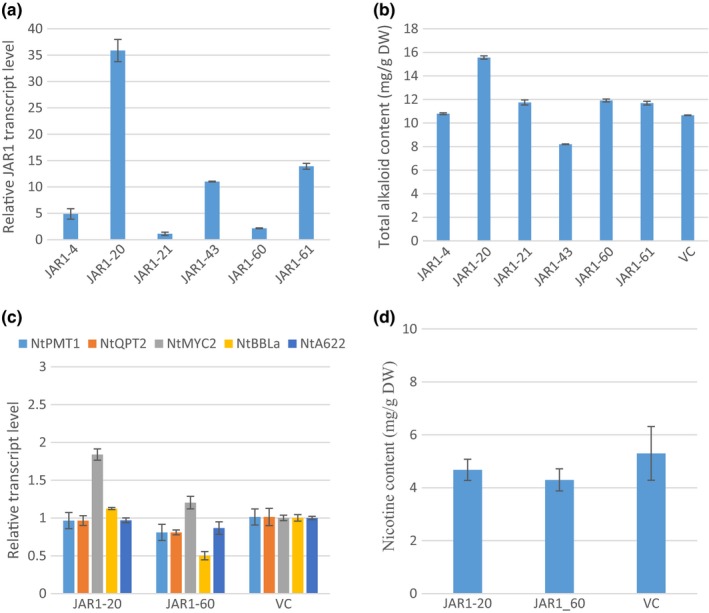
Nicotine is naturally synthesized in tobacco roots and accumulates in leaves as a defense compound against herbivory attack. Nicotine biosynthesis pathway has been extensively studied with major genes and enzymes being isolated and functionally characterized. However, the molecular regulation of nicotine synthesis has not been fully understood. The phytohormone jasmonic acid (JA) mediates many aspects of plant defense responses including nicotine biosynthesis. In this study, five key genes (, , , , ) involved in JA biosynthesis from were individually overexpressed, and a JA-Ile hydrolysis-related gene, , was suppressed by RNAi approach, to understand their effects on nicotine accumulation in tobacco. Interestingly, while transgene expression was high, levels of JA-Ile (the biologically active form of JA) were often significantly reduced. Meanwhile, nicotine content in these transgenic plants did not increase. The research revealed a tightly controlled JA signaling pathway and a complicated regulatory network for nicotine biosynthesis by JA signaling.
尼古丁在烟草根部自然合成,并作为一种抵御食草动物攻击的防御化合物在叶片中积累。尼古丁生物合成途径已得到广泛研究,主要基因和酶已被分离并进行了功能表征。然而,尼古丁合成的分子调控尚未完全了解。植物激素茉莉酸(JA)介导植物防御反应的许多方面,包括尼古丁生物合成。在本研究中,从[具体植物名称]中参与JA生物合成的五个关键基因([基因名称1]、[基因名称2]、[基因名称3]、[基因名称4]、[基因名称5])被分别过表达,并且一个与JA-Ile水解相关的基因[基因名称6]通过RNAi方法被抑制,以了解它们对烟草中尼古丁积累的影响。有趣的是,虽然转基因表达很高,但JA-Ile(JA的生物活性形式)的水平常常显著降低。与此同时,这些转基因植物中的尼古丁含量并未增加。该研究揭示了一个受严格控制的JA信号通路以及JA信号对尼古丁生物合成的复杂调控网络。