Department of Psychology, Social and Economic Cognition II, University of Cologne, Cologne, Germany.
PLoS One. 2019 Jun 27;14(6):e0219005. doi: 10.1371/journal.pone.0219005. eCollection 2019.
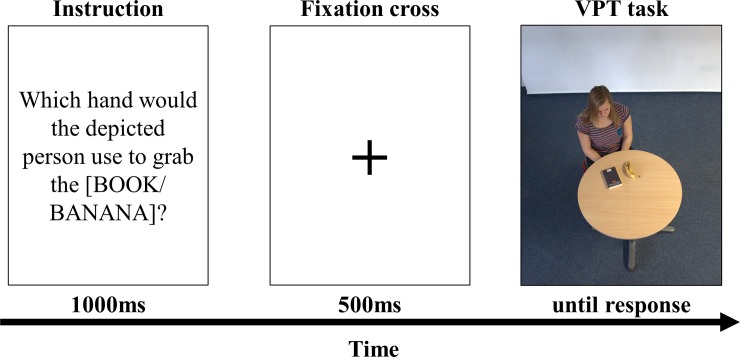
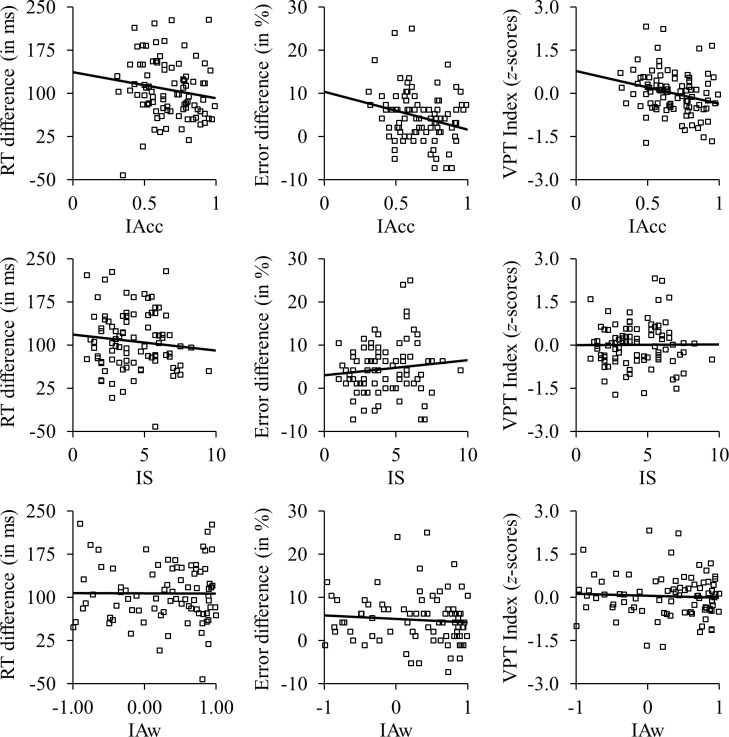
Level-2 visuo-spatial perspective-taking is an embodied process during which the perspective-taker mentally simulates a movement of his or her body into the location of the target. Evidence for the embodiment of this process so far exclusively stems from congruency effects in visuo-spatial perspective-taking experiments. Here, additional triangulation for the embodiment of this process is provided from an interindividual differences perspective. In a cross-sectional observational study, participants completed a behavioral level-2 visuo-spatial perspective-taking task and the heartbeat tracking task, which measures interoceptive accuracy and sensibility. Interoceptive accuracy is the objective ability to accurately perceive signals from within the body. In the present study, interoceptive accuracy was quantified by comparing the number of actual heartbeats observed via electrocardiographic recording to subjectively perceived heartbeats during that time. This measure was related to faster perspective-taking and better overall perspective-taking performance. Interoceptive sensibility refers to subjective beliefs about interoceptive abilities. Here, confidence in the estimated number of heartbeats served as a measure if interoceptive sensibility. Finally, the correspondence between interoceptive accuracy and sensibility is referred to as interoceptive awareness. Interoceptive sensibility and awareness were unrelated to perspective-taking. The study is a demonstration of the role interindividual differences in different facets of interoception play for embodied cognition. Implications for future research on links between embodied cognition and interoception are outlined and critically discussed.
二级视空间视角-taking 是一种具身过程,在此过程中,视角-taker 会在心理上模拟自己的身体向目标位置的移动。到目前为止,这一过程具身性的证据仅来自于视空间视角-taking 实验中的一致性效应。在这里,从个体间差异的角度为这一过程的具身性提供了额外的佐证。在一项横断面观察性研究中,参与者完成了一项行为层面的二级视空间视角-taking 任务和心跳跟踪任务,该任务测量了内感受准确性和敏感性。内感受准确性是准确感知来自身体内部信号的客观能力。在本研究中,内感受准确性通过将通过心电图记录观察到的实际心跳次数与同一时间内主观感知到的心跳次数进行比较来量化。这一衡量标准与更快的视角-taking 和更好的整体视角-taking 表现有关。内感受敏感性是指对自身内感受能力的主观信念。在这里,对估计心跳次数的信心可以作为内感受敏感性的衡量标准。最后,内感受准确性和敏感性之间的一致性被称为内感受意识。内感受敏感性和意识与视角-taking 无关。该研究展示了个体间不同内感受方面的差异在具身认知中的作用。概述并批判性地讨论了未来关于具身认知和内感受之间联系的研究的意义。