Department of Respiratory Medicine, the second affiliated hospital of Guangxi Medical University, Nanning, China.
Department of Intensive Care Unit, the second affiliated hospital of Guangxi Medical University, Nanning, China.
PLoS One. 2019 Jun 27;14(6):e0219081. doi: 10.1371/journal.pone.0219081. eCollection 2019.
The abnormal proliferation and migration of airway smooth muscle (ASM) cells contributes to airway remodeling during asthma. MiR-19a has been demonstrated to promote cell proliferation and angiogenesis of several cancer types by regulating the PTEN/PI3K/AKT pathway. Our previous study has shown that High-mobility group box protein 1 (HMGB1) is involved in the pathogenesis of airway remodeling using a mouse model of chronic asthma. However, the effects of HMGB1 on proliferation and migration of ASM cells and its underlying mechanisms remain unknown.
Human ASM cells were obtained by primary explant techniques. MiR-19a expression was evaluated using qRT-PCR. Cell proliferation and migration were evaluated by the CCK-8 and the transwell migration assays, respectively. Transfection studies of ASM cells were performed to identify the underlying mechanisms.
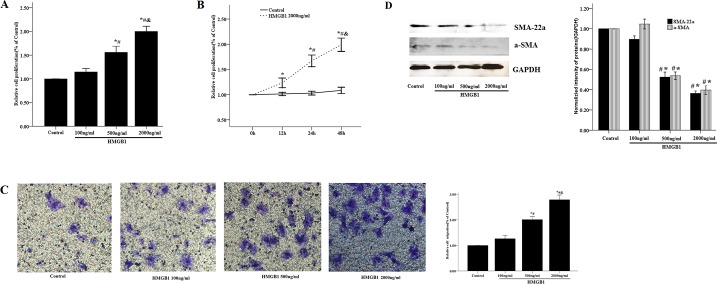
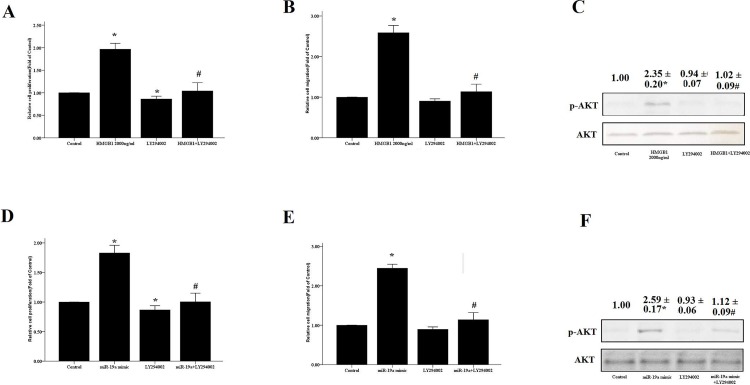
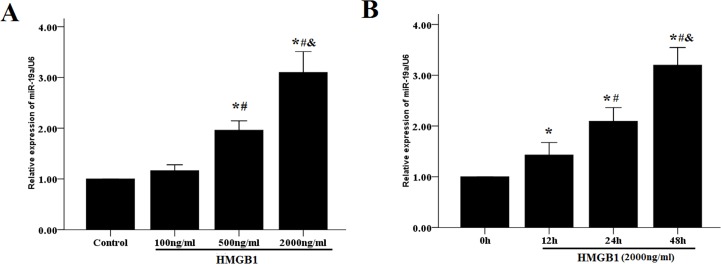
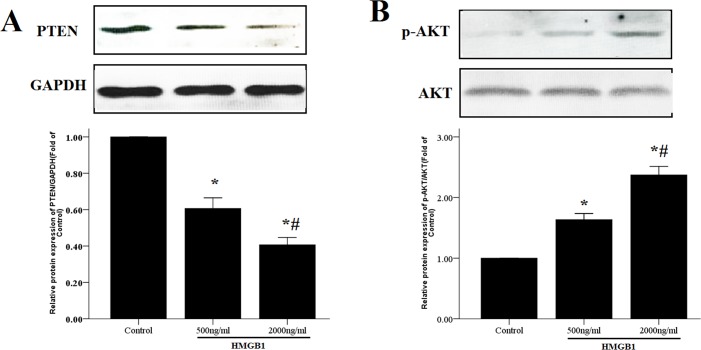
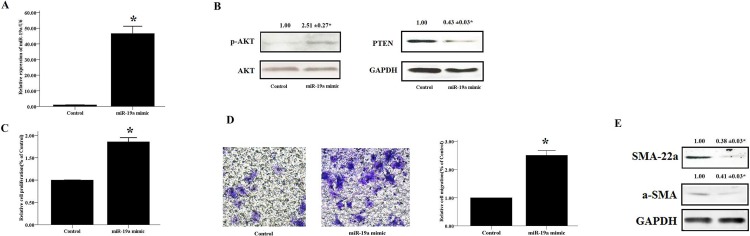
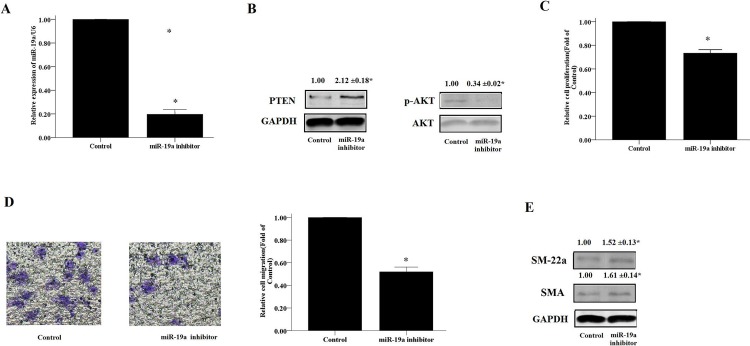
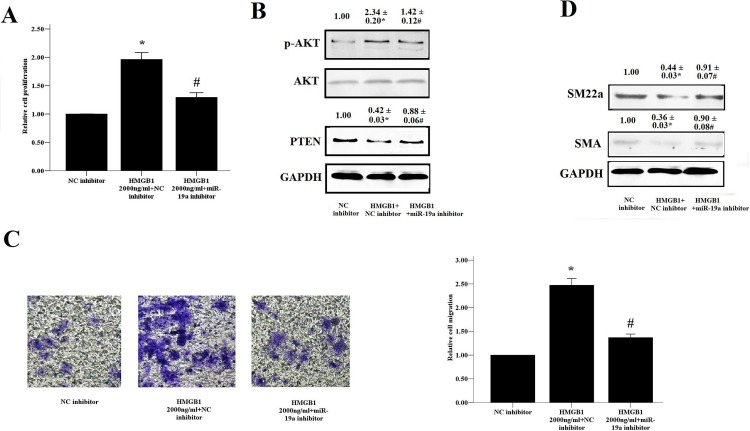
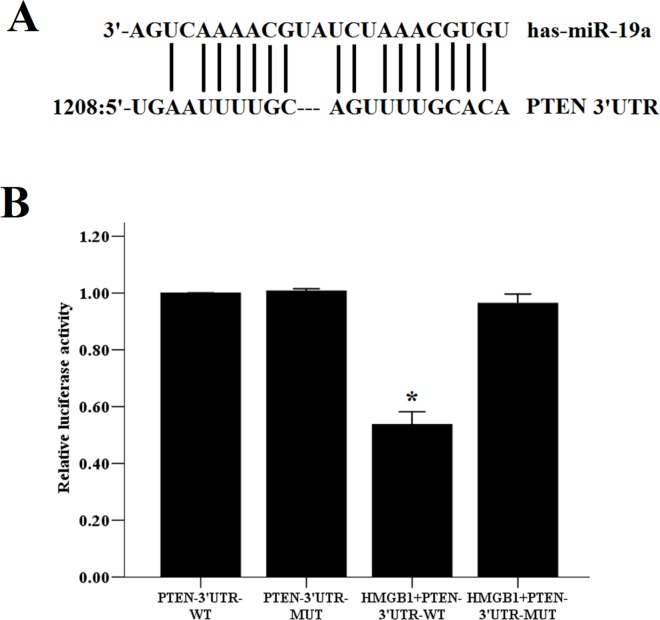
HMGB1 stimulated ASM cell proliferation and migration in a dose-dependent manner. The expression levels of miR-19a and the PTEN and AKT signaling proteins were also modulated by HMGB1. Functional studies indicated that overexpression of miR-19a enhanced the proliferation and migration of ASM cells, whereas inhibition of miR-19a decreased the proliferation and migration of ASM cells. Western blot analysis demonstrated that miR-19a negatively regulated PTEN expression and positively regulated p-AKT expression. MiR-19 only regulates the proliferation of HASM cells induced by HMGB1, but not PDGF, EGF, TGF-β1. Furthermore, we demonstrated that miR-19 contributed to the promoting effects of HMGB1 on ASM cells by targeting PTEN 3'-UTR.
Our results demonstrated that HMGB1 induced proliferation and migration of ASM cells via the miR-19a /PTEN/AKT axis and provided direct evidence on the role of HMGB1 in ASM cells proliferation in vitro. The present study further indicated that miR-19a may be explored as a potential novel therapeutic target to reverse proliferation and migration of ASM cells.
气道平滑肌(ASM)细胞的异常增殖和迁移导致哮喘期间气道重塑。miR-19a 已被证明通过调节 PTEN/PI3K/AKT 通路促进多种癌症类型的细胞增殖和血管生成。我们之前的研究表明,高迁移率族蛋白 B1(HMGB1)通过慢性哮喘小鼠模型参与气道重塑的发病机制。然而,HMGB1 对 ASM 细胞增殖和迁移的影响及其潜在机制尚不清楚。
采用原代培养技术获取人 ASM 细胞。使用 qRT-PCR 评估 miR-19a 的表达。通过 CCK-8 和 Transwell 迁移实验分别评估细胞增殖和迁移。进行 ASM 细胞的转染研究以确定潜在机制。
HMGB1 以剂量依赖的方式刺激 ASM 细胞增殖和迁移。miR-19a 和 PTEN 和 AKT 信号蛋白的表达水平也受到 HMGB1 的调节。功能研究表明,miR-19a 的过表达增强了 ASM 细胞的增殖和迁移,而 miR-19a 的抑制则降低了 ASM 细胞的增殖和迁移。Western blot 分析表明,miR-19a 负调控 PTEN 表达并正调控 p-AKT 表达。miR-19 仅调节 HMGB1 诱导的 HASM 细胞增殖,而不调节 PDGF、EGF、TGF-β1。此外,我们证明 miR-19 通过靶向 PTEN 3'-UTR 促进 HMGB1 对 ASM 细胞的促进作用。
我们的结果表明,HMGB1 通过 miR-19a/PTEN/AKT 轴诱导 ASM 细胞增殖和迁移,并提供了 HMGB1 在体外促进 ASM 细胞增殖中的作用的直接证据。本研究进一步表明,miR-19a 可能作为一种潜在的新型治疗靶点,用于逆转 ASM 细胞的增殖和迁移。