Dr. Rolf M. Schwiete Research Unit for Osteoarthritis, Orthopedic University Hospital Friedrichsheim gGmbH, 60528 Frankfurt/Main, Germany.
Laboratory of Experimental Rheumatology and Neuroendocrine Immunology, Department of Internal Medicine, University Hospital Regensburg, 93053 Regensburg, Germany.
Int J Mol Sci. 2019 Jun 26;20(13):3127. doi: 10.3390/ijms20133127.
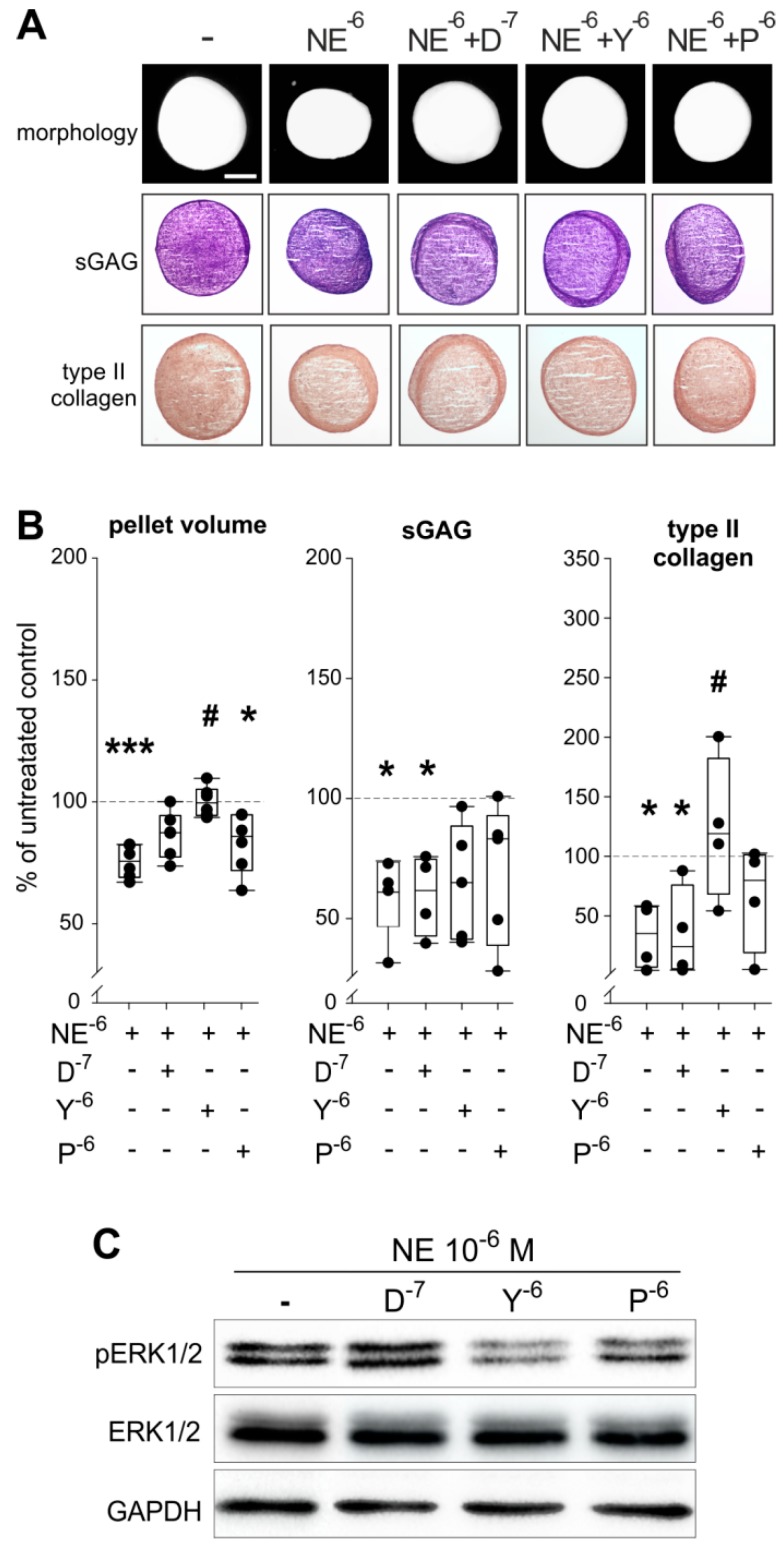
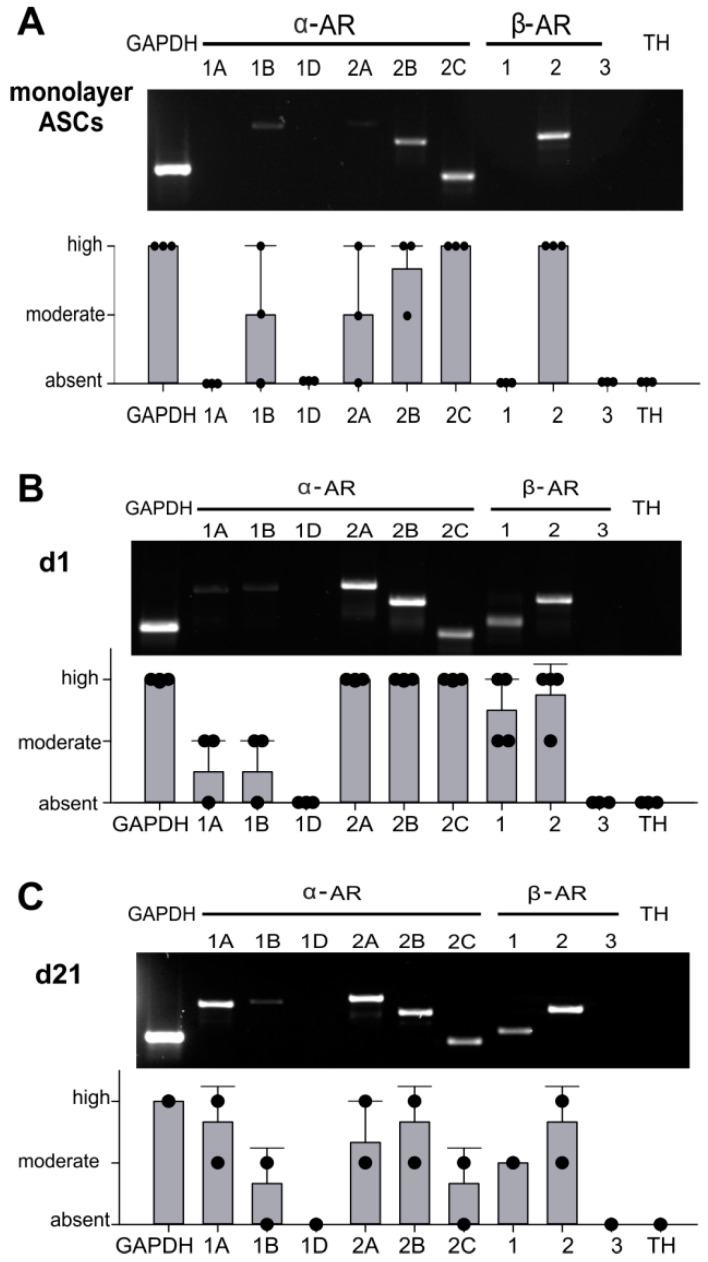
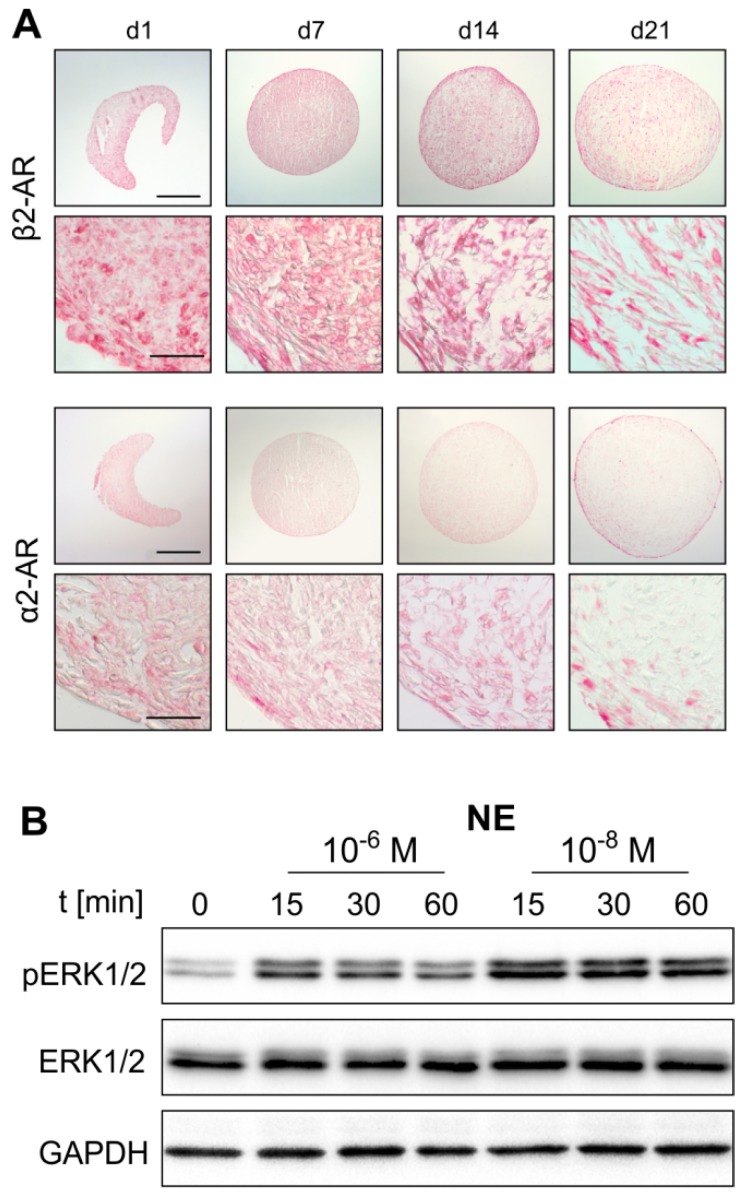
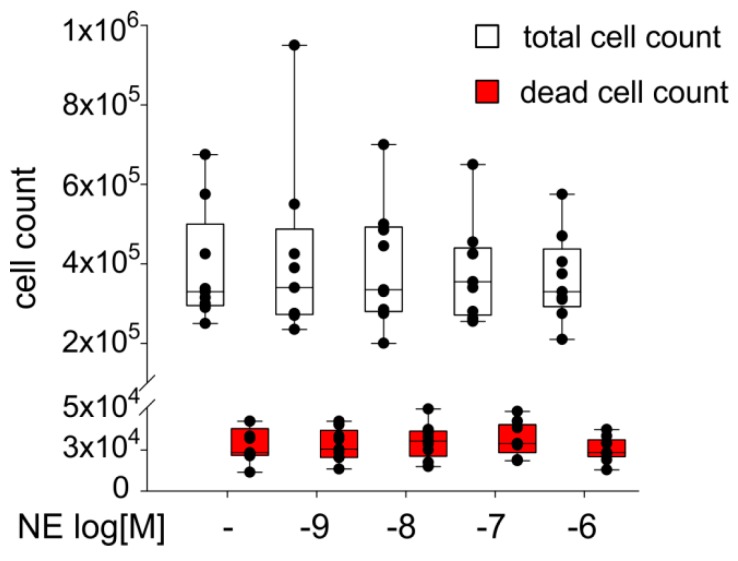
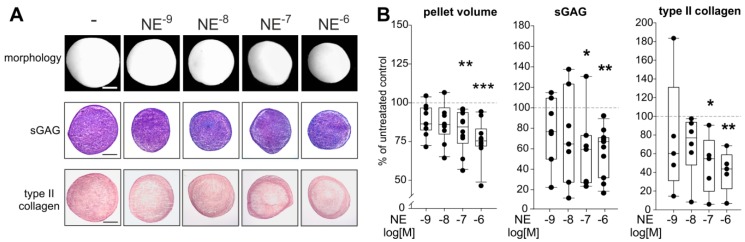
In recent years, first evidences emerged that sympathetic neurotransmitters influence osteoarthritis (OA) manifestation. Joint-resident stem cells might contribute to cartilage repair, however, their chondrogenic function is reduced. The neurotransmitter norepinephrine (NE) was detected in the synovial fluid of trauma and OA patients. Therefore, the aim of this study was to analyse how NE influences the chondrogenesis of synovial adipose tissue-derived stem cells (sASCs). sASCs were isolated from knee-OA patients synovia. After adrenoceptor (AR) expression analysis, proliferation and chondrogenic differentiation in presence of NE and/or α- and β-AR antagonist were investigated. Cell count, viability, chondrogenic and hypertophic gene expression, sulfated glycosaminoglycan (sGAG) and type II collagen content were determined. Key AR-dependent signaling (ERK1/2, PKA) was analyzed via western blot. sASC expressed α1A-, α1B-, α2A-, α2B-, α2C-, and β2-AR in monolayer and pellet culture. NE did not affect proliferation and viability, but 10 and 10 M NE significantly reduced sGAG and type II collagen content as well as ERK1/2 phosphorylation. These effects were fully reversed by yohimbine (α2-AR antagonist). Our study confirms the important role of NE in sASC chondrogenic function and provides new insights in OA pathophysiology. Future studies might help to develop novel therapeutic options targeting neuroendocrine pathways for OA treatment.
近年来,有初步证据表明交感神经递质会影响骨关节炎(OA)的表现。关节驻留的干细胞可能有助于软骨修复,但它们的软骨形成功能会降低。神经递质去甲肾上腺素(NE)已在创伤和 OA 患者的滑液中被检测到。因此,本研究旨在分析 NE 如何影响滑膜脂肪组织来源的干细胞(sASCs)的软骨形成。sASCs 从膝部 OA 患者的滑膜中分离出来。在分析肾上腺素能受体(AR)表达后,研究了 NE 以及 α-和 β-AR 拮抗剂存在时对 sASC 的增殖和软骨分化的影响。通过细胞计数、活力、软骨形成和肥大基因表达、硫酸化糖胺聚糖(sGAG)和 II 型胶原蛋白含量来确定。通过 Western blot 分析关键的 AR 依赖性信号(ERK1/2、PKA)。sASC 在单层和微球体培养中表达 α1A-、α1B-、α2A-、α2B-、α2C-和 β2-AR。NE 不影响增殖和活力,但 10 和 10 M NE 显著降低 sGAG 和 II 型胶原蛋白含量以及 ERK1/2 磷酸化。育亨宾(α2-AR 拮抗剂)完全逆转了这些作用。本研究证实了 NE 在 sASC 软骨形成功能中的重要作用,并为 OA 病理生理学提供了新的见解。未来的研究可能有助于开发针对 OA 治疗的神经内分泌途径的新型治疗选择。