Translational Medicine Center, Hong Hui Hospital, Xi'an Jiaotong University, Xi'an, 710054, China.
Department of Spine Surgery, Hong Hui Hospital, Xi'an Jiaotong University, Xi'an, 710054, China.
Stem Cell Res Ther. 2019 Jun 27;10(1):195. doi: 10.1186/s13287-019-1294-x.
Recent progress in the induced generation of dopaminergic (DA) neurons from different types of stem cells or reprogrammed somatic cells holds tremendous potential for the treatment of Parkinson's disease (PD). However, the lack of a reliable source for cell replacement therapy remains a major limitation in the treatment of human neurological disorders. Additionally, the current protocols for in vitro differentiation or cell reprogramming to generate human DA neurons are laborious, time-consuming, and expensive, and efficient conversion of human spermatogonial stem cells (hSSCs) to functional DA neurons has not yet been achieved.
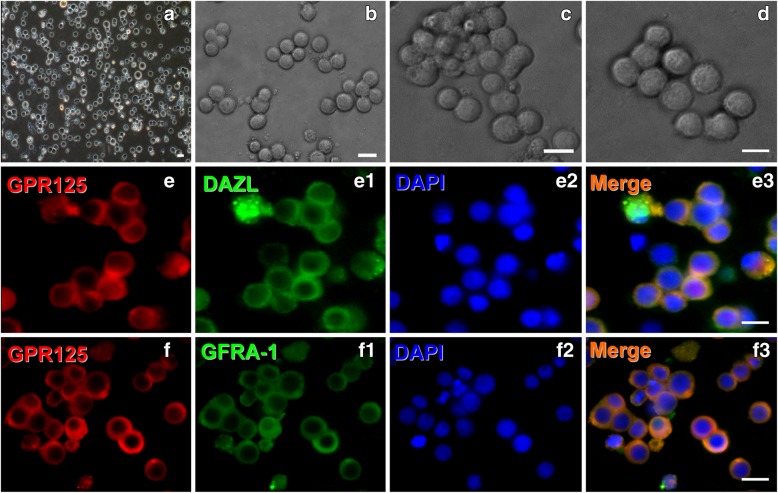
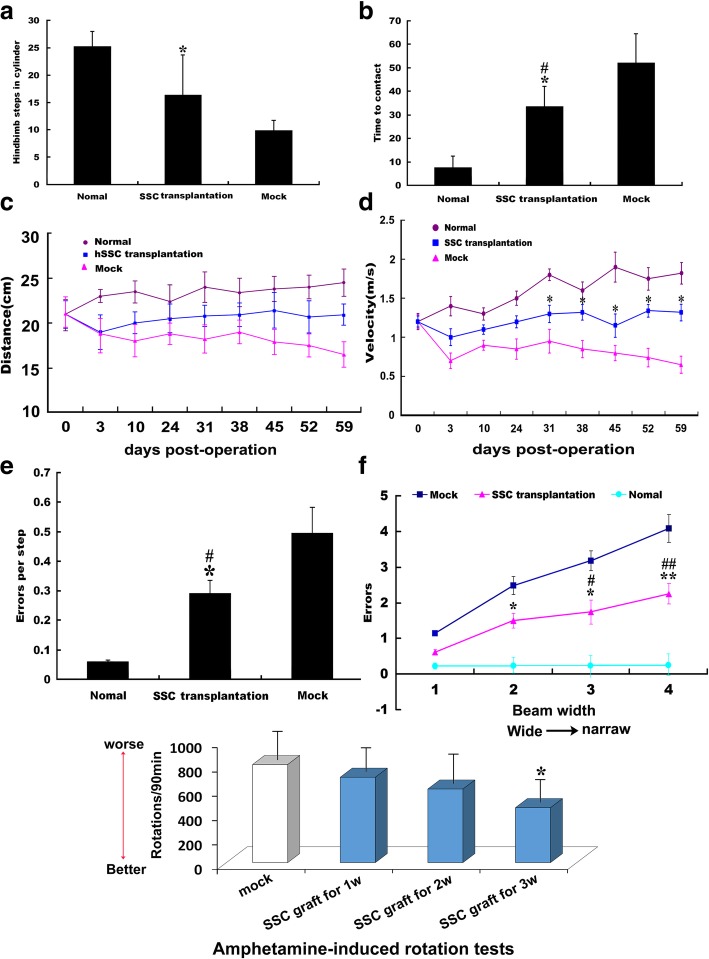
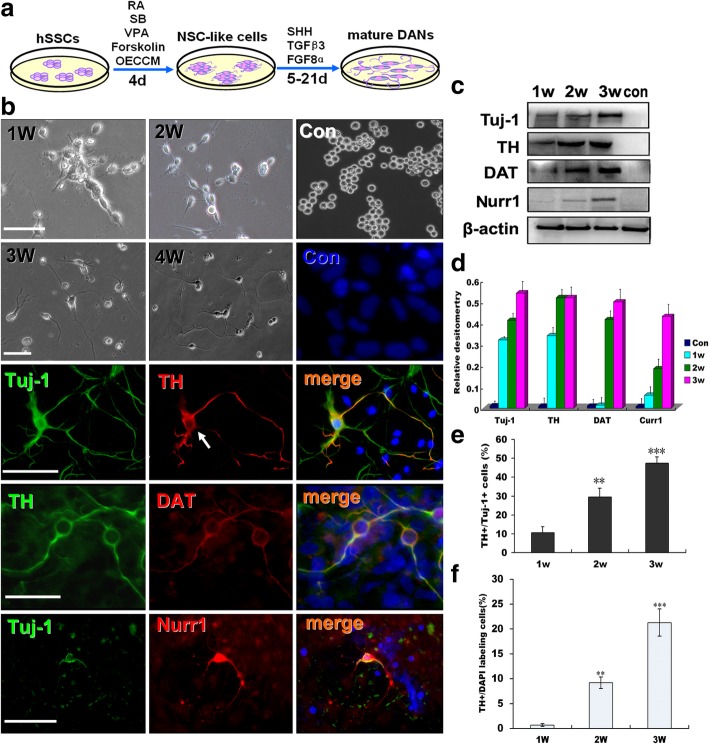
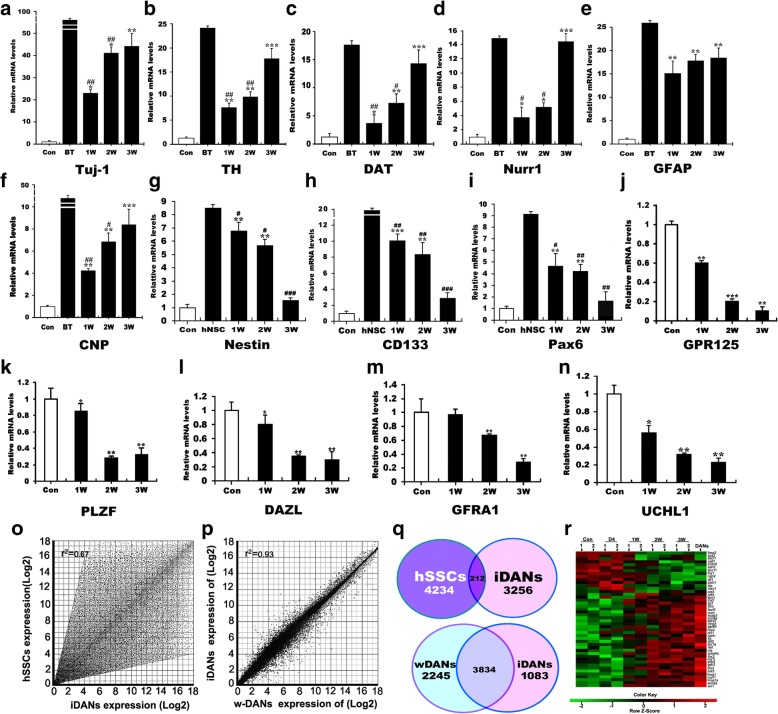
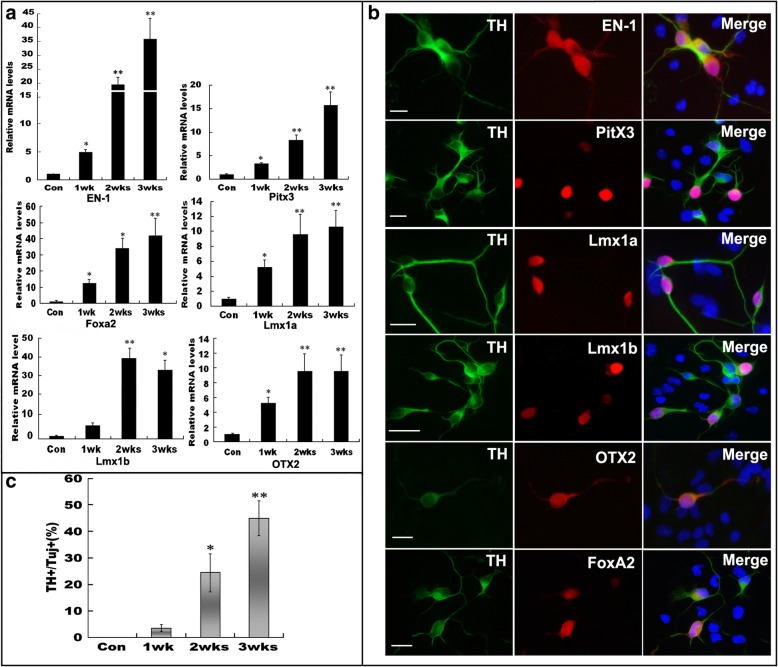
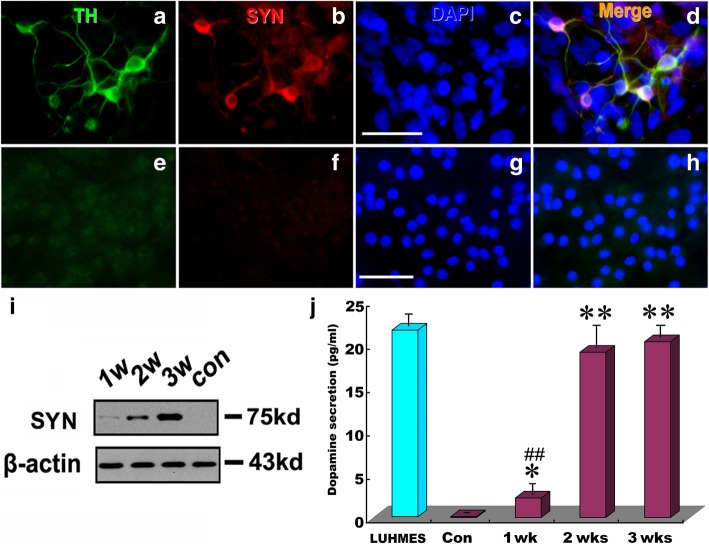
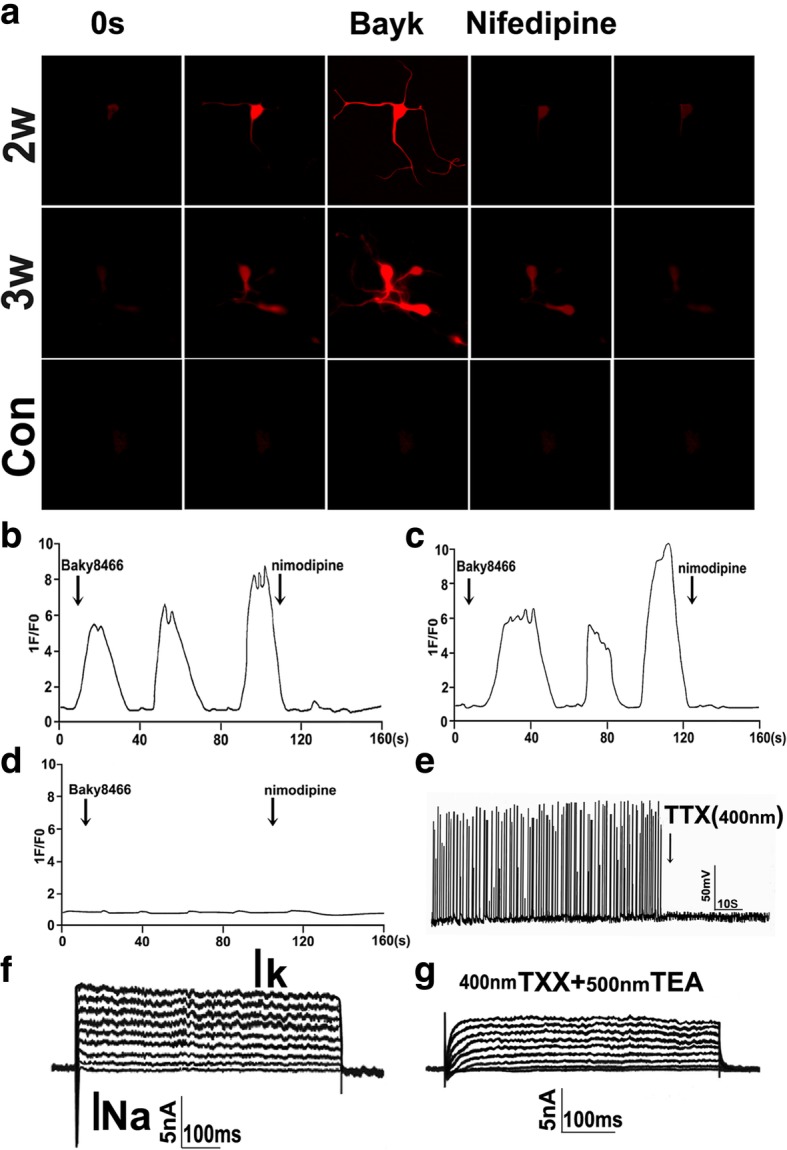
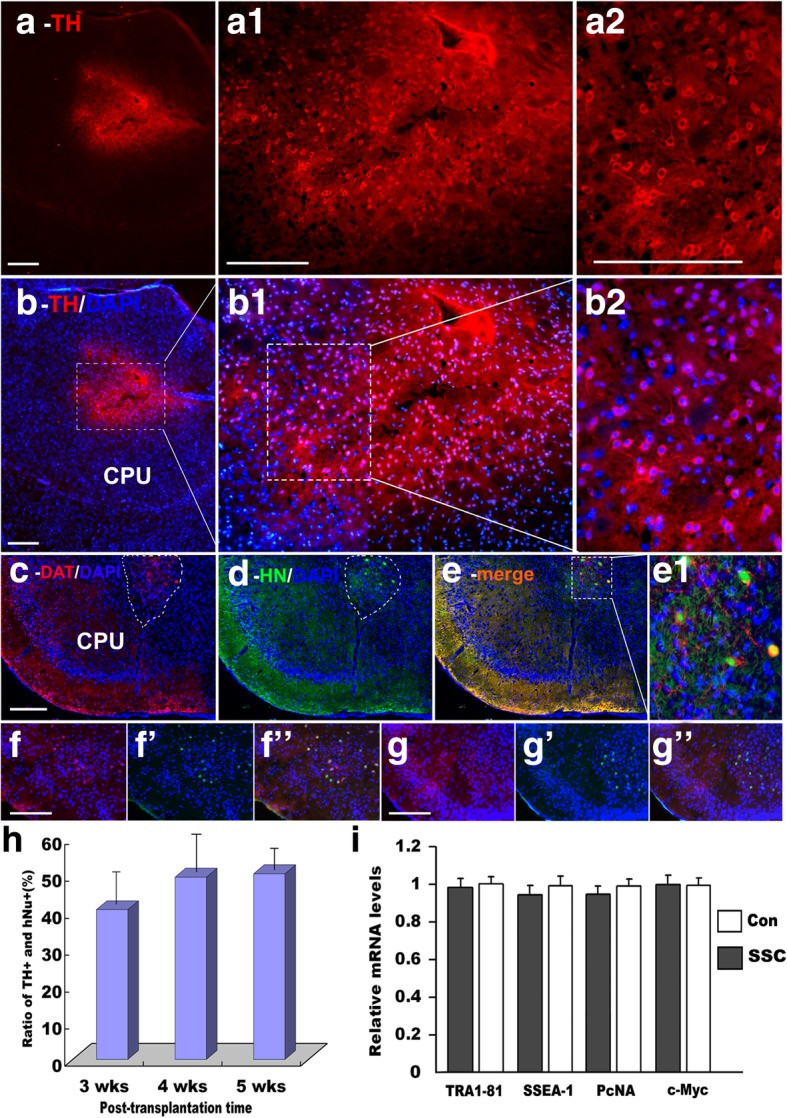
Primary hSSCs from testicular tissues of patients were exposed to an improved induction system, which consisted mainly of olfactory ensheathing cell conditioned culture medium (OECCM) and a set of defined cell-extrinsic factors and small molecules. Morphological changes were assessed, along with the expression of various DA neuron phenotypic markers (e.g., Tuj-1, TH, Nurr1, DAT) and several critical pro-DA neurogenesis effectors (e.g., EN-1, Pitx3, Foxa2, Lmx1a, Lmx1b, and OTX2). In addition, transcriptome analysis was used to further evaluate the genetic similarity between the artificially differentiated DA neurons and genuine ones. Concomitantly, the functional properties of converted DA neurons including synapse formation, dopamine release, electrophysiological activity, and neuron-specific Ca signaling images were determined. Finally, hSSCs in the early stage of induction were evaluated for survival, differentiation, migration, tumorigenicity in the mouse striatum, and improvement of functional deficits in MPTP-induced PD animals.
The hSSC-derived neurons not only acquired neuronal morphological features but also expressed various phenotypic genes and protein characteristic of DA neurons and several effectors critical for pro-DA neurogenesis. Strikingly, as the period of induction was prolonged, expression of the critical molecules for DA neuron epigenetic status gradually increased while hSSC-specific markers sharply decreased. After 3 weeks of induction, the transdifferentiation efficiency reached 21%. In addition, hierarchical clustering analysis showed that the differentiated DA neurons closely resembled genuine ones. Furthermore, the hSSC-derived neurons gained sophisticated functional properties of wild-type DA neurons, and pro-induced hSSCs efficiently survived, migrated, and differentiated into DA neurons without tumorigenesis after transplantation into mouse striatum, leading to improvement of functional deficits in PD animals.
The results showed that, using the present improved straightforward approach, hSSCs could acquire DA neuron morphological features and functional properties and rescue parkinsonian phenotypes. Our strategy for the conversion of hSSCs into DA neurons is very efficient and thus may provide an alternative approach suitable for clinical cell therapy to treat neurodegenerative diseases including PD.
近年来,从不同类型的干细胞或重编程的体细胞中诱导产生多巴胺能(DA)神经元的研究取得了进展,这为帕金森病(PD)的治疗带来了巨大的潜力。然而,用于细胞替代治疗的可靠来源仍然是治疗人类神经疾病的主要限制因素。此外,目前用于体外分化或细胞重编程以产生人类 DA 神经元的方案繁琐、耗时且昂贵,并且尚未实现高效地将人类精原干细胞(hSSC)转化为功能性 DA 神经元。
从患者睾丸组织中分离的原代 hSSC 暴露于改良的诱导系统中,该系统主要由嗅鞘细胞条件培养基(OECCM)和一组定义的细胞外因子和小分子组成。评估了形态变化,以及各种 DA 神经元表型标志物(例如 Tuj-1、TH、Nurr1、DAT)和几个关键的促 DA 神经发生效应物(例如,EN-1、Pitx3、Foxa2、Lmx1a、Lmx1b 和 OTX2)的表达。此外,还进行了转录组分析以进一步评估人工分化的 DA 神经元与真正的 DA 神经元之间的遗传相似性。同时,确定了转化的 DA 神经元的功能特性,包括突触形成、多巴胺释放、电生理活性和神经元特异性 Ca 信号成像。最后,评估了诱导早期 hSSC 的存活、分化、迁移、在小鼠纹状体中的致瘤性以及改善 MPTP 诱导的 PD 动物的功能缺陷。
hSSC 衍生的神经元不仅获得了神经元形态特征,而且还表达了各种表型基因和 DA 神经元的特征蛋白以及几个对 DA 神经发生至关重要的效应物。引人注目的是,随着诱导时间的延长,DA 神经元表观遗传状态的关键分子的表达逐渐增加,而 hSSC 特异性标志物急剧减少。诱导 3 周后,转分化效率达到 21%。此外,层次聚类分析表明,分化的 DA 神经元与真正的 DA 神经元非常相似。此外,hSSC 衍生的神经元获得了野生型 DA 神经元的复杂功能特性,并且在移植到小鼠纹状体后,诱导的 hSSC 能够有效地存活、迁移和分化为 DA 神经元,而不会发生肿瘤形成,从而改善了 PD 动物的功能缺陷。
结果表明,使用本研究中改进的简单方法,hSSC 可以获得 DA 神经元的形态特征和功能特性,并挽救帕金森病表型。我们将 hSSC 转化为 DA 神经元的策略非常有效,因此可能为治疗包括 PD 在内的神经退行性疾病的临床细胞治疗提供一种替代方法。