Anello Melina, Fernández Estefanía, Daverio María Silvana, Vidal-Rioja Lidia, Di Rocco Florencia
Laboratorio de Genética Molecular, Instituto Multidisciplinario de Biología Celular, CONICET-UNLP-CIC, La Plata, Argentina.
Cátedra de Biología, Departamento de Ciencias Biológicas, Facultad de Ciencias Exactas, Universidad Nacional de La Plata, La Plata, Argentina.
Front Genet. 2019 Jun 12;10:568. doi: 10.3389/fgene.2019.00568. eCollection 2019.
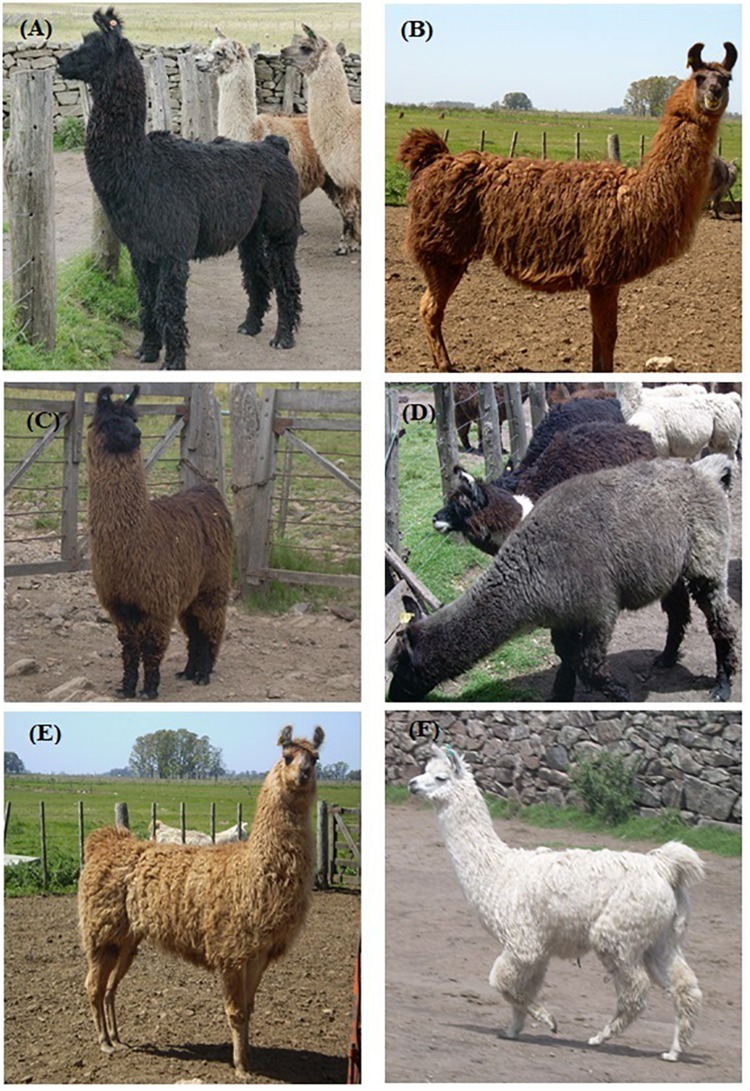
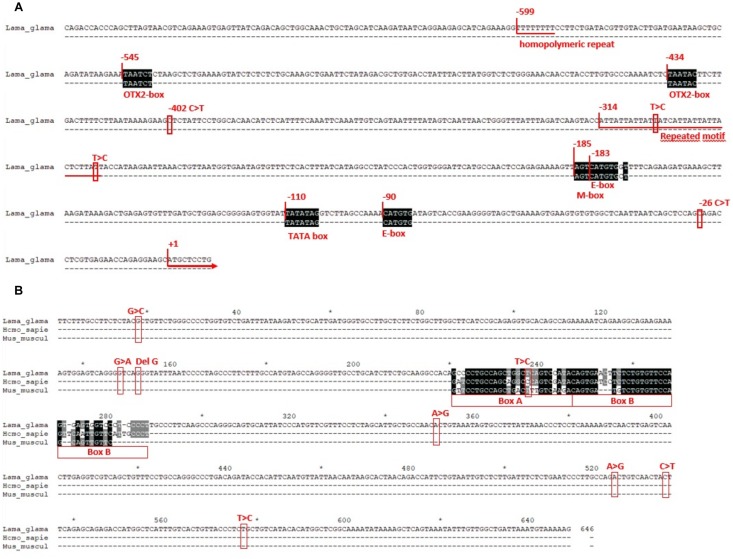
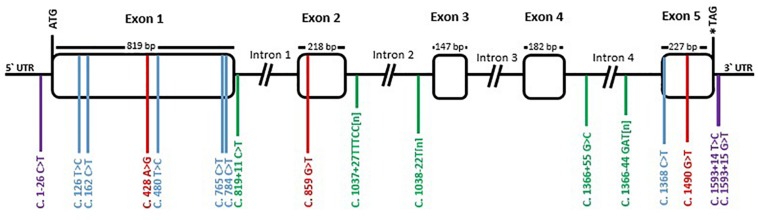
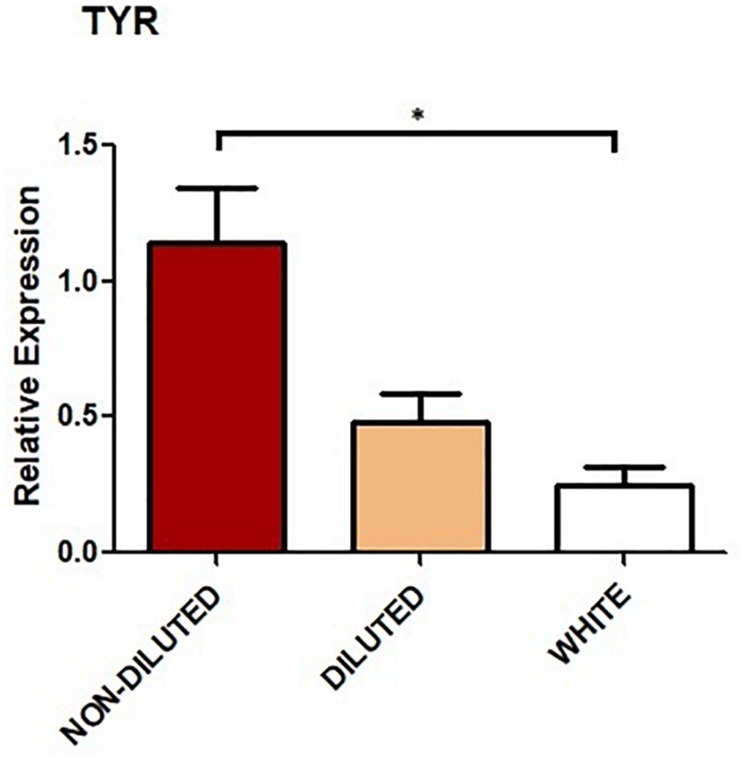
Tyrosinase, encoded by gene, is an enzyme that plays a major role in mammalian pigmentation. It catalyzes the oxidation of L-dihydroxy-phenylalanine (DOPA) to DOPA quinone, a precursor of both types of melanin: eumelanin and pheomelanin. is commonly known as the locus since mutations in this gene result in albinism in several species. However, many other mutations have been found to cause diluted phenotypes, like the Himalayan or chinchilla phenotypes in mice. The llama () presents a wide variety of coat colors ranging from non-diluted phenotypes (eumelanic and pheomelanic), through different degrees of dilution, to white. To investigate the possible contribution of gene to coat color variation in llamas, we sequenced exons and their flanking regions and genotyped animals with diluted, non-diluted, and white coat, including three blue-eyed white individuals. Moreover, we analyzed mRNA expression levels in skin biopsies by qPCR. coding region presented nine SNPs, of which three were non-synonymous, c.428A > G, c.859G > T, and c.1490G > T. We also identified seven polymorphisms in non-coding regions, including two microsatellites, an homopolymeric repeat, and five SNPs: one in the promoter region (c.1-26C > T), two in the 3'-UTR, and two flanking the exons. Although no complete association was found between coat color and SNPs, c.1-26C > T was partially associated to diluted phenotypes. Additionally, the frequency of the G allele from c.428A > G was significantly higher in white compared to non-diluted. Results from qPCR showed that expression levels of TYR in white llamas were significantly lower ( < 0.05) than those in diluted and non-diluted phenotypes. Screening for variation in regulatory regions of TYR did not reveal polymorphisms that explain such differences. However, data from this study showed that TYR expression levels play a role in llama pigmentation.
由该基因编码的酪氨酸酶是一种在哺乳动物色素沉着中起主要作用的酶。它催化L - 二羟基苯丙氨酸(多巴)氧化为多巴醌,多巴醌是两种黑色素(真黑素和褐黑素)的前体。由于该基因的突变会导致多个物种出现白化病,所以它通常被称为白化病基因座。然而,人们还发现许多其他该基因的突变会导致毛色变浅的表型,比如小鼠中的喜马拉雅或青紫蓝表型。美洲驼呈现出多种多样的毛色,从非稀释表型(真黑素和褐黑素),经过不同程度的稀释,到白色。为了研究该基因对美洲驼毛色变异的可能贡献,我们对该基因的外显子及其侧翼区域进行了测序,并对毛色稀释、非稀释和白色的动物进行了基因分型,其中包括三只蓝眼白色个体。此外,我们通过定量聚合酶链反应分析了皮肤活检样本中的mRNA表达水平。该基因的编码区有九个单核苷酸多态性(SNP),其中三个是非同义突变,分别为c.428A > G、c.859G > T和c.1490G > T。我们还在非编码区鉴定出七个多态性,包括两个微卫星、一个同聚物重复序列和五个SNP:一个在启动子区域(c.1 - 26C > T),两个在3'非翻译区,两个在外显子侧翼。虽然未发现毛色与SNP之间存在完全关联,但c.1 - 26C > T与稀释表型部分相关。此外,与非稀释毛色相比,白色美洲驼中c.428A > G的G等位基因频率显著更高。定量聚合酶链反应的结果表明,白色美洲驼中TYR的表达水平显著低于稀释和非稀释表型(P < 0.05)。对TYR调控区变异的筛查未发现能解释这种差异的多态性。然而,本研究的数据表明TYR表达水平在美洲驼色素沉着中发挥作用。