
芒果苷通过 MAPK/Nrf-2/HO-1/NF-B 和 减轻心肌缺血再灌注损伤。
Mangiferin Attenuates Myocardial Ischemia-Reperfusion Injury via MAPK/Nrf-2/HO-1/NF-B and .
机构信息
Department of Cardiothoracic Surgery, Affiliated Hospital of Nantong University, Nantong, China.
Department of Obstetrics and Gynecology, Affiliated Hospital of Nantong University, Nantong, China.
出版信息
Oxid Med Cell Longev. 2019 May 13;2019:7285434. doi: 10.1155/2019/7285434. eCollection 2019.
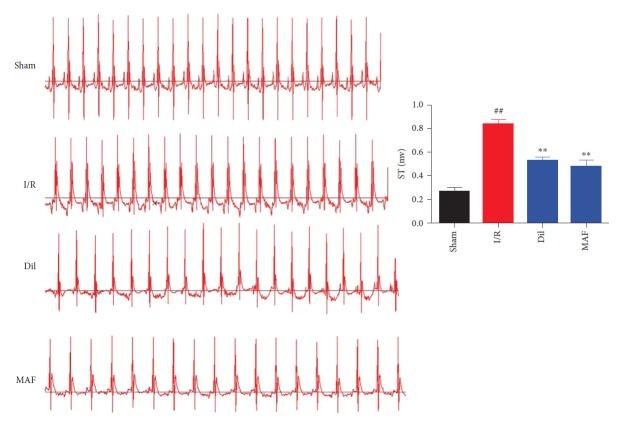
The aim of this study was to investigate the cardioprotective effect of mangiferin (MAF) and . Oxidative stress and inflammatory injury were detected in coronary artery ligation in rats and also in hypoxia-reoxygenation- (H/R-) induced H9c2 cells. MAF inhibited myocardial oxidative stress and proinflammatory cytokines in rats with coronary artery occlusion. The ST segment of MAF treatment groups also resumed. Triphenyltetrazolium chloride (TTC) staining and pathological analysis showed that MAF could significantly reduce myocardial injury. In vitro data showed that MAF could improve hypoxia/reoxygenation- (H/R-) induced H9c2 cell activity. In addition, MAF could significantly reduce oxidative stress and inflammatory pathway protein expression in H/R-induced H9c2 cells. This study has clarified the protective effects of MAF on myocardial injury and also confirmed that oxidative stress and inflammation were involved in the myocardial ischemia-reperfusion injury (I/R) model.
本研究旨在探讨芒果苷(MAF)的心脏保护作用。在大鼠冠状动脉结扎和缺氧再复氧(H/R)诱导的 H9c2 细胞中检测氧化应激和炎症损伤。MAF 抑制冠状动脉闭塞大鼠心肌氧化应激和促炎细胞因子。MAF 治疗组的 ST 段也恢复。氯化三苯基四氮唑(TTC)染色和病理分析表明,MAF 可显著减轻心肌损伤。体外数据显示,MAF 可改善缺氧/复氧(H/R)诱导的 H9c2 细胞活性。此外,MAF 可显著降低 H/R 诱导的 H9c2 细胞中氧化应激和炎症通路蛋白的表达。本研究阐明了 MAF 对心肌损伤的保护作用,并证实氧化应激和炎症参与了心肌缺血再灌注损伤(I/R)模型。




 Zotero 插件