Byrd Alzheimer's Institute, Department of Pharmaceutical Sciences, University of South Florida, 4001 E. Fletcher Ave, Tampa, FL, 33613, USA.
Neuroscience Institute, Department of Neuroscience and Physiology, New York University School of Medicine, 1 Park Avenue, New York, NY, 10016, USA.
Alzheimers Res Ther. 2019 Jun 29;11(1):58. doi: 10.1186/s13195-019-0507-y.
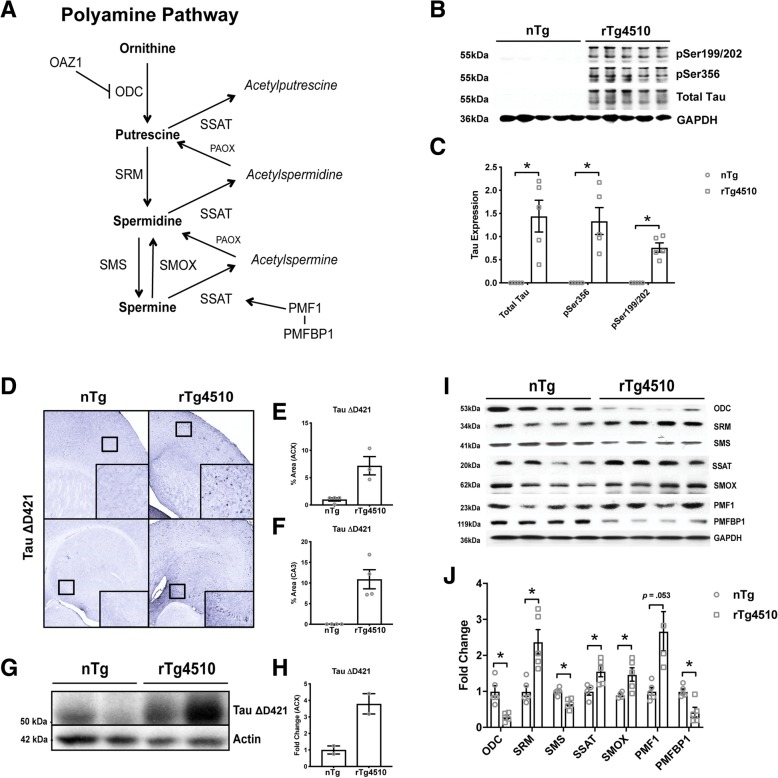
Tau stabilizes microtubules; however, in Alzheimer's disease (AD) and tauopathies, tau becomes hyperphosphorylated, aggregates, and results in neuronal death. Our group recently uncovered a unique interaction between polyamine metabolism and tau fate. Polyamines exert an array of physiological effects that support neuronal function and cognitive processing. Specific stimuli can elicit a polyamine stress response (PSR), resulting in altered central polyamine homeostasis. Evidence suggests that elevations in polyamines following a short-term stressor are beneficial; however, persistent stress and subsequent PSR activation may lead to maladaptive polyamine dysregulation, which is observed in AD, and may contribute to neuropathology and disease progression.
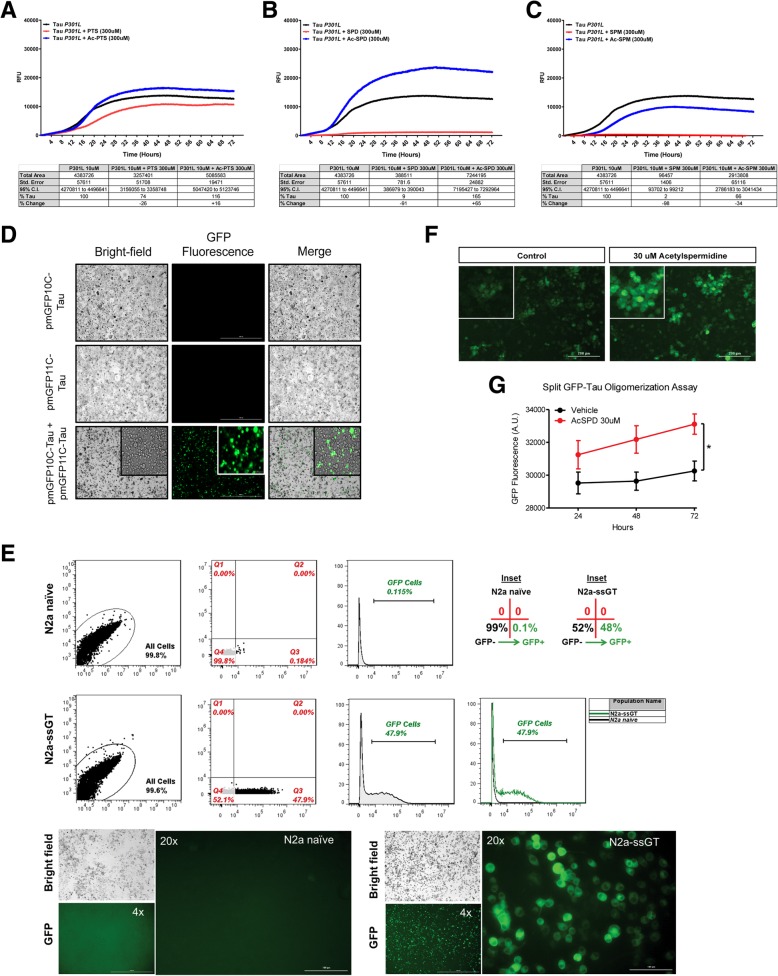
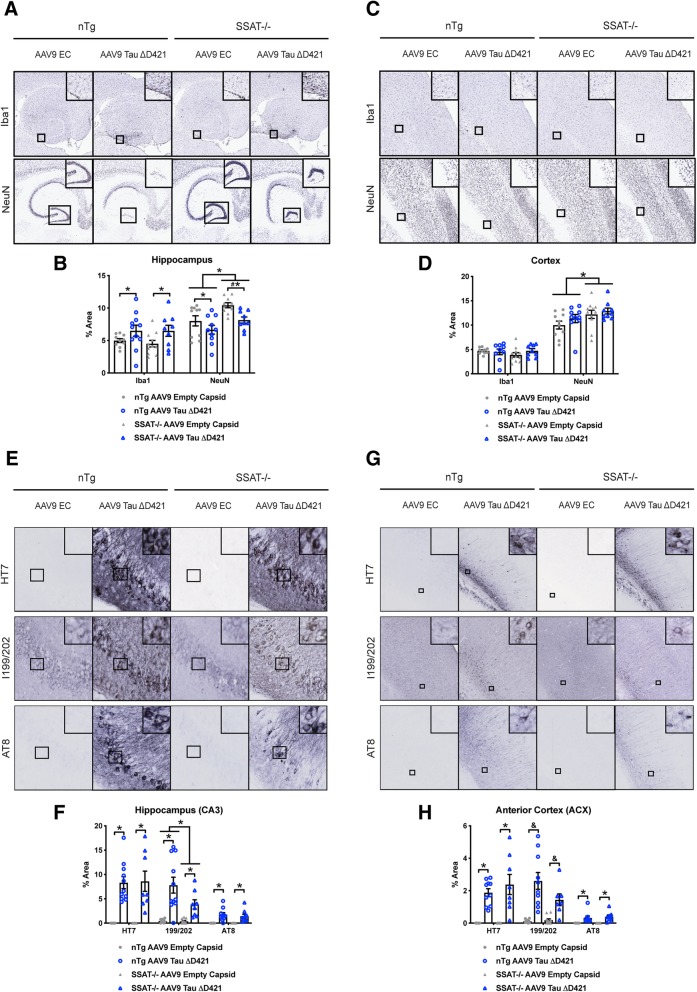
Male and female mice harboring tau P301L mutation (rTg4510) were examined for a tau-induced central polyamine stress response (tau-PSR). The direct effect of tau-PSR byproducts on tau fibrillization and oligomerization were measured using a thioflavin T assay and a N2a split superfolder GFP-Tau (N2a-ssGT) cell line, respectively. To therapeutically target the tau-PSR, we bilaterally injected caspase 3-cleaved tau truncated at aspartate 421 (AAV9 Tau ΔD421) into the hippocampus and cortex of spermidine/spermine-N-acetyltransferase (SSAT), a key regulator of the tau-PSR, knock out (SSAT-/-), and wild type littermates, and the effects on tau neuropathology, polyamine dysregulation, and behavior were measured. Lastly, cellular models were employed to further examine how SSAT repression impacted tau biology.
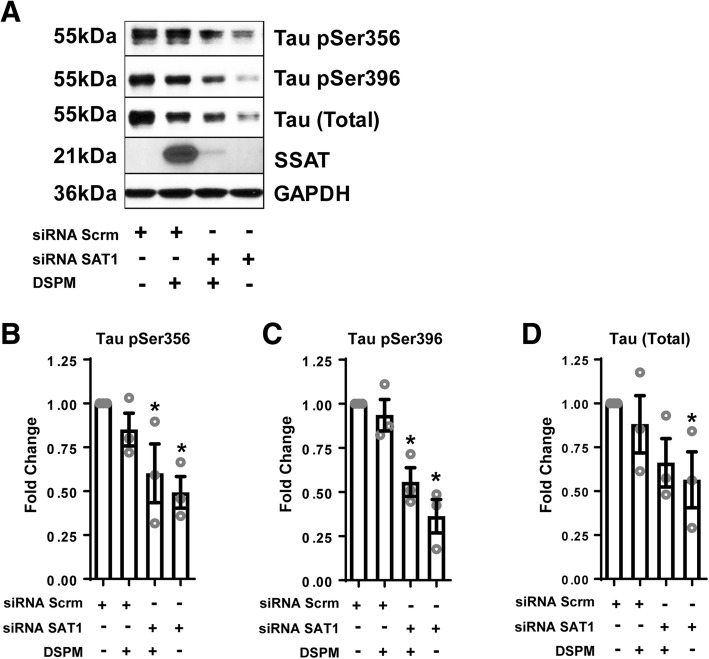
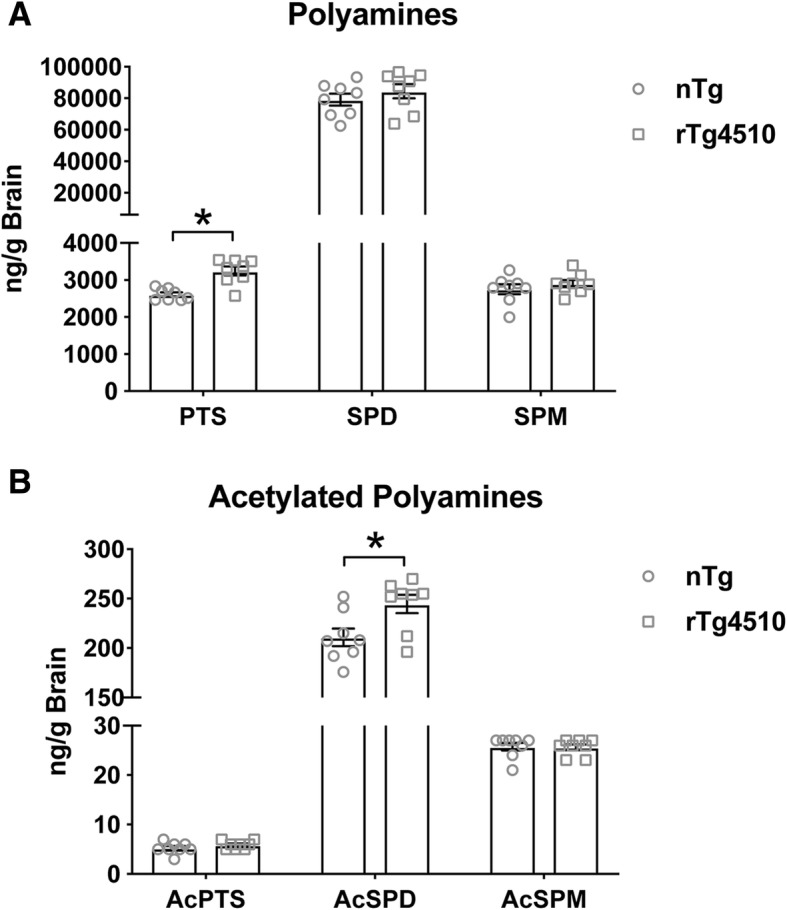
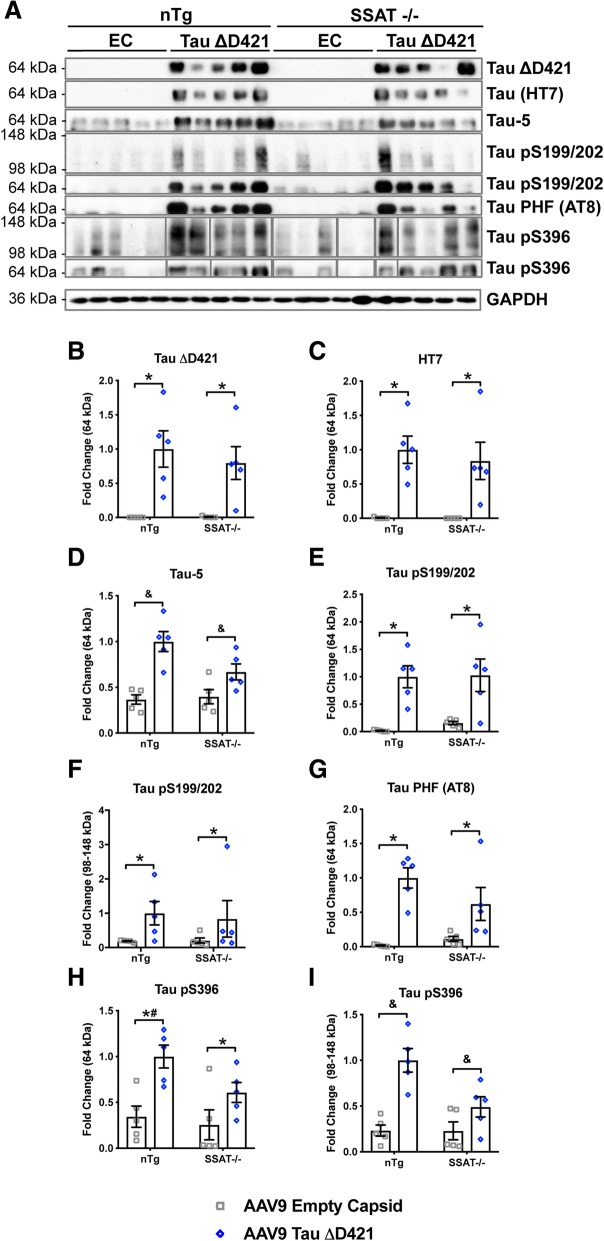
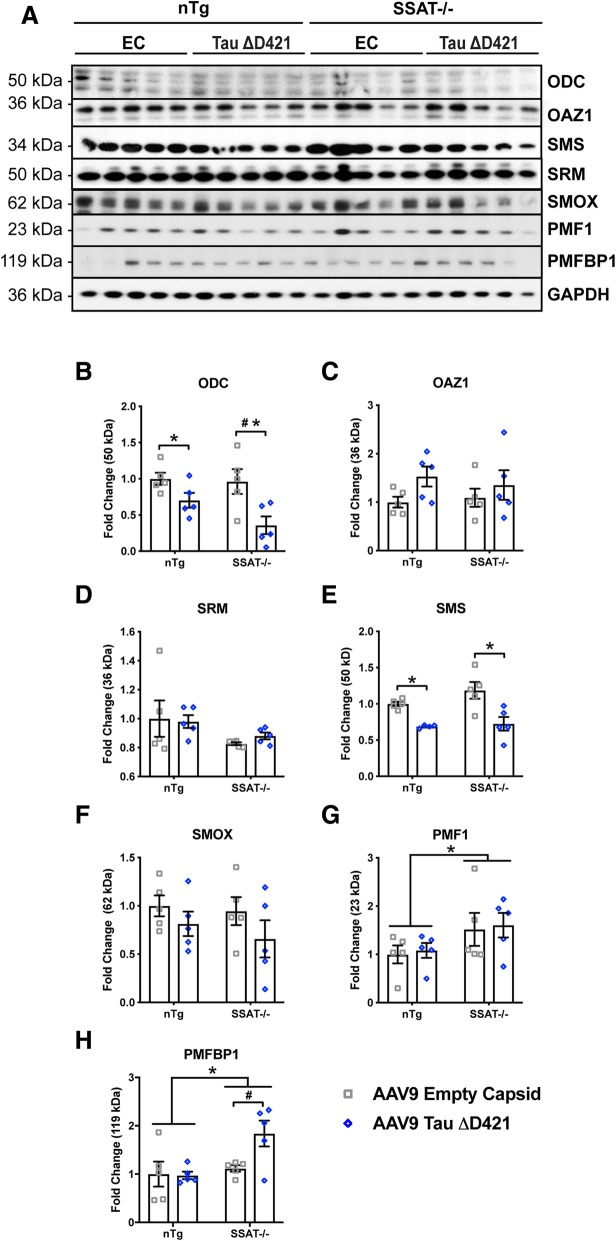
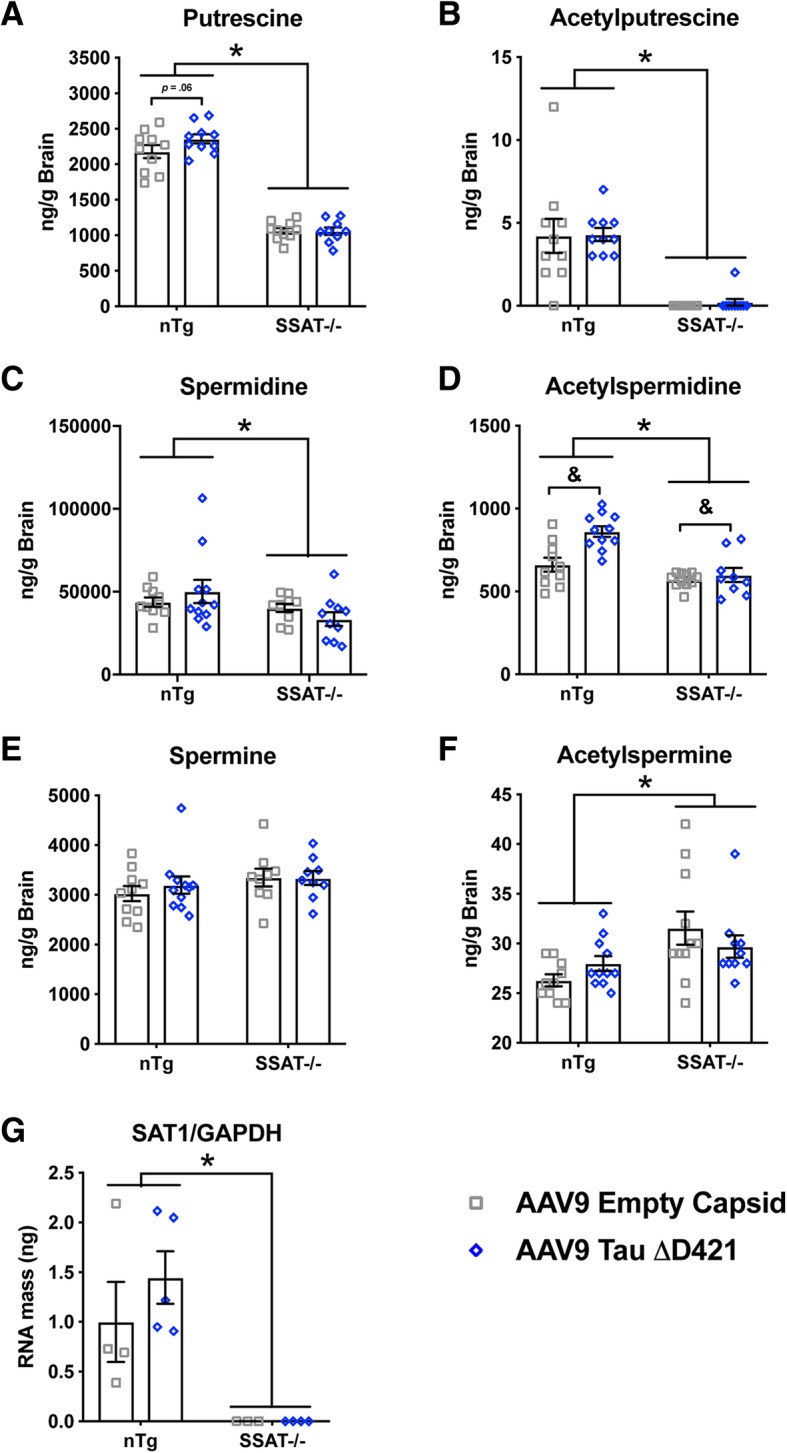
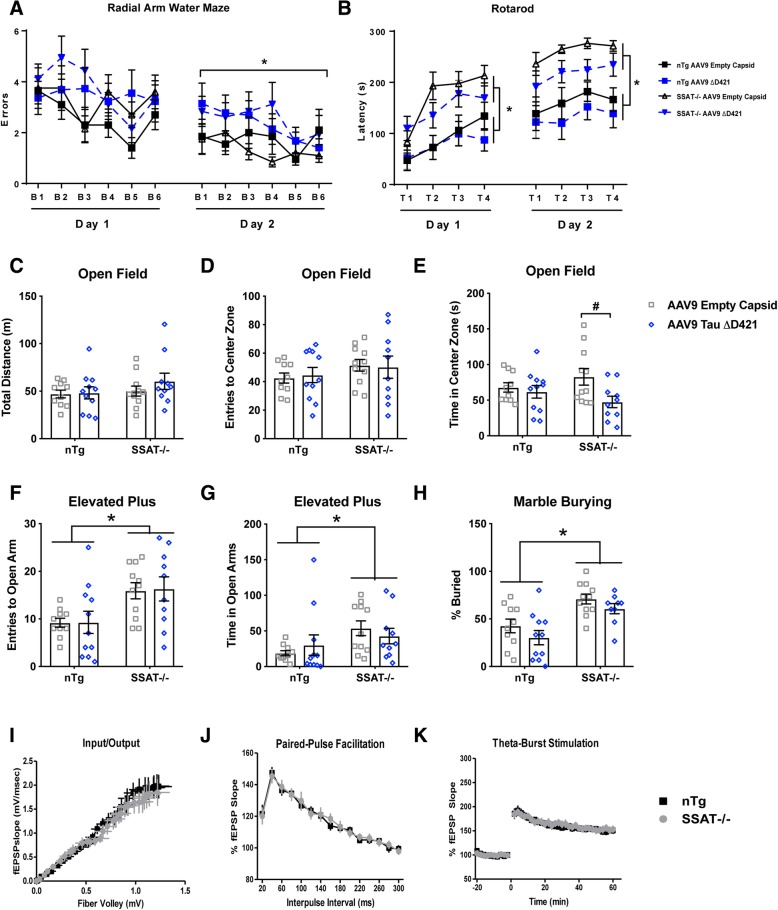
Tau induced a unique tau-PSR signature in rTg4510 mice, notably in the accumulation of acetylated spermidine. In vitro, higher-order polyamines prevented tau fibrillization but acetylated spermidine failed to mimic this effect and even promoted fibrillization and oligomerization. AAV9 Tau ΔD421 also elicited a unique tau-PSR in vivo, and targeted disruption of SSAT prevented the accumulation of acetylated polyamines and impacted several tau phospho-epitopes. Interestingly, SSAT knockout mice presented with altered behavior in the rotarod task, the elevated plus maze, and marble burying task, thus highlighting the impact of polyamine homeostasis within the brain.
These data represent a novel paradigm linking tau pathology and polyamine dysfunction and that targeting specific arms within the polyamine pathway may serve as new targets to mitigate certain components of the tau phenotype.
Tau 稳定微管;然而,在阿尔茨海默病(AD)和 Tau 病中,Tau 过度磷酸化、聚集,导致神经元死亡。我们的小组最近发现了多胺代谢与 Tau 命运之间的独特相互作用。多胺发挥一系列生理作用,支持神经元功能和认知处理。特定的刺激可以引发多胺应激反应(PSR),导致中枢多胺动态平衡改变。有证据表明,短期应激源后多胺的升高是有益的;然而,持续的应激和随后的 PSR 激活可能导致适应性多胺失调,这种失调在 AD 中观察到,并且可能导致神经病理学和疾病进展。
携带 Tau P301L 突变(rTg4510)的雄性和雌性小鼠被检查是否存在 Tau 诱导的中枢多胺应激反应(tau-PSR)。使用硫黄素 T 测定法和 N2a 分裂超折叠 GFP-Tau(N2a-ssGT)细胞系分别测量 Tau-PSR 副产物对 Tau 纤维化和寡聚化的直接影响。为了针对 Tau-PSR 进行治疗,我们将半胱天冬酶 3 切割的 Tau 截断于天冬氨酸 421 处(AAV9 Tau ΔD421)双侧注射到 spermidine/spermine-N-acetyltransferase(SSAT)的海马体和皮层中,SSAT 是 Tau-PSR 的关键调节剂,敲除(SSAT-/-)和野生型同窝仔鼠,并测量 Tau 神经病理学、多胺失调和行为的影响。最后,使用细胞模型进一步研究 SSAT 抑制如何影响 Tau 生物学。
Tau 在 rTg4510 小鼠中诱导了独特的 Tau-PSR 特征,特别是在乙酰化 spermidine 的积累。在体外,较高阶的多胺可阻止 Tau 纤维化,但乙酰化 spermidine 未能模拟这种作用,甚至促进纤维化和寡聚化。AAV9 Tau ΔD421 也在体内引发了独特的 Tau-PSR,靶向破坏 SSAT 可防止乙酰化多胺的积累,并影响几个 Tau 磷酸化表位。有趣的是,SSAT 敲除小鼠在旋转棒任务、高架十字迷宫和大理石掩埋任务中表现出行为改变,因此突出了大脑内多胺动态平衡的影响。
这些数据代表了一种新的范式,将 Tau 病理学和多胺功能障碍联系起来,并且靶向多胺途径中的特定分支可能成为减轻 Tau 表型某些成分的新靶标。