Neuroregeneration and Stem Cell Programs, Institute for Cell Engineering, Johns Hopkins University School of Medicine, Baltimore, MD 21205, USA; Department of Neurology, Johns Hopkins University School of Medicine, Baltimore, MD 21205, USA.
The Russell H. Morgan Department of Radiology and Radiological Science, Johns Hopkins University School of Medicine, Baltimore, MD 21205, USA.
Neuron. 2019 Aug 21;103(4):627-641.e7. doi: 10.1016/j.neuron.2019.05.035. Epub 2019 Jun 26.
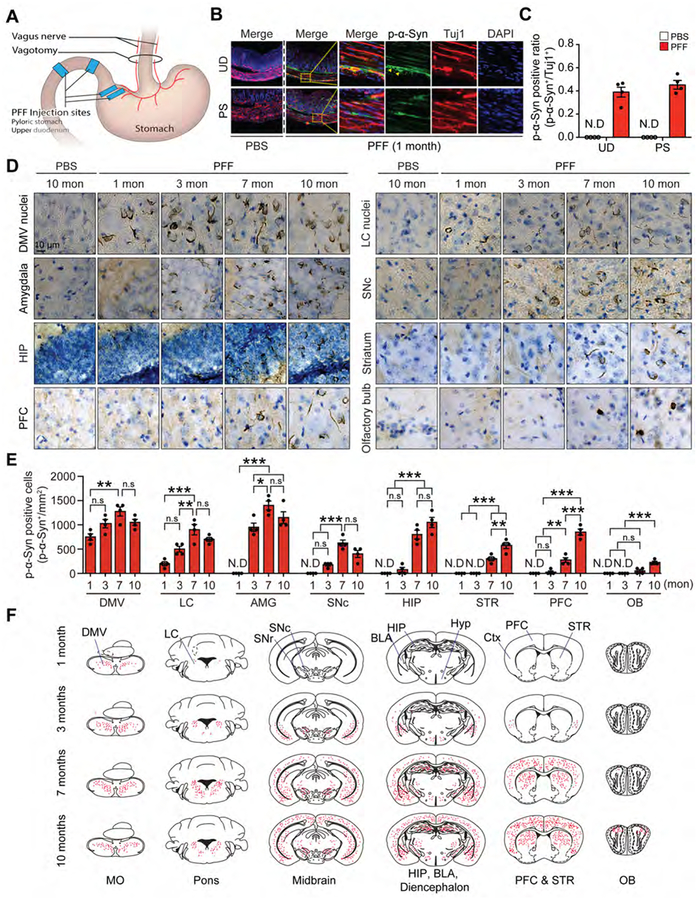
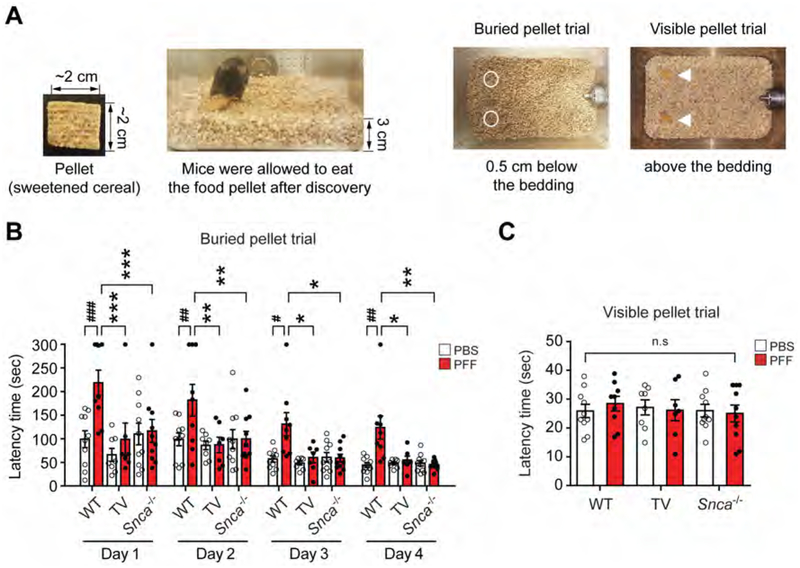
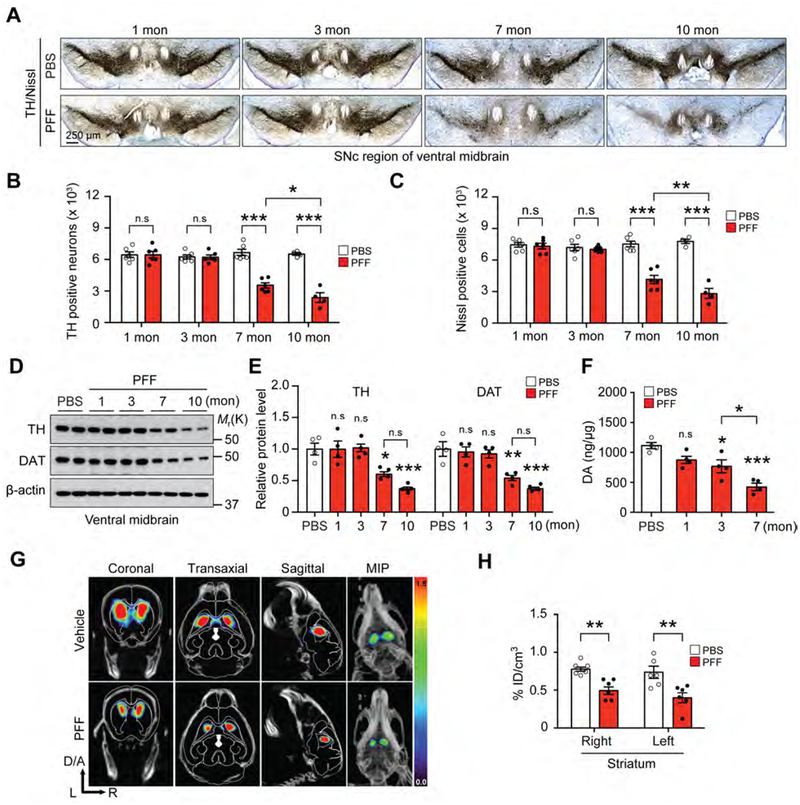
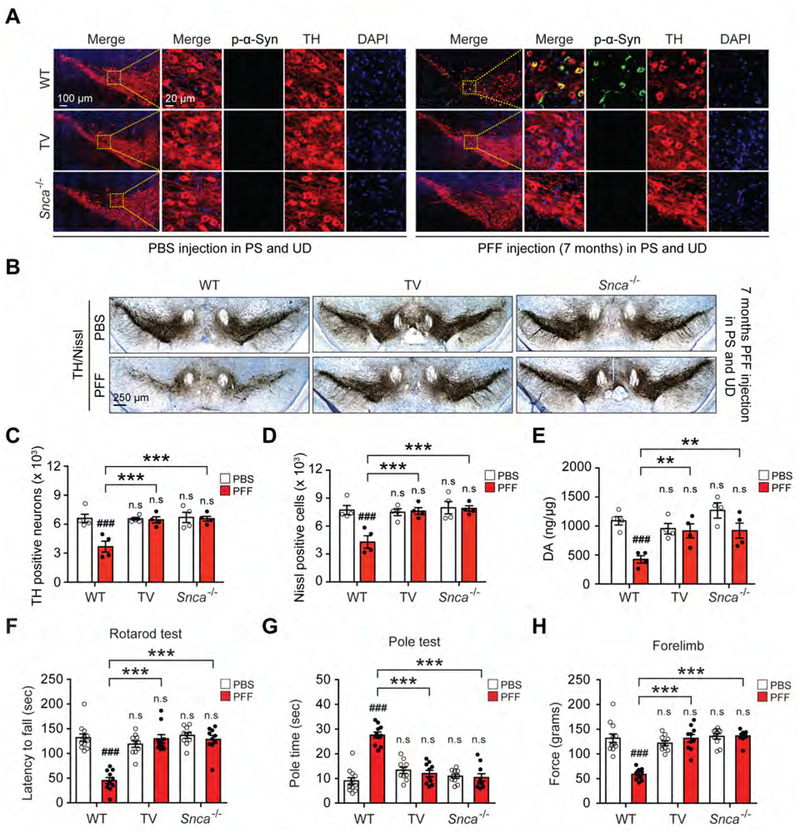
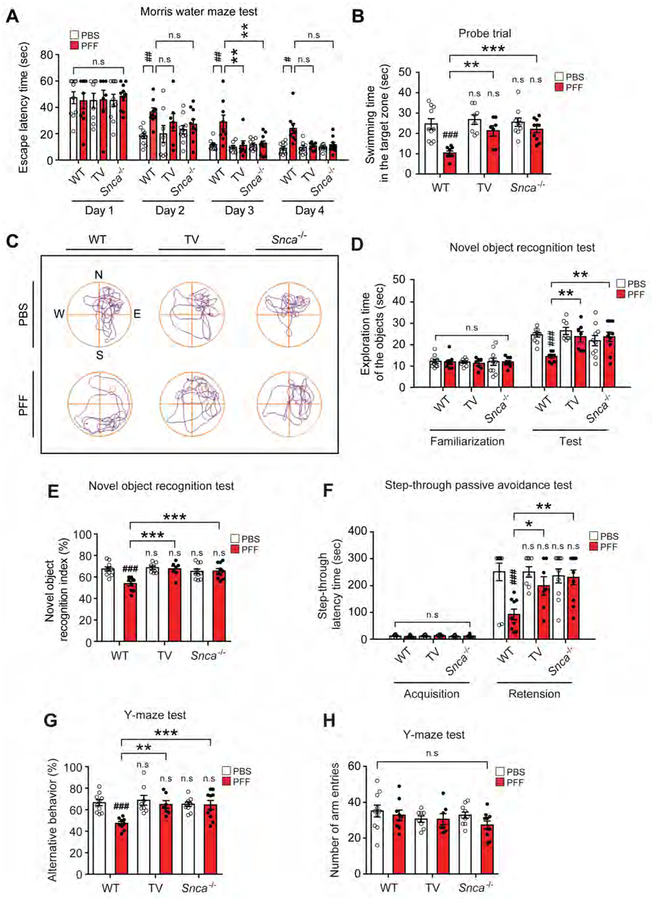
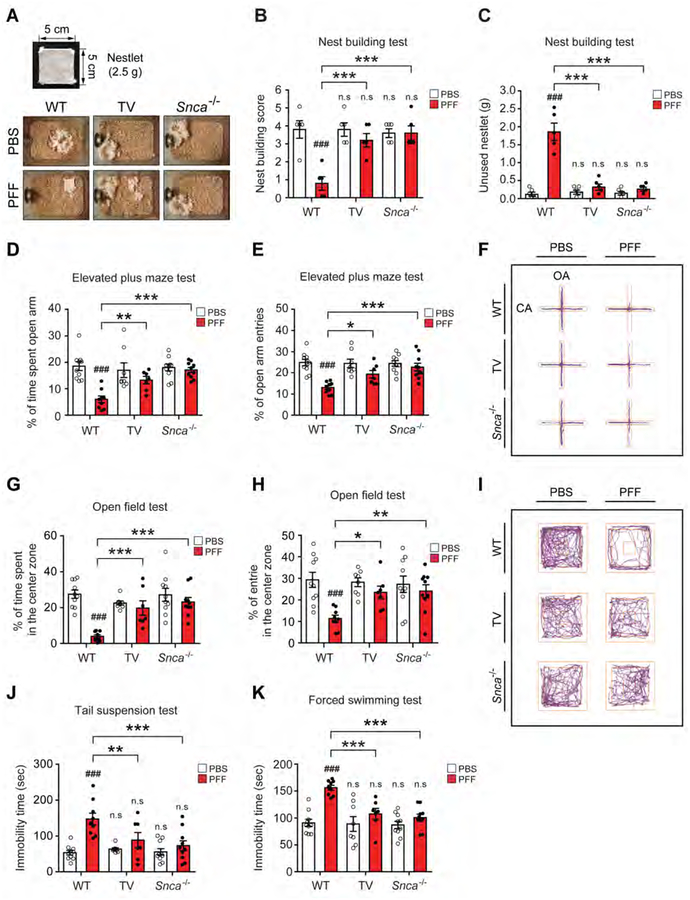
Analysis of human pathology led Braak to postulate that α-synuclein (α-syn) pathology could spread from the gut to brain via the vagus nerve. Here, we test this postulate by assessing α-synucleinopathy in the brain in a novel gut-to-brain α-syn transmission mouse model, where pathological α-syn preformed fibrils were injected into the duodenal and pyloric muscularis layer. Spread of pathologic α-syn in brain, as assessed by phosphorylation of serine 129 of α-syn, was observed first in the dorsal motor nucleus, then in caudal portions of the hindbrain, including the locus coeruleus, and much later in basolateral amygdala, dorsal raphe nucleus, and the substantia nigra pars compacta. Moreover, loss of dopaminergic neurons and motor and non-motor symptoms were observed in a similar temporal manner. Truncal vagotomy and α-syn deficiency prevented the gut-to-brain spread of α-synucleinopathy and associated neurodegeneration and behavioral deficits. This study supports the Braak hypothesis in the etiology of idiopathic Parkinson's disease (PD).
对人类病理学的分析促使 Braak 提出假说,即α-突触核蛋白(α-syn)病理学可以通过迷走神经从肠道传播到大脑。在这里,我们通过评估新型肠道到大脑α-syn 传递小鼠模型中大脑中的α-突触核蛋白病来检验这一假说,在该模型中,病理性α-syn 预制纤维被注射到十二指肠和幽门肌层中。通过 α-syn 的丝氨酸 129 的磷酸化来评估,病理性α-syn 在大脑中的传播首先在背侧运动核中观察到,然后在脑桥的尾部部分,包括蓝斑核,并且在稍后的时间在基底外侧杏仁核、中缝背核和黑质致密部中观察到。此外,在类似的时间内观察到多巴胺能神经元和运动和非运动症状的丧失。躯干迷走神经切断术和α-syn 缺乏可防止α-突触核蛋白病以及相关的神经退行性变和行为缺陷从肠道传播到大脑。这项研究支持了 Braak 假说在特发性帕金森病(PD)病因学中的作用。