Department of Anatomy and Embryology, Xuzhou Key Laboratory of Neurobiology, Xuzhou Medical University, Xuzhou, Jiangsu 221004, P.R. China.
Department of Neurology, The Affiliated Hospital of Xuzhou Medical University, Xuzhou, Jiangsu 221004, P.R. China.
Int J Mol Med. 2019 Sep;44(3):995-1005. doi: 10.3892/ijmm.2019.4250. Epub 2019 Jun 20.
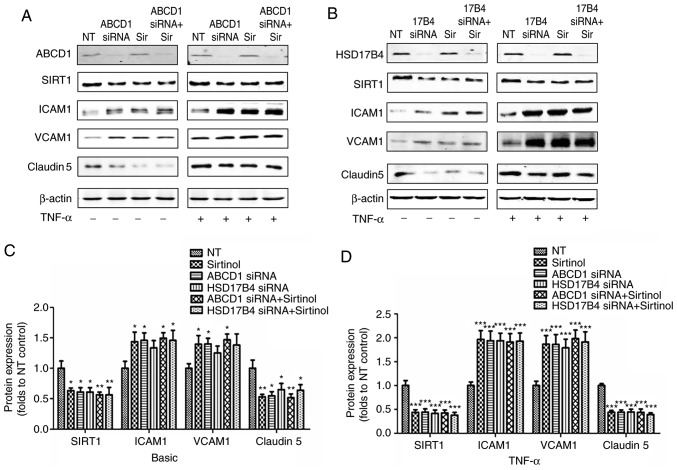
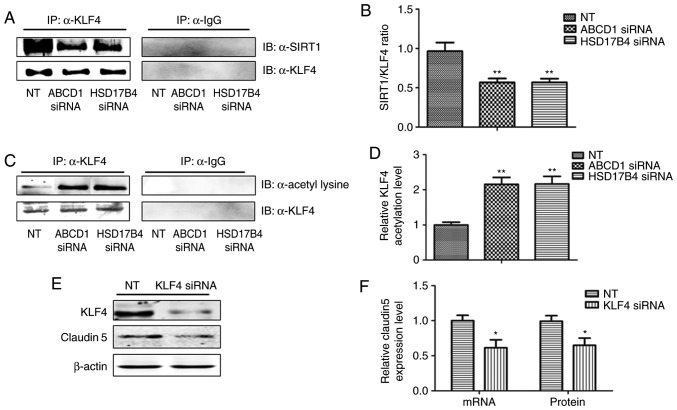
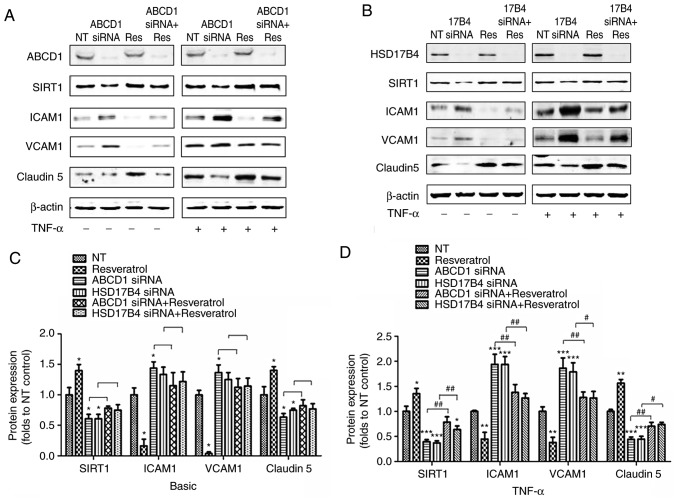
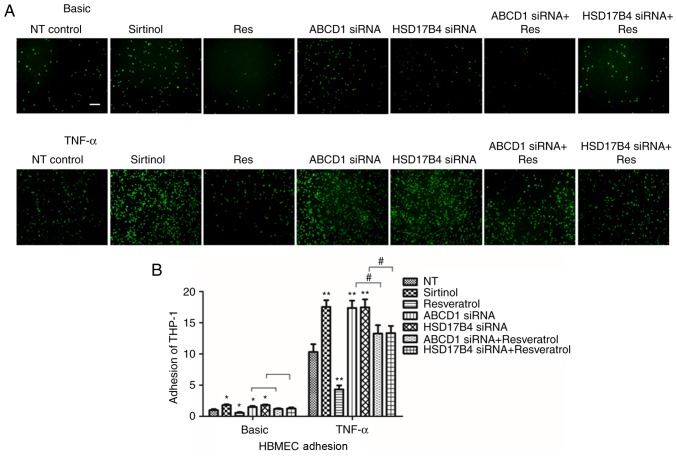
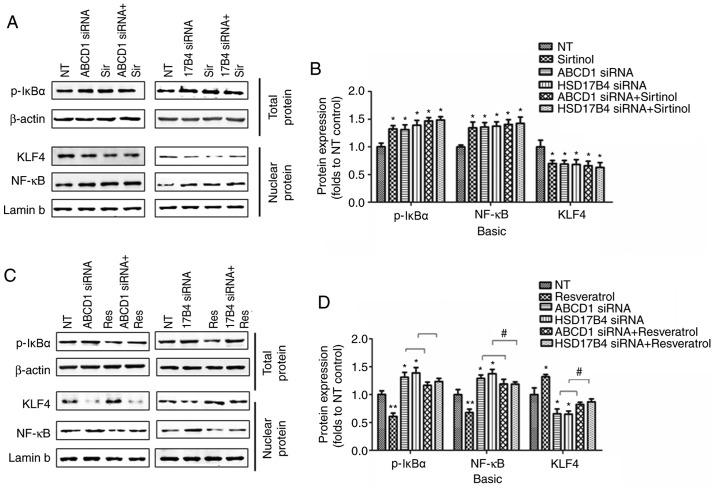
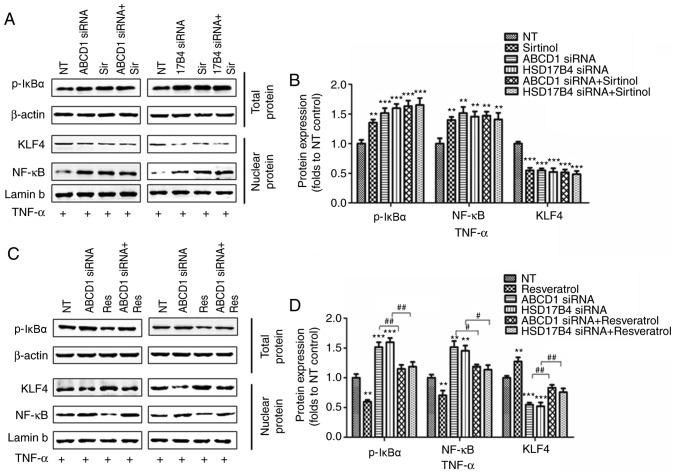
Peroxisomal disorders are genetically heterogeneous metabolic disorders associated with a deficit of very long chain fatty acid β‑oxidation that commonly manifest as early‑onset neurodegeneration. Brain microvascular endothelial dysfunction with increased permeability to monocytes has been described in X‑linked adrenoleukodystrophy, one of the most common peroxisomal disorders caused by mutations of the ATP binding cassette subfamily D member 1 (ABCD1) gene. The present study demonstrated that dysregulation of sirtuin 1 (SIRT1) in human brain microvascular endothelial cells (HBMECs) mediates changes in adhesion molecules and tight‑junction protein expression, as well as increased adhesion to monocytes associated with peroxisomal dysfunction due to ABCD1 or hydroxysteroid 17‑β dehydrogenase 4 silencing. Furthermore, enhancement of the function of SIRT1 by resveratrol attenuated this molecular and functional dysregulation of HBMECs via modulation of the nuclear factor‑κB and Krüppel‑like factor 4 signaling pathways.
过氧化物酶体病是一种与极长链脂肪酸β-氧化缺陷相关的遗传异质性代谢疾病,通常表现为早发性神经退行性变。X 连锁肾上腺脑白质营养不良是最常见的过氧化物酶体病之一,由 ATP 结合盒亚家族 D 成员 1 (ABCD1) 基因突变引起,其特征为脑微血管内皮细胞功能障碍伴单核细胞通透性增加。本研究表明,人脑微血管内皮细胞 (HBMEC) 中沉默信息调节因子 1 (SIRT1) 的失调介导了黏附分子和紧密连接蛋白表达的变化,以及与过氧化物酶体功能障碍相关的单核细胞黏附增加,而过氧化物酶体功能障碍是由于 ABCD1 或羟甾体 17-β 脱氢酶 4 沉默所致。此外,白藜芦醇增强 SIRT1 的功能可通过调节核因子-κB 和 Krüppel 样因子 4 信号通路来减轻 HBMEC 这种分子和功能失调。