
应用于计算均匀化的不同基于投影的模型降阶技术的数值研究。
A numerical study of different projection-based model reduction techniques applied to computational homogenisation.
作者信息
Soldner Dominic, Brands Benjamin, Zabihyan Reza, Steinmann Paul, Mergheim Julia
机构信息
Chair of Applied Mechanics, Friedrich-Alexander-Universität Erlangen-Nürnberg, Egerlandstrasse 5, 91058 Erlangen, Germany.
出版信息
Comput Mech. 2017;60(4):613-625. doi: 10.1007/s00466-017-1428-x. Epub 2017 Jun 8.
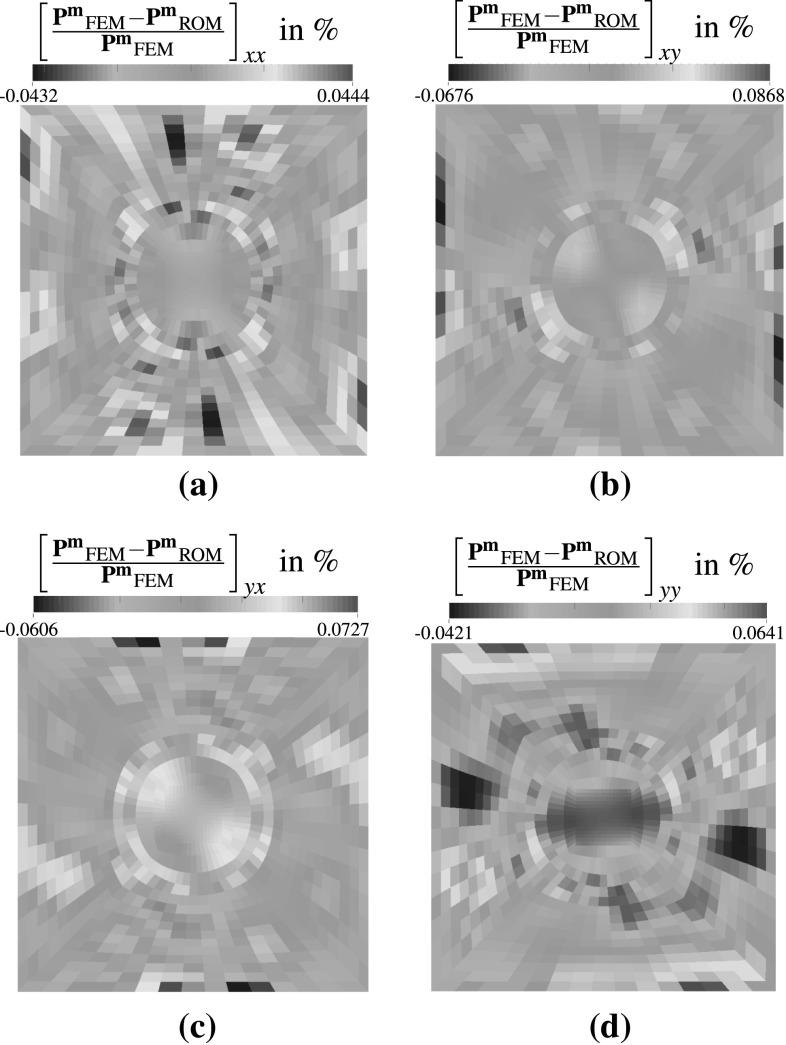
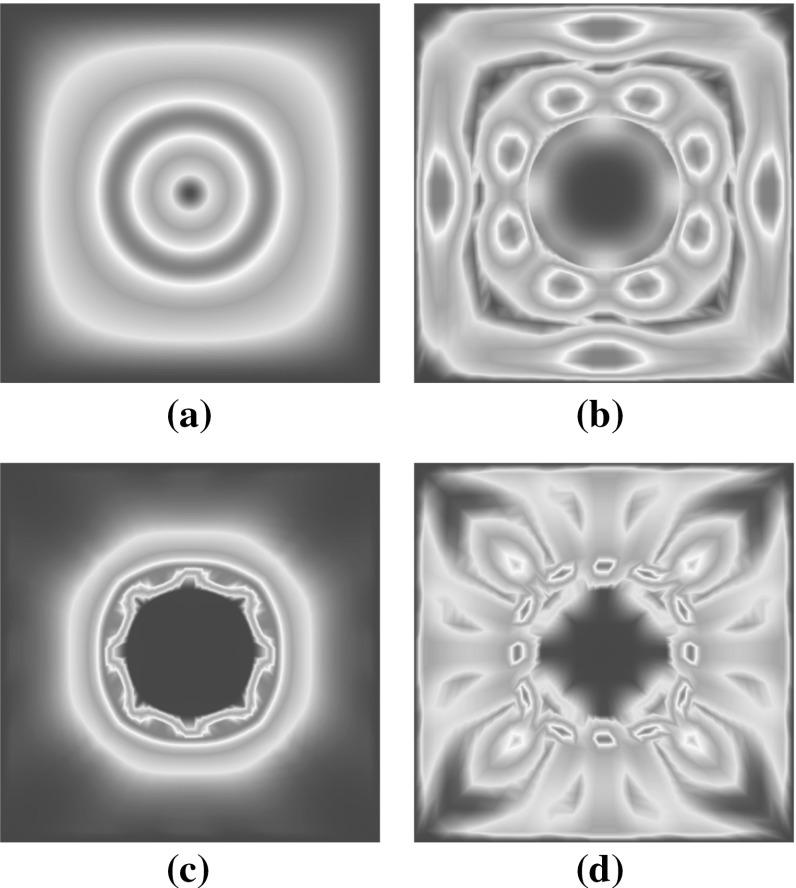
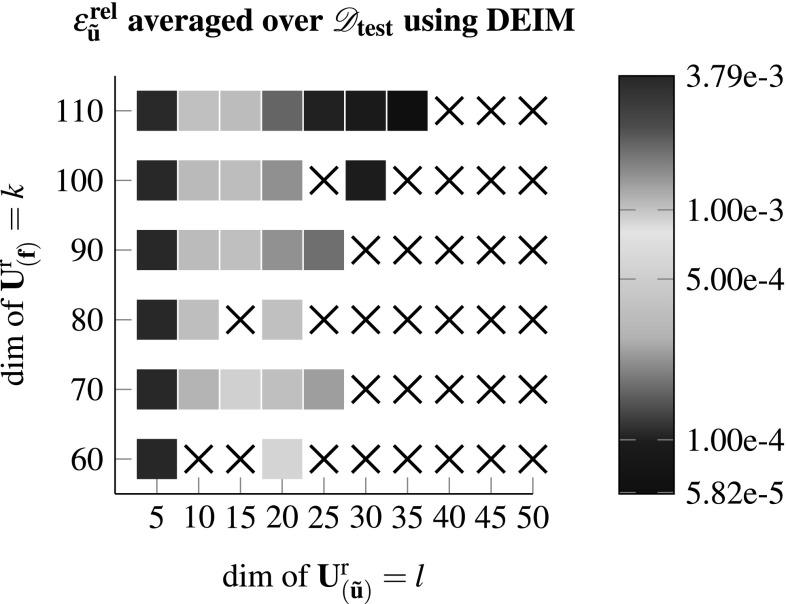
Computing the macroscopic material response of a continuum body commonly involves the formulation of a phenomenological constitutive model. However, the response is mainly influenced by the heterogeneous microstructure. Computational homogenisation can be used to determine the constitutive behaviour on the macro-scale by solving a boundary value problem at the micro-scale for every so-called macroscopic material point within a nested solution scheme. Hence, this procedure requires the repeated solution of similar microscopic boundary value problems. To reduce the computational cost, model order reduction techniques can be applied. An important aspect thereby is the robustness of the obtained reduced model. Within this study reduced-order modelling (ROM) for the geometrically nonlinear case using hyperelastic materials is applied for the boundary value problem on the micro-scale. This involves the Proper Orthogonal Decomposition (POD) for the primary unknown and hyper-reduction methods for the arising nonlinearity. Therein three methods for hyper-reduction, differing in how the nonlinearity is approximated and the subsequent projection, are compared in terms of accuracy and robustness. Introducing interpolation or Gappy-POD based approximations may not preserve the symmetry of the system tangent, rendering the widely used Galerkin projection sub-optimal. Hence, a different projection related to a Gauss-Newton scheme (Gauss-Newton with Approximated Tensors- GNAT) is favoured to obtain an optimal projection and a robust reduced model.
计算连续体的宏观材料响应通常涉及构建一个唯象本构模型。然而,该响应主要受非均匀微观结构的影响。计算均匀化可用于通过在嵌套求解方案中为每个所谓的宏观材料点求解微观尺度的边值问题来确定宏观尺度上的本构行为。因此,此过程需要重复求解类似的微观边值问题。为了降低计算成本,可以应用模型降阶技术。其中一个重要方面是所获得的降阶模型的鲁棒性。在本研究中,将使用超弹性材料的几何非线性情况下的降阶建模(ROM)应用于微观尺度的边值问题。这涉及对主要未知量的本征正交分解(POD)以及对产生的非线性的超降阶方法。其中,比较了三种超降阶方法,它们在非线性近似方式和后续投影方面存在差异,从准确性和鲁棒性方面进行了比较。引入基于插值或间隙-POD的近似可能无法保持系统切线的对称性,使得广泛使用的伽辽金投影次优。因此,倾向于使用与高斯-牛顿法相关的不同投影(带近似张量的高斯-牛顿法-GNAT)来获得最优投影和鲁棒的降阶模型。





 Zotero 插件