Li2P, University of Paris 13, Sorbonne Paris Cité, Bobigny, France.
Inserm UMR 1125, Li2P, Bobigny, France.
Front Immunol. 2019 Jun 14;10:1346. doi: 10.3389/fimmu.2019.01346. eCollection 2019.
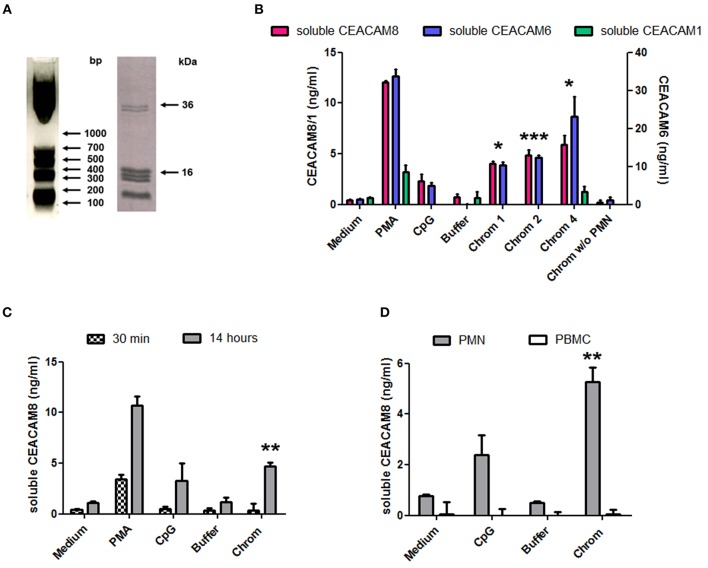
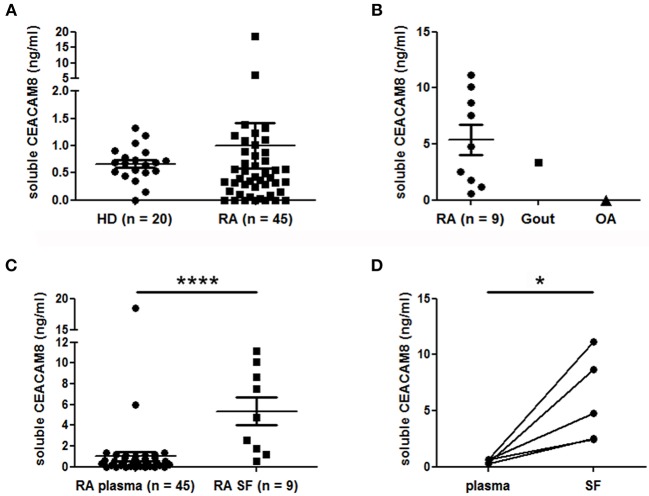
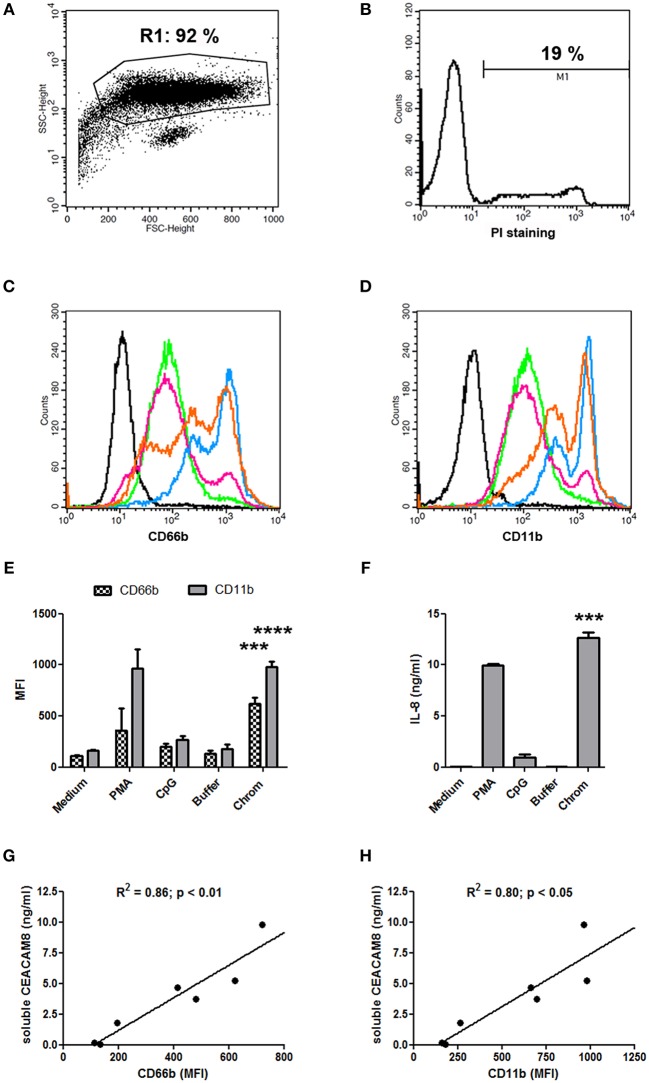
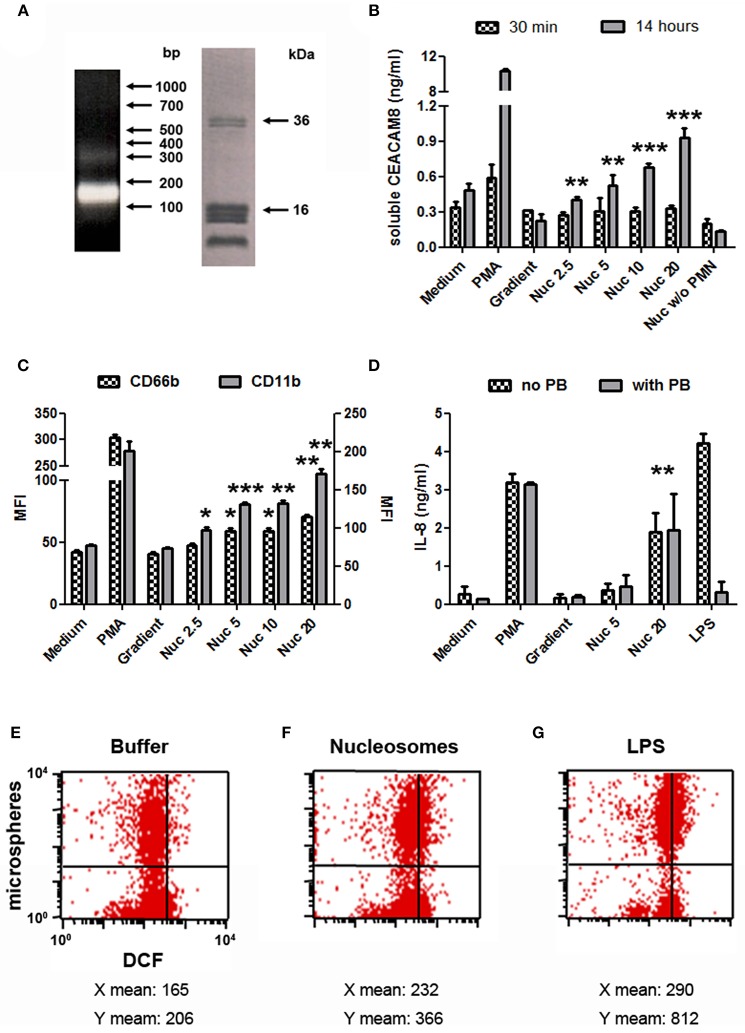
Increased concentrations of extracellular chromatin are observed in cancer, sepsis, and inflammatory autoimmune diseases like systemic lupus erythematosus (SLE) or rheumatoid arthritis (RA). In SLE and RA, extracellular chromatin may behave as a danger-associated molecular pattern (DAMP). Polymorphonuclear neutrophils (PMN) are described as typical pro-inflammatory cells but possess also immunoregulatory properties. They are activated in SLE and RA but surprisingly remain moderately studied in these diseases, and especially the disease-associated stimuli triggering PMN activation are still not completely characterized. PMN express plasma membrane carcinoembryonic antigen-related cell adhesion molecule (CEACAM) 8 (CD66b) and secrete a soluble form of CEACAM8 after activation. Soluble CEACAM8 has in turn immunoregulatory functions. However, few natural stimuli inducing soluble CEACAM8 secretion by PMN have been identified. Here we demonstrate for the first time that extracellular chromatin triggers secretion of soluble CEACAM8 by primary human PMN. Priming of PMN was not required. Secretion was associated with activation of PMN. Similar induction of soluble CEACAM8 release was observed with purified mono-nucleosomes as well as long chromatin fragments and occurred in a time-dependent and concentration-dependent manner. Results indicate that chromatin induces both neo-synthesis of soluble CEACAM8 and release of soluble CEACAM8 through degranulation. In addition, we report the presence of soluble CEACAM8 at high concentration in the synovial fluid of RA patients. Thus, we describe here a novel mechanism by which a natural DAMP, with inflammatory properties in SLE and RA, induces soluble CEACAM8 secretion by activated PMN with potential immunoregulatory consequences on other immune cells, including PMN.
细胞外染色质浓度的增加在癌症、脓毒症和炎症性自身免疫性疾病(如系统性红斑狼疮或类风湿关节炎)中被观察到。在系统性红斑狼疮和类风湿关节炎中,细胞外染色质可能表现为危险相关分子模式(DAMP)。多形核粒细胞(PMN)被描述为典型的促炎细胞,但也具有免疫调节特性。它们在系统性红斑狼疮和类风湿关节炎中被激活,但令人惊讶的是,它们在这些疾病中的研究仍然相对较少,特别是触发 PMN 激活的疾病相关刺激物仍未完全确定。PMN 表达细胞膜癌胚抗原相关细胞粘附分子(CEACAM)8(CD66b),并在激活后分泌可溶性 CEACAM8 形式。可溶性 CEACAM8 具有免疫调节功能。然而,只有少数天然刺激物被确定可以诱导 PMN 分泌可溶性 CEACAM8。在这里,我们首次证明细胞外染色质触发原代人 PMN 分泌可溶性 CEACAM8。PMN 的启动不需要。分泌与 PMN 的激活有关。纯化的单核小体以及长染色质片段也观察到类似的可溶性 CEACAM8 释放诱导,并且以时间和浓度依赖的方式发生。结果表明,染色质通过脱粒诱导可溶性 CEACAM8 的新合成和释放。此外,我们报告了在类风湿关节炎患者的滑液中存在高浓度的可溶性 CEACAM8。因此,我们在这里描述了一种新的机制,即一种具有炎症性质的天然 DAMP 在 SLE 和 RA 中诱导激活的 PMN 分泌可溶性 CEACAM8,这可能对包括 PMN 在内的其他免疫细胞产生潜在的免疫调节作用。