Wang Yan, Li Zhiping
Department of Pharmacy, Children's Hospital of Fudan University, Shanghai 201102, P.R. China.
Hainan Provincial Key Lab of R&D of Tropical Herbs, College of Pharmacy, Hainan Medical University, Haikou, Hainan 571199, P.R. China.
Exp Ther Med. 2019 Jul;18(1):373-383. doi: 10.3892/etm.2019.7538. Epub 2019 Apr 30.
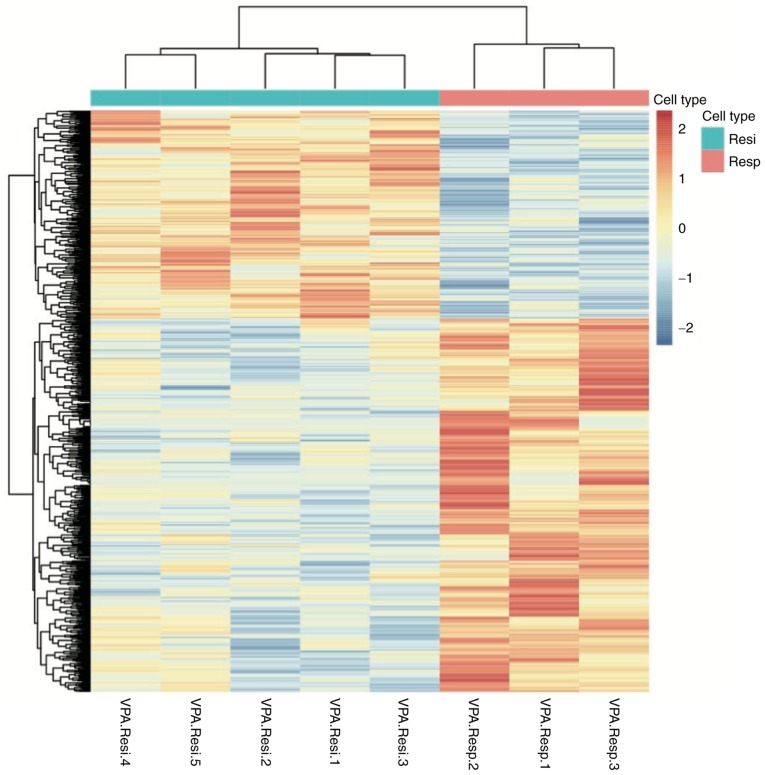
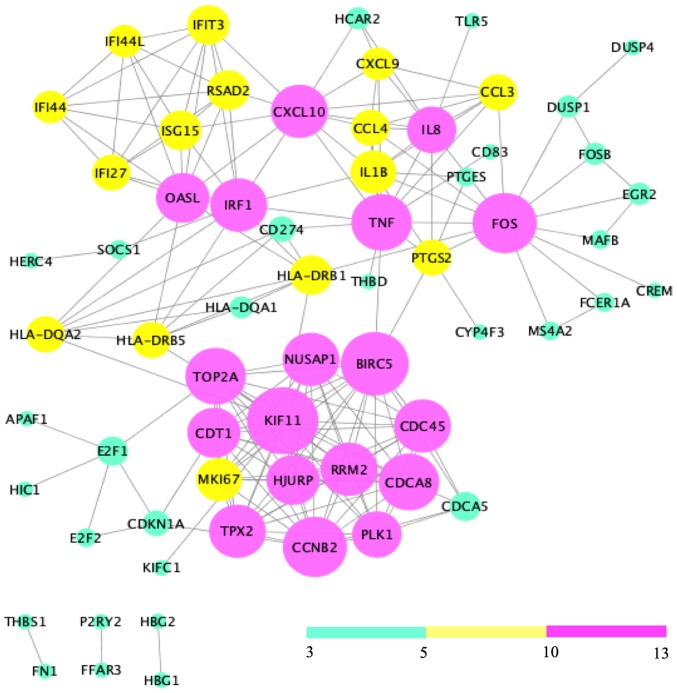
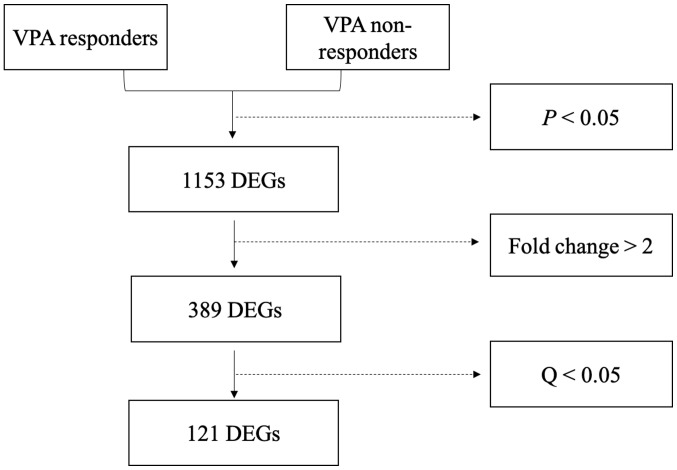
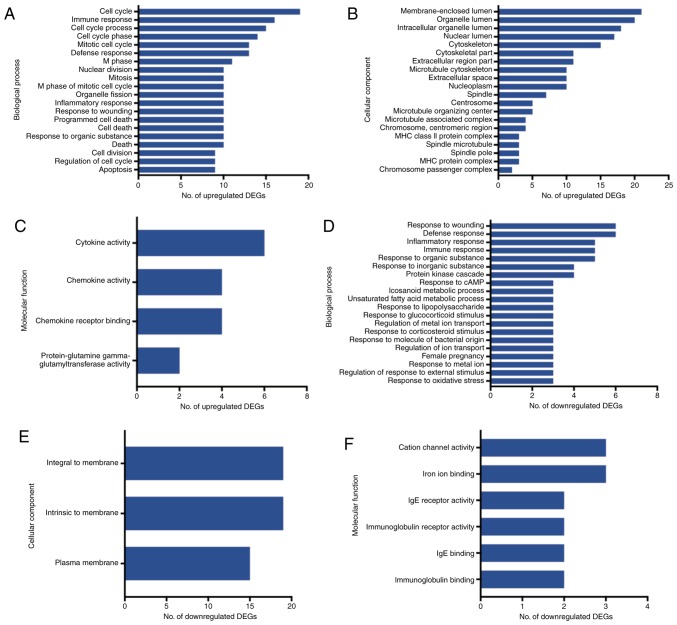
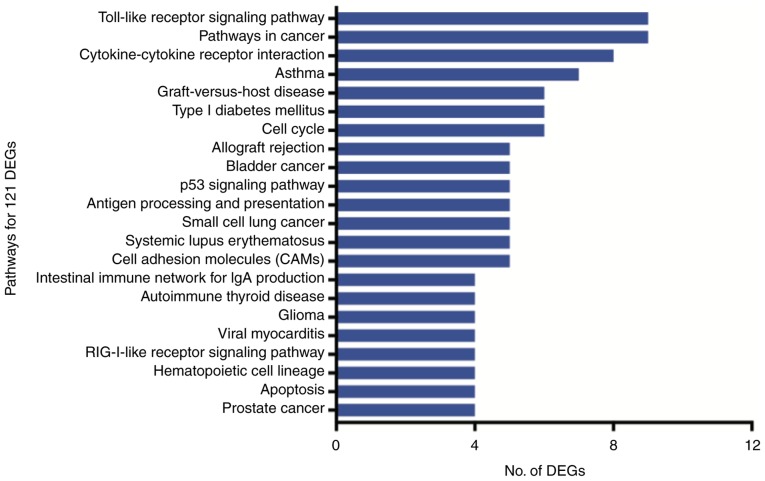
Epilepsy is the most common chronic neurological disorder, affecting ~70 million individuals worldwide. However, approximately one-third of the patients are refractory to epilepsy medication. Of note, 100% of patients with genetic epilepsy who are resistant to the traditional drug, valproic acid (VPA), are also refractory to the other anti-epileptic drugs. The aim of the present study was to compare the transcriptomes in VPA responders and non-responders, to explore the mechanism of action of VPA and identify possible biomarkers to predict VPA resistance. Thus, RNA-seq was employed for transcriptomic analysis, differentially expressed genes (DEGs) were analyzed using Cuffdiff software and the DAVID database was used to infer the functions of the DEGs. A protein-protein interaction network was obtained using STRING and visualized with Cytoscape. A total of 389 DEGs between VPA-responsive and non-responsive pediatric patients were identified. Of these genes, 227 were upregulated and 162 were downregulated. The upregulated DEGs were largely associated with cytokines, chemokines and chemokine receptor-binding factors, whereas the downregulated DEGs were associated with cation channels, iron ion binding proteins, and immunoglobulin E receptors. In the pathway analysis, the toll-like receptor signaling pathway, pathways in cancer, and cytokine-cytokine receptor interaction were mostly enriched by the DEGs. Furthermore, three modules were identified by protein-protein interaction analysis, and the potential hub genes, chemokine (C-C motif) ligand 3 and 4, chemokine (C-X-C motif) ligand 9, tumor necrosis factor-α and interleukin-1β, which are known to be closely associated with epilepsy, were identified. These specific chemokines may participate in processes associated with VPA resistance and may be potential biomarkers for monitoring the efficacy of VPA.
癫痫是最常见的慢性神经系统疾病,全球约有7000万人受其影响。然而,约三分之一的患者对癫痫药物难治。值得注意的是,对传统药物丙戊酸(VPA)耐药的遗传性癫痫患者100%对其他抗癫痫药物也难治。本研究的目的是比较VPA反应者和无反应者的转录组,探讨VPA的作用机制,并确定预测VPA耐药的可能生物标志物。因此,采用RNA测序进行转录组分析,使用Cuffdiff软件分析差异表达基因(DEG),并使用DAVID数据库推断DEG的功能。使用STRING获得蛋白质-蛋白质相互作用网络,并用Cytoscape进行可视化。共鉴定出VPA反应性和无反应性儿科患者之间的389个DEG。在这些基因中,227个上调,162个下调。上调的DEG主要与细胞因子、趋化因子和趋化因子受体结合因子相关,而下调的DEG与阳离子通道、铁离子结合蛋白和免疫球蛋白E受体相关。在通路分析中,Toll样受体信号通路、癌症通路和细胞因子-细胞因子受体相互作用大多被DEG富集。此外,通过蛋白质-蛋白质相互作用分析鉴定出三个模块,并鉴定出已知与癫痫密切相关的潜在枢纽基因,即趋化因子(C-C基序)配体3和4、趋化因子(C-X-C基序)配体9、肿瘤坏死因子-α和白细胞介素-1β。这些特定的趋化因子可能参与与VPA耐药相关的过程,可能是监测VPA疗效的潜在生物标志物。