
EPHA3 通过破坏子宫内膜异位症小鼠中的 mTOR 信号通路增强巨噬细胞自噬和凋亡。
EPHA3 enhances macrophage autophagy and apoptosis by disrupting the mTOR signaling pathway in mice with endometriosis.
机构信息
Department of Obstetrics, The First Hospital of Jilin University, Changchun 130021, Jilin, China.
Department of Gynaecology and Obstetrics, The First Hospital of Jilin University, Changchun 130021, Jilin, China.
出版信息
Biosci Rep. 2019 Jul 30;39(7). doi: 10.1042/BSR20182274. Print 2019 Jul 31.
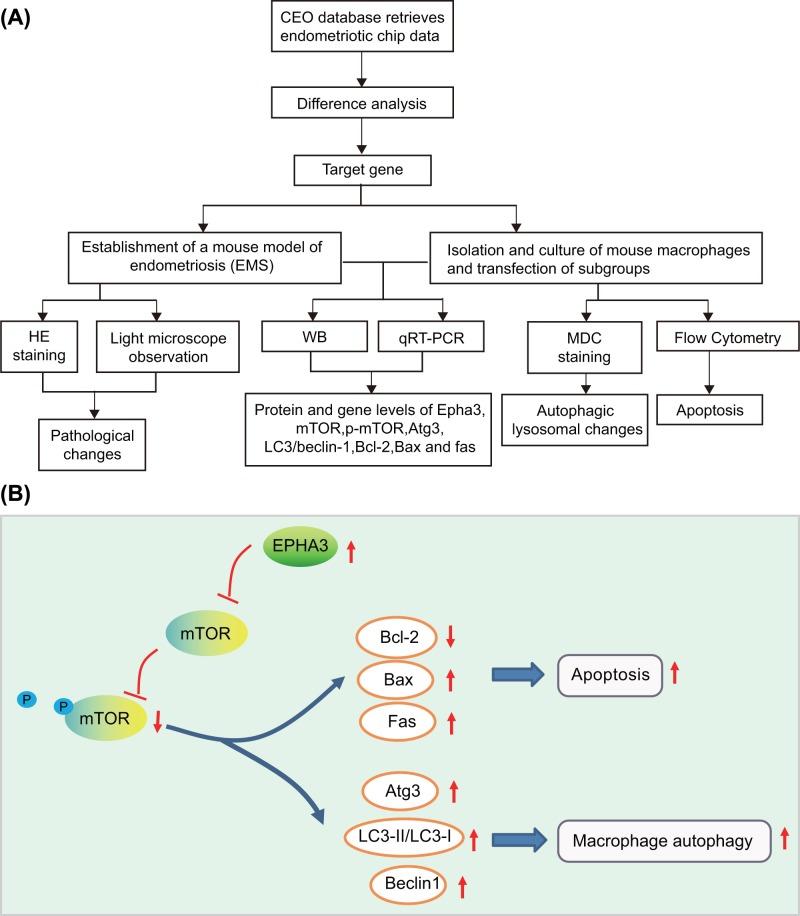
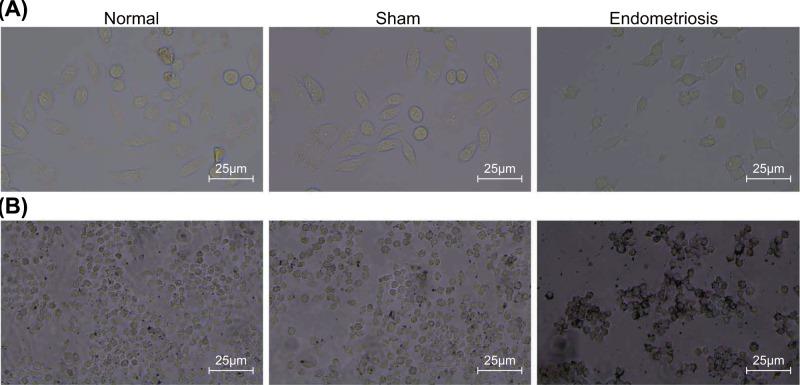
Endometriosis is a chronic fibrotic disease characterized by agonizing pelvic pain and low fertility, mainly affecting middle-aged women. The aim of the present study is to assess the potential effects of erythropoietin-producing hepatocellular carcinoma A3 (EPHA3) on endometriosis, with emphasis on the autophagy and apoptosis of macrophages via inhibition of the mammalian target of rapamycin (mTOR) signaling pathway. The mouse models of endometriosis were established followed by culturing the macrophages and macrophage transfection via the EPHA3 vector, siRNA EPHA3, and RAPA (an inhibitor of the mTOR signaling pathway). The expression of EPHA3, related factors in the mTOR signaling pathway, macrophage autophagy (autophagy-related gene 3 (Atg3), light chain 3-I (LC3-I), light chain 3-II (LC3-II) and Beclin1) and apoptosis (B-cell lymphoma-2 (bcl-2), bax and fas) were all detected and documented, respectively. The changes of autophagic lysosomes and the apoptosis of macrophages in each group following transfection were also inspected and detected. The results of the analysis ascertained EPHA3 to be a candidate gene of endometriosis. After successful modeling, the uterine tissues of endometriosis mice presented with a low expression of EPHA3 and activated mTOR signaling pathway. Overexpression of EPHA3 inhibited the activation of the mTOR signaling pathway, down-regulated bcl-2 expression, up-regulated the expression of Atg3, LC3-II/LC3-I, Beclin1, bax and fas, and also promoted the autophagy and apoptosis of macrophages in endometriosis mice. Altogether, EPHA3 could potentially promote the autophagy and apoptosis of macrophages in endometriosis via inhibition of the mTOR signaling pathway, highlighting the potential of EPHA3 as the target to treat endometriosis.
子宫内膜异位症是一种以剧烈盆腔疼痛和低生育力为特征的慢性纤维化疾病,主要影响中年妇女。本研究旨在评估促红细胞生成素产生肝细胞癌 A3(EPHA3)对子宫内膜异位症的潜在影响,重点关注通过抑制哺乳动物雷帕霉素靶蛋白(mTOR)信号通路对巨噬细胞自噬和凋亡的影响。建立子宫内膜异位症小鼠模型后,通过 EPHA3 载体、siRNA EPHA3 和 RAPA(mTOR 信号通路抑制剂)培养巨噬细胞和巨噬细胞转染。检测并记录 EPHA3 的表达、mTOR 信号通路相关因子、巨噬细胞自噬(自噬相关基因 3(Atg3)、微管相关蛋白轻链 3-I(LC3-I)、微管相关蛋白轻链 3-II(LC3-II)和 Beclin1)和凋亡(B 细胞淋巴瘤-2(bcl-2)、bax 和 fas)。还观察和检测了各组转染后自噬溶酶体的变化和巨噬细胞的凋亡。分析结果确定 EPHA3 是子宫内膜异位症的候选基因。成功建模后,子宫内膜异位症小鼠的子宫组织中 EPHA3 表达降低,mTOR 信号通路激活。EPHA3 的过表达抑制了 mTOR 信号通路的激活,下调了 bcl-2 的表达,上调了 Atg3、LC3-II/LC3-I、Beclin1、bax 和 fas 的表达,并促进了子宫内膜异位症小鼠巨噬细胞的自噬和凋亡。总之,EPHA3 可能通过抑制 mTOR 信号通路促进子宫内膜异位症中巨噬细胞的自噬和凋亡,提示 EPHA3 作为治疗子宫内膜异位症的靶点具有潜力。





 Zotero 插件