Department of Laboratory Medicine, Yonsei University College of Medicine, 50 Yonsei-ro, Seodaemun-gu, Seoul, 03722, Republic of Korea.
Department of Pathology, Yonsei University College of Medicine, Seoul, Korea.
BMC Med Genomics. 2019 Jul 3;12(1):103. doi: 10.1186/s12920-019-0553-0.
Familial adenomatous polyposis (FAP) is an autosomal dominant colorectal tumor characterized by numerous adenomatous colonic polyps that often lead to colon cancer. Although most patients with FAP harbored germline mutations in APC gene, it was recently recognized that patients with clinical FAP, but without detectable pathogenic mutations, could be associated with somatic mosaic APC mutation.
We reanalyzed the nest-generation sequencing (NGS) gene panel testing results of patients who were diagnosed with FAP, but did not have APC mutations, at Yonsei Cancer Prevention Center between July 2016 and March 2018. We tested several variant calling algorithms to identify low level mosaic variants. In one patient with a low frequency APC mutation, NGS analysis was performed together with endoscopic biopsy. Variant calling tools HaplotypeCaller, MuTect2, VarScan2, and Pindel were used. We also used 3'-Modified Oligonucleotides (MEMO)-PCR or conventional PCR for confirmation.
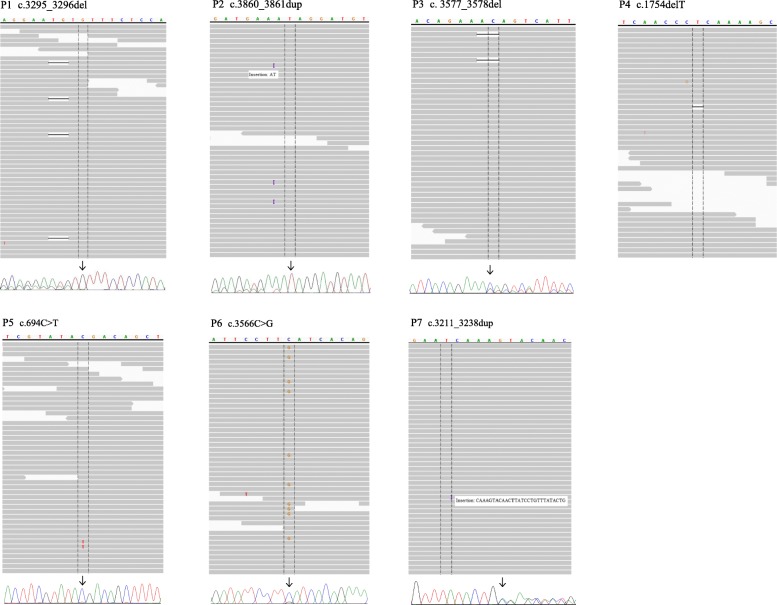
Among 28 patients with clinical suspicion of FAP but no detectable pathogenic variants of colonic polyposis associated genes, somatic mosaic pathogenic variants were identified in seven patients. The variant allele frequency ranged from 0.3 to 7.7%. These variants were mostly detected through variant caller MuTect2 and Pindel, and were further confirmed using mutant enrichment with MEMO-PCR.
The NGS with an adequate combination of bioinformatics tools is effective to detect low level somatic variants in a single assay. Because mosaic APC mutations are more frequent than previously thought, the presence of mosaic mutations must be considered when analyzing genetic tests of patients with FAP.
家族性腺瘤性息肉病(FAP)是一种常染色体显性遗传的结直肠肿瘤,其特征为大量腺瘤性结肠息肉,常导致结肠癌。尽管大多数 FAP 患者携带 APC 基因突变,但最近发现,具有临床 FAP 但未检测到致病性突变的患者可能与体细胞镶嵌 APC 突变有关。
我们重新分析了 2016 年 7 月至 2018 年 3 月期间在延世癌症预防中心被诊断为 FAP 但无 APC 突变的患者的巢代测序(NGS)基因面板检测结果。我们测试了几种变异calling 算法来识别低水平镶嵌变体。在一名 APC 突变低频的患者中,我们同时进行了 NGS 分析和内镜活检。使用了 HaplotypeCaller、MuTect2、VarScan2 和 Pindel 等变异calling 工具。我们还使用 3'修饰寡核苷酸(MEMO)-PCR 或常规 PCR 进行确认。
在 28 名具有临床怀疑患有 FAP 但未检测到与结肠息肉相关基因的致病性变异的患者中,7 名患者被确定存在体细胞镶嵌致病性变异。变异等位基因频率从 0.3%到 7.7%不等。这些变体主要通过变异caller MuTect2 和 Pindel 检测到,并通过使用 MEMO-PCR 进行突变富集进一步确认。
NGS 与适当的生物信息学工具相结合,可有效地在单次检测中检测低水平的体细胞变异。由于镶嵌 APC 突变比以前认为的更为常见,因此在分析 FAP 患者的遗传检测时,必须考虑到镶嵌突变的存在。