
遗传性结直肠癌:基因组医学与精准肿瘤学的临床意义
Hereditary Colorectal Cancer: Clinical Implications of Genomic Medicine and Precision Oncology.
作者信息
Yamada Atsushi, Kondo Tomohiro
机构信息
Department of Clinical Oncology, Kyoto University Hospital, Kyoto, Japan.
Department of Real-World Data Research and Development, Graduate School of Medicine, Kyoto University, Kyoto, Japan.
出版信息
J Anus Rectum Colon. 2025 Apr 25;9(2):167-178. doi: 10.23922/jarc.2025-001. eCollection 2025.
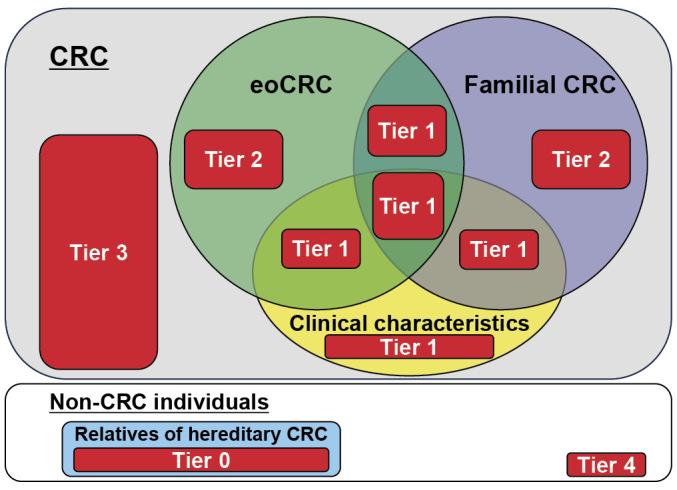
Approximately 10% of colorectal cancer (CRC) cases occur in the context of hereditary cancer-predisposing conditions caused by germline pathogenic variants (PVs) in cancer predisposition genes, with Lynch syndrome and familial adenomatous polyposis at the top of the list. Although the identification of hereditary CRC has traditionally relied on clinical characteristics, including familial accumulation, multiple and early onset of CRC and other related cancers, and the presence of gastrointestinal polyposis, more comprehensive approaches, such as universal tumor screening and universal germline testing, have recently been employed. From a technical standpoint, next-generation sequencing has enabled genome-wide analysis of genetic alterations in germline and somatic settings. Taking advantage of this technology, germline multigene panel testing has been utilized in genetic testing, which leads to the identification of PVs, not only in well-known hereditary CRC genes but also in rare causal genes, moderate-risk genes, and high-risk genes previously not linked to CRC predisposition. In addition, comprehensive genomic profiling and companion diagnostics for solid tumors occasionally yield unexpected hereditary CRC diagnoses. Thus, more hereditary CRCs have been identified not based on clinical phenotypes but rather by comprehensive approaches or as secondary findings of treatment drug testing. In this review, we discuss the impact of recent advances in genomic medicine on the clinical aspects of hereditary CRC, which has promoted an understanding of the entire landscape of genetic predisposition to CRC.
大约10%的结直肠癌(CRC)病例发生在由癌症易感基因中的种系致病性变异(PVs)引起的遗传性癌症易感条件下,其中林奇综合征和家族性腺瘤性息肉病位居榜首。虽然遗传性CRC的识别传统上依赖于临床特征,包括家族聚集、CRC和其他相关癌症的多发和早发,以及胃肠道息肉病的存在,但最近采用了更全面的方法,如普遍肿瘤筛查和普遍种系检测。从技术角度来看,下一代测序能够对种系和体细胞环境中的基因改变进行全基因组分析。利用这项技术,种系多基因panel检测已被用于基因检测,这不仅能识别出知名遗传性CRC基因中的PVs,还能识别出罕见的致病基因、中度风险基因和先前与CRC易感性无关的高风险基因。此外,实体瘤的综合基因组分析和伴随诊断偶尔也会得出意外的遗传性CRC诊断结果。因此,更多的遗传性CRC不是基于临床表型,而是通过综合方法或作为治疗药物检测的次要发现而被识别出来的。在这篇综述中,我们讨论了基因组医学的最新进展对遗传性CRC临床方面的影响,这促进了对CRC遗传易感性全貌的理解。
 Zotero 插件