State Key Laboratory of Crop Genetics and Germplasm Enhancement, Nanjing Agricultural University, Nanjing, China.
Zhejiang Provincial Key Laboratory of Crop Genetic Resources, Institute of Crop Science, College of Agriculture and Biotechnology, Zhejiang University, Zhejiang, China.
J Exp Bot. 2019 Oct 15;70(19):5145-5156. doi: 10.1093/jxb/erz312.
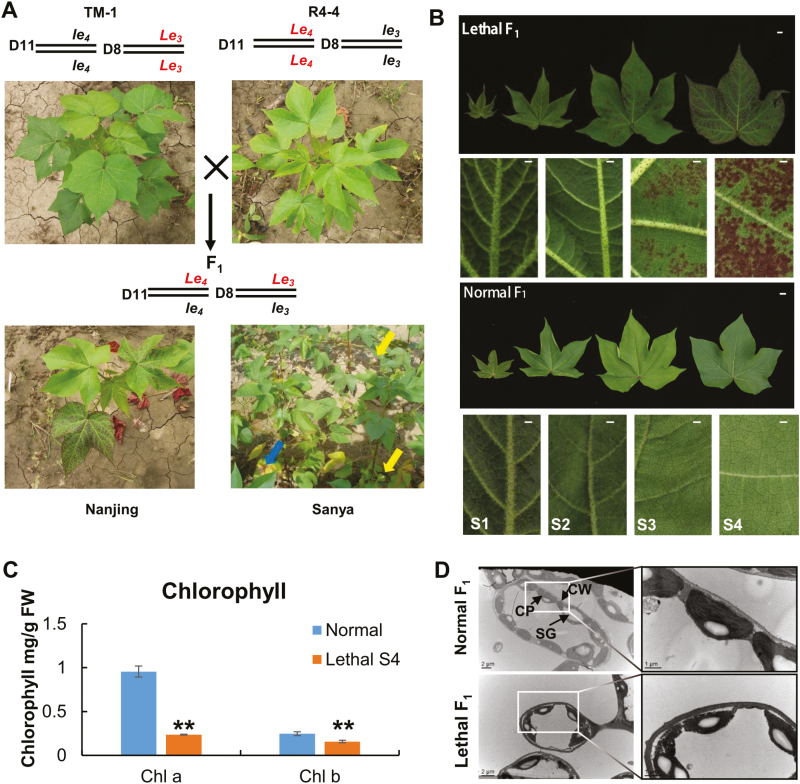
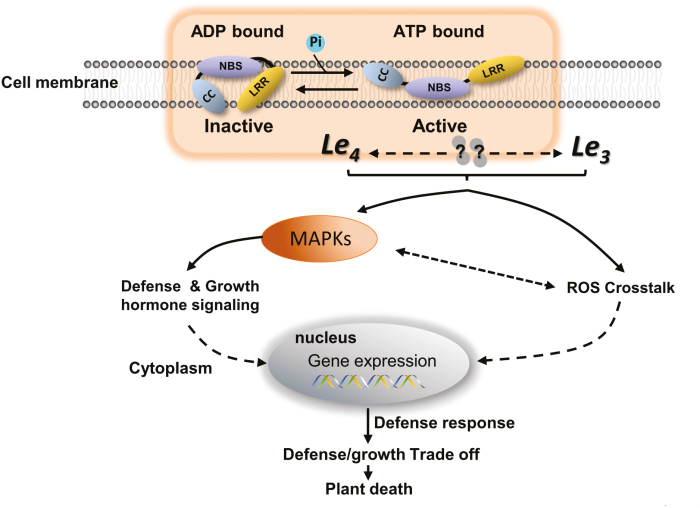
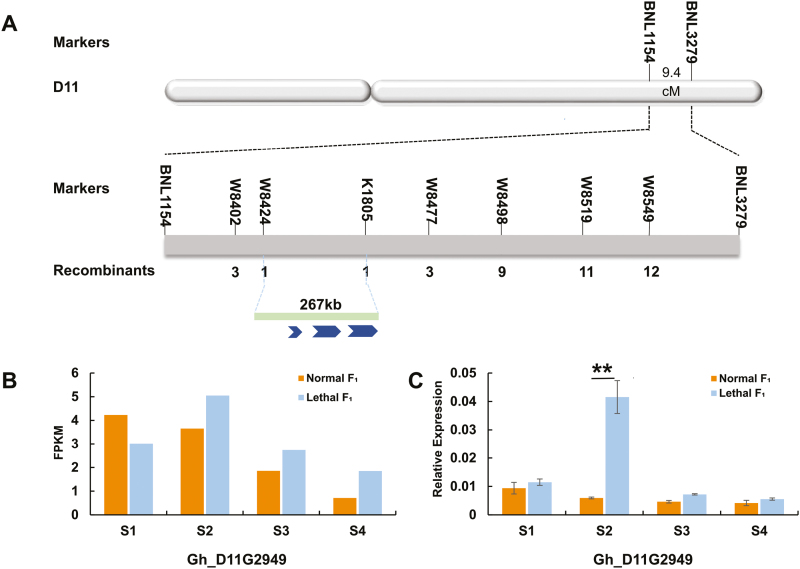
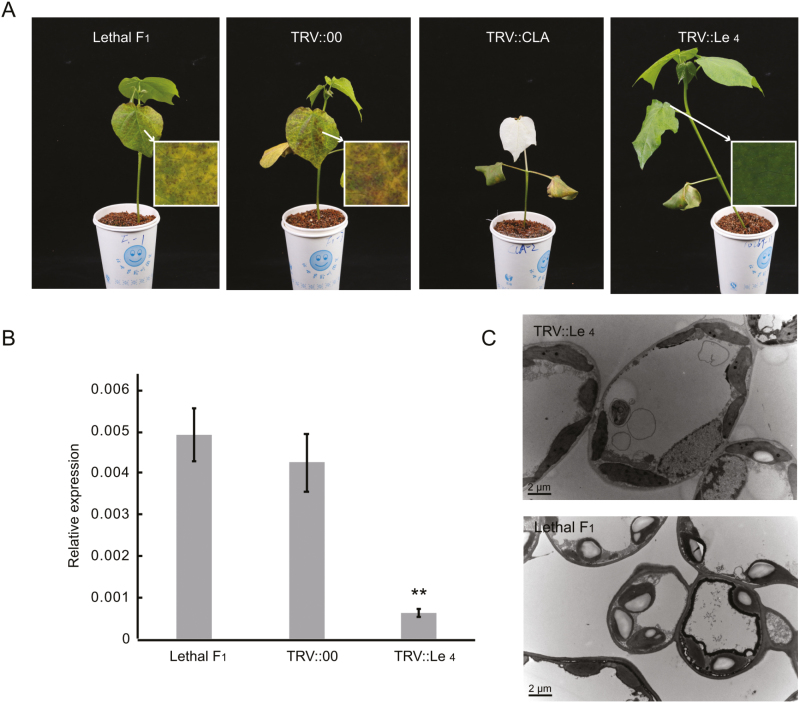
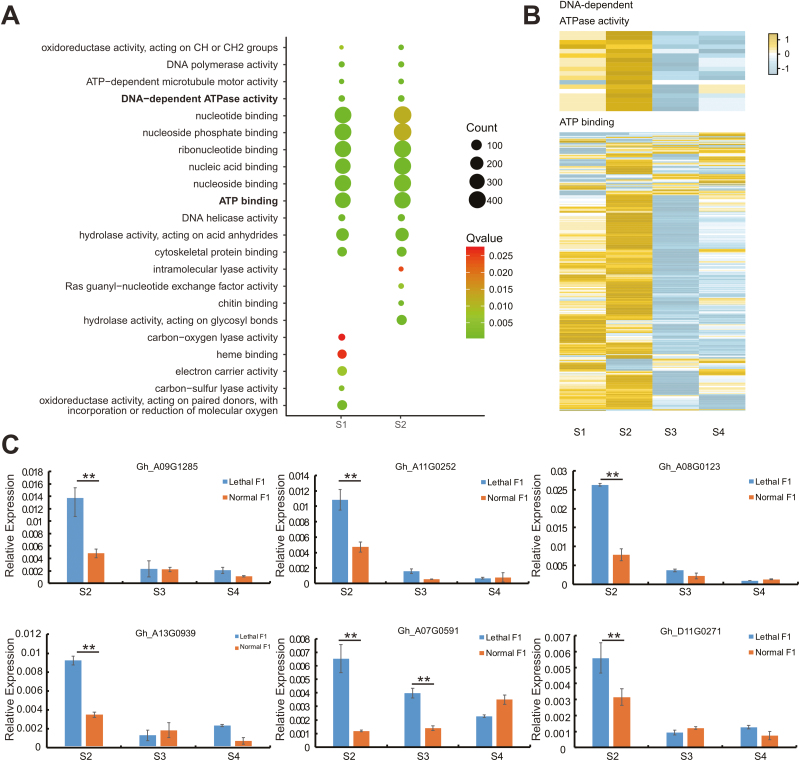
Hybrid lethality forms a reproductive barrier that has been found in many eukaryotes. Most cases follow the Bateson-Dobzhansky-Muller genetic incompatibility model and involve two or more loci. In this study, we demonstrate that a coiled-coil nucleotide-binding site leucine-rich repeat (CC-NBS-LRR) gene is the causal gene underlying the Le4 locus for interspecific hybrid lethality between Gossypium barbadense and G. hirsutum (cotton). Silencing this CC-NBS-LRR gene can restore F1 plants from a lethal to a normal phenotype. A total of 11 099 genes were differentially expressed between the leaves of normal and lethal F1 plants, of which genes related to autoimmune responses were highly enriched. Genes related to ATP-binding and ATPase were up-regulated before the lethal syndrome appeared; this may result in the conversion of Le4 into an active state and hence trigger immune signals in the absence of biotic/abiotic stress. We discuss our results in relation to the evolution and domestication of Sea Island cottons and the molecular mechanisms of hybrid lethality associated with autoimmune responses. Our findings provide new insights into reproductive isolation and may benefit cotton breeding.
杂种致死性形成了生殖隔离,这种现象在许多真核生物中都有发现。大多数情况下遵循的是贝特森-多布赞斯基-穆勒遗传不相容模型,涉及两个或更多的基因座。在这项研究中,我们证明了一个卷曲螺旋核苷酸结合位点富含亮氨酸重复(CC-NBS-LRR)基因是种间杂交致死性的 Le4 基因座的候选基因,该基因座存在于 Gossypium barbadense 和 G. hirsutum(棉花)之间。沉默这个 CC-NBS-LRR 基因可以将致死性的 F1 植株恢复为正常表型。在正常和致死性 F1 植株的叶片之间,共有 11099 个基因表达差异,其中与自身免疫反应相关的基因高度富集。在致死综合征出现之前,与 ATP 结合和 ATP 酶相关的基因上调;这可能导致 Le4 进入活跃状态,并在没有生物/非生物胁迫的情况下触发免疫信号。我们根据海岛棉的进化和驯化以及与自身免疫反应相关的杂种致死性的分子机制讨论了我们的结果。我们的发现为生殖隔离提供了新的见解,并可能有益于棉花的培育。