Colombo Desirée, Fernández-Álvarez Javier, García Palacios Azucena, Cipresso Pietro, Botella Cristina, Riva Giuseppe
Department of Basic Psychology, Clinical and Psychobiology, Jaume I University, Castellón de la Plana, Spain.
Department of Psychology, Università Cattolica del Sacro Cuore, Milan, Italy.
Front Psychol. 2019 Jun 18;10:1261. doi: 10.3389/fpsyg.2019.01261. eCollection 2019.
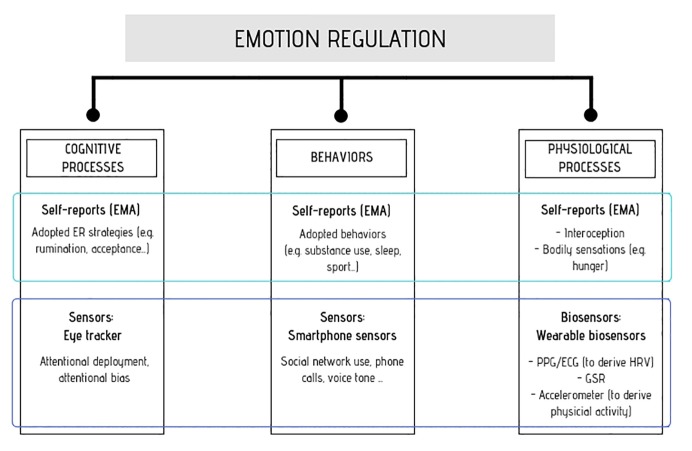
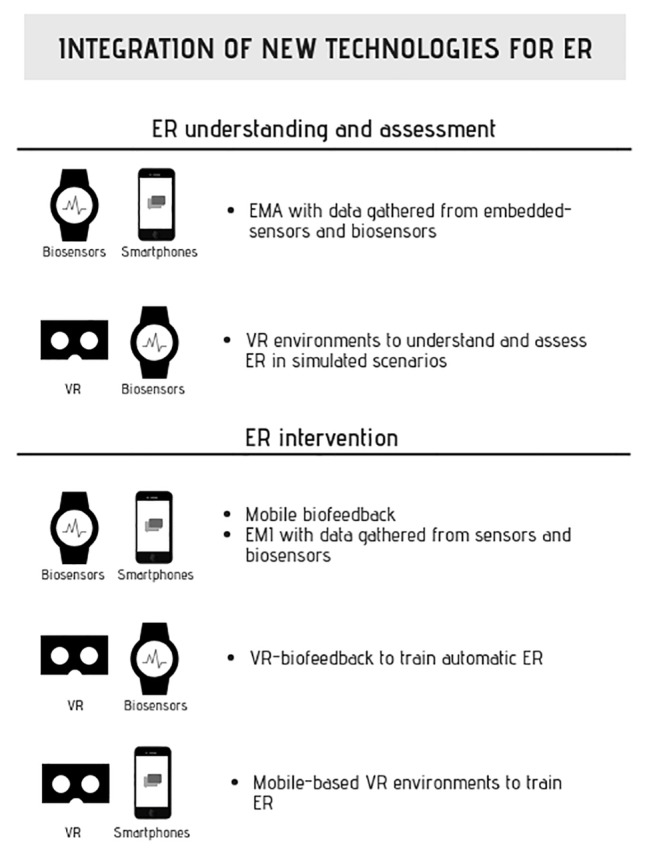
In the last decades, emotion regulation (ER) received increasing attention and became one of the most studied topics within the psychological field. Nevertheless, this construct has not been fully updated with the latest technological advancements. In this perspective, we will show how diverse technologies, such as virtual reality (VR), wearable biosensors, smartphones, or biofeedback techniques, can be applied to the understanding, assessment, and intervention of ER. After providing a brief overview of the currently available technological developments, we will discuss the benefits of incorporating new technologies in ER field, including ecological validity, intervention personalization, and the integration of understudied facets of ER, such as the implicit and interpersonal dimension.
在过去几十年里,情绪调节受到了越来越多的关注,并成为心理学领域研究最多的主题之一。然而,这一概念尚未完全跟上最新的技术进步。从这个角度来看,我们将展示虚拟现实(VR)、可穿戴生物传感器、智能手机或生物反馈技术等多种技术如何应用于情绪调节的理解、评估和干预。在简要概述当前可用的技术发展之后,我们将讨论在情绪调节领域引入新技术的好处,包括生态效度、干预个性化以及整合情绪调节中未被充分研究的方面,如内隐维度和人际维度。