Key Laboratory of Experimental Marine Biology, Institute of Oceanology, Chinese Academy of Sciences, 7 Nanhai Road, Qingdao 266071, China.
Laboratory for Marine Biology and Biotechnology, Qingdao National Laboratory for Marine Science and Technology, Qingdao 266237, China.
Mar Drugs. 2019 Jul 4;17(7):395. doi: 10.3390/md17070395.
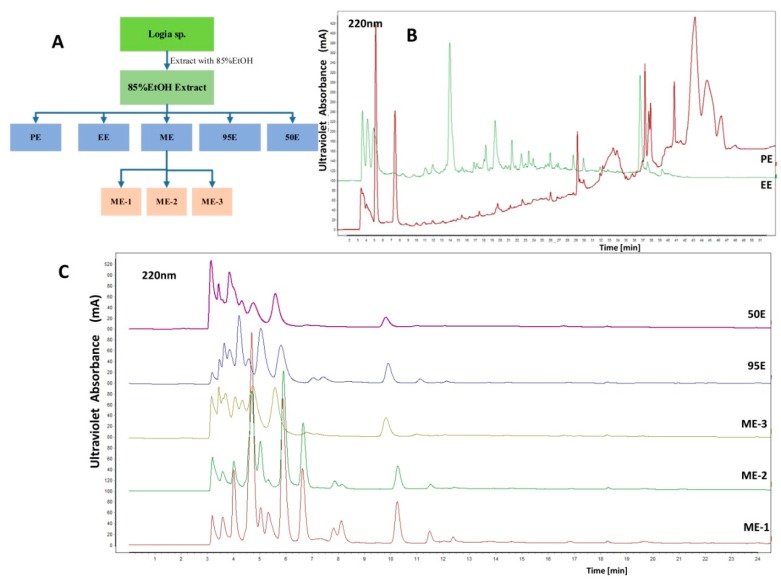
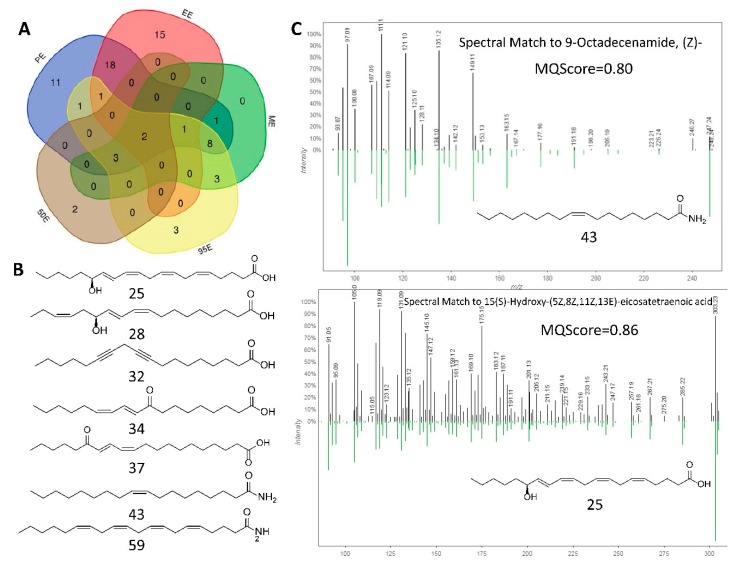
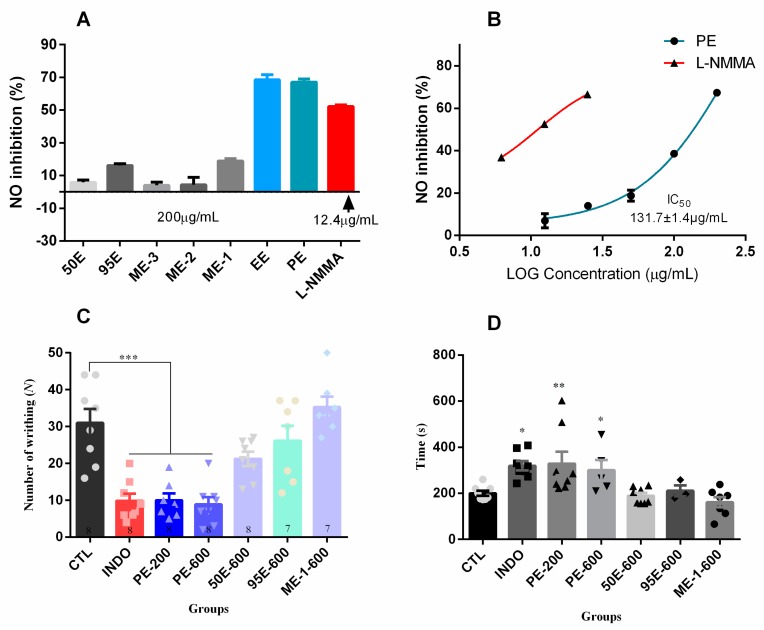
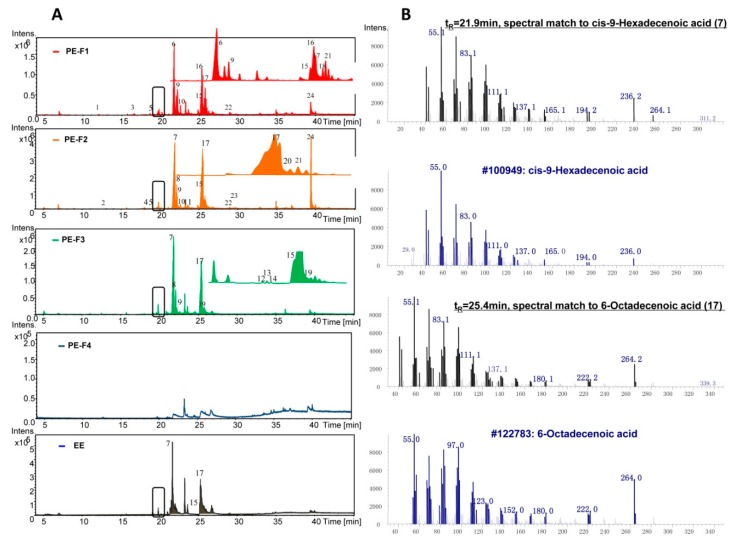
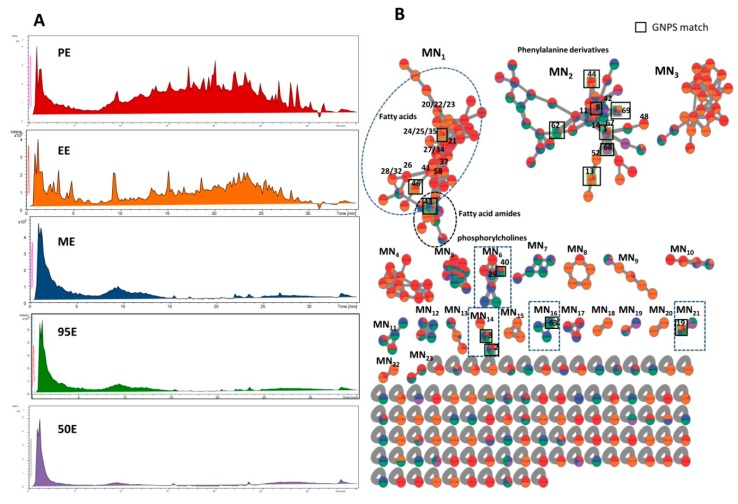
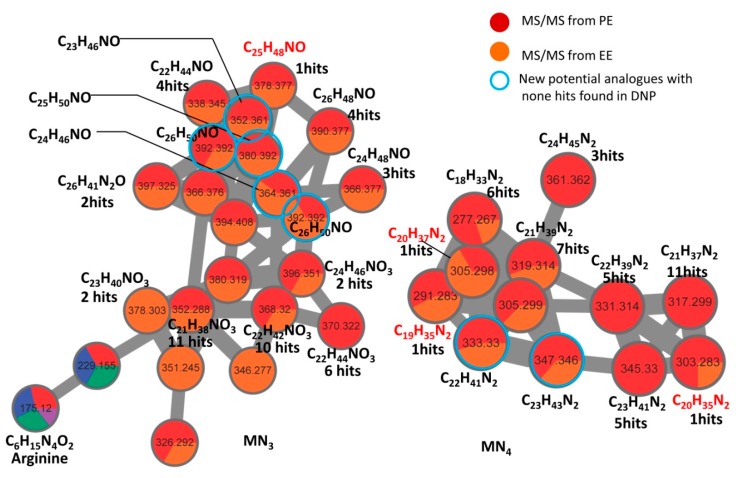
The sea slater is believed to have effects of reducing swelling and relieving pain in Chinese folk medicine. However, the scientific foundation of using the sea slater spp. as an analgesic and anti-inflammatory material remains elusive. In the present study, various organic extracts from sea slater were subjected to biological screening employing in vitro and in vivo models, and chemical phenotypes of the biologically active extract were deciphered by integrated gas chromatograph-mass spectrometry (GC-MS) profiling and MS/MS-based molecular networking. The results demonstrated, for the first time, that petroleum ether extract (PE) from possessed remarkable anti-inflammatory and analgesic effects. Moreover, intragastric administration of PE at 200 mg/kg produced analgesic effects in both the writhing test and hot plate test. GC-MS analysis revealed that Z-9-hexadecenoic acid and 6-octadecenoic acid dominated in the volatile compositions of PE. Molecular networking (MN) suggested great chemical diversity within . In total, 69 known compounds were identified in extracts by MS/MS spectral matching, and at least 7 analogues from two clusters of nitrogen-containing compounds (MN) were strongly suggested as novel compounds. The molecular families MN were almost exclusively detected in the biologically active PE and ethyl acetate extract (EE). Importantly, various known compounds identified in MN were reported to possess analgesic and anti-inflammatory effects in the literature, which may contribute to the observed analgesic and anti-inflammatory effects of . The present study not only demonstrated the ethnopharmaceutical value of for pain-relief in Chinese folk medicine, but also suggested that sea slaters may represent a promising source for discovery of novel analgesic and anti-inflammatory compounds in the near future.
在中国民间医学中,海蟑螂被认为具有消肿止痛的功效。然而,将海蟑螂 spp. 作为一种镇痛和抗炎物质的科学依据仍不清楚。在本研究中,使用体外和体内模型对海蟑螂的各种有机提取物进行了生物筛选,并通过集成气相色谱-质谱 (GC-MS) 分析和基于 MS/MS 的分子网络解析了具有生物活性的提取物的化学表型。结果首次表明,来自海蟑螂的石油醚提取物 (PE) 具有显著的抗炎和镇痛作用。此外,PE 在 200mg/kg 的剂量下经胃给药在扭体试验和热板试验中均产生了镇痛作用。GC-MS 分析表明,Z-9-十六烯酸和 6-十八烯酸在 PE 的挥发性成分中占主导地位。分子网络 (MN) 表明 内的化学多样性很大。通过 MS/MS 光谱匹配,从 提取物中共鉴定出 69 种已知化合物,至少有 7 种来自两个含氮化合物(MN)簇的类似物被强烈认为是新化合物。MN 中的分子家族几乎仅在具有生物活性的 PE 和乙酸乙酯提取物 (EE) 中检测到。重要的是,MN 中鉴定出的各种已知化合物在文献中被报道具有镇痛和抗炎作用,这可能是 观察到的镇痛和抗炎作用的原因。本研究不仅证明了中国民间医学中海蟑螂在缓解疼痛方面的民族药理学价值,而且还表明海蟑螂可能在不久的将来成为发现新型镇痛和抗炎化合物的有前途的来源。