Translational Molecular Pathology Group, Vall d'Hebron Research Institute, Barcelona, Spain.
CIBERONC (Centro de Investigación Biomédica en Red de Cáncer), Madrid, Spain.
BMC Cancer. 2019 Jul 5;19(1):666. doi: 10.1186/s12885-019-5883-y.
Cancer is a rapidly evolving, multifactorial disease that accumulates numerous genetic and epigenetic alterations. This results in molecular and phenotypic heterogeneity within the tumor, the complexity of which is further amplified through specific interactions between cancer cells. We aimed to dissect the molecular mechanisms underlying the cooperation between different clones.
We produced clonal cell lines derived from the MDA-MB-231 breast cancer cell line, using the UbC-StarTrack system, which allowed tracking of multiple clones by color: GFP C3, mKO E10 and Sapphire D7. Characterization of these clones was performed by growth rate, cell metabolic activity, wound healing, invasion assays and genetic and epigenetic arrays. Tumorigenicity was tested by orthotopic and intravenous injections. Clonal cooperation was evaluated by medium complementation, co-culture and co-injection assays.
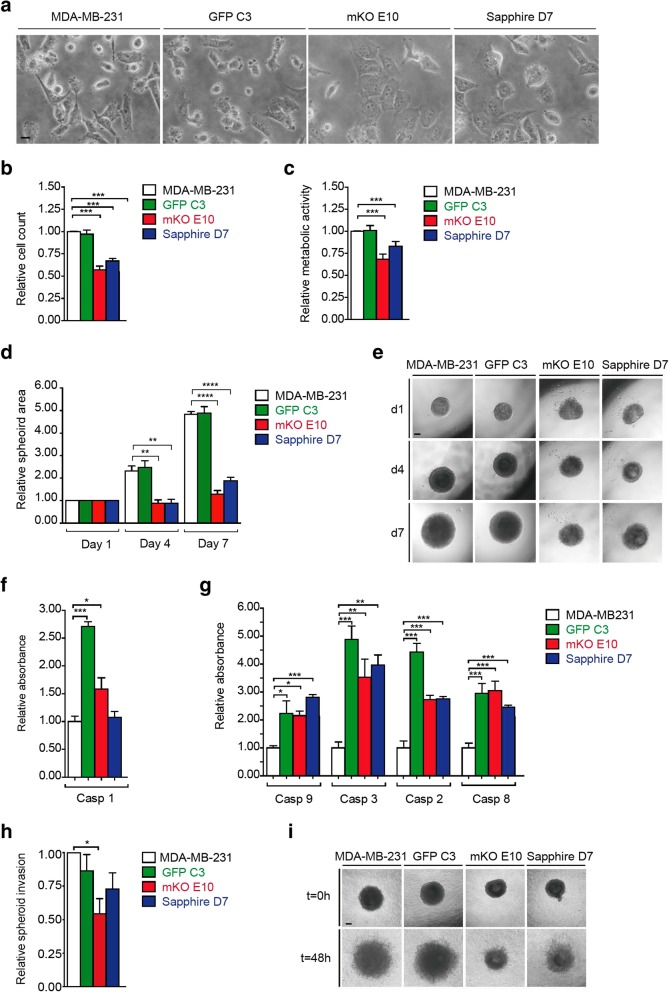
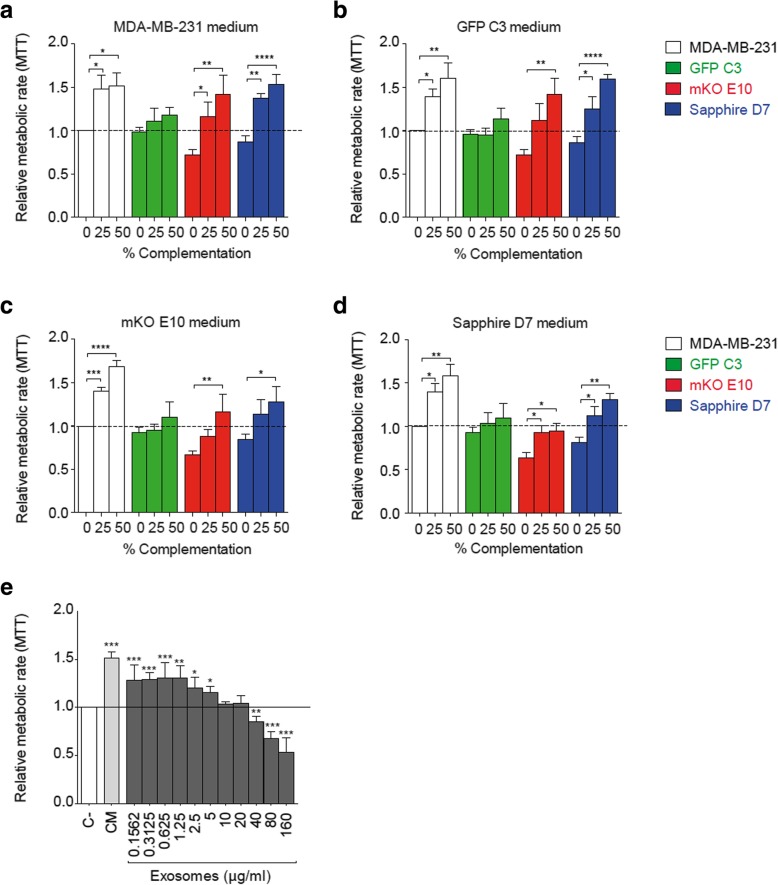
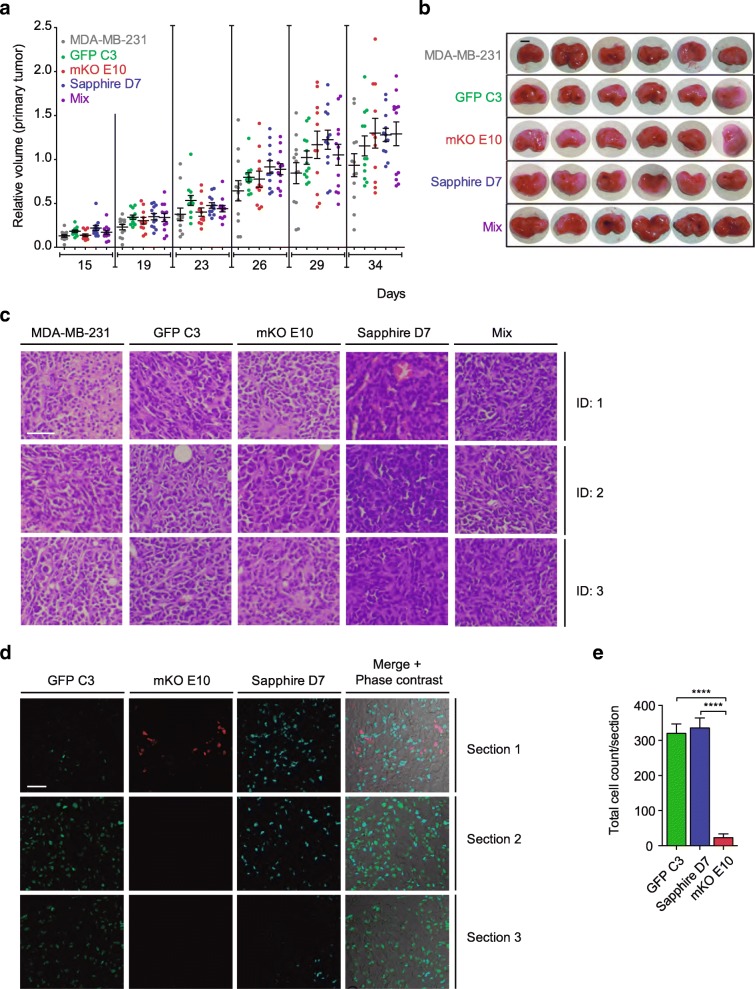
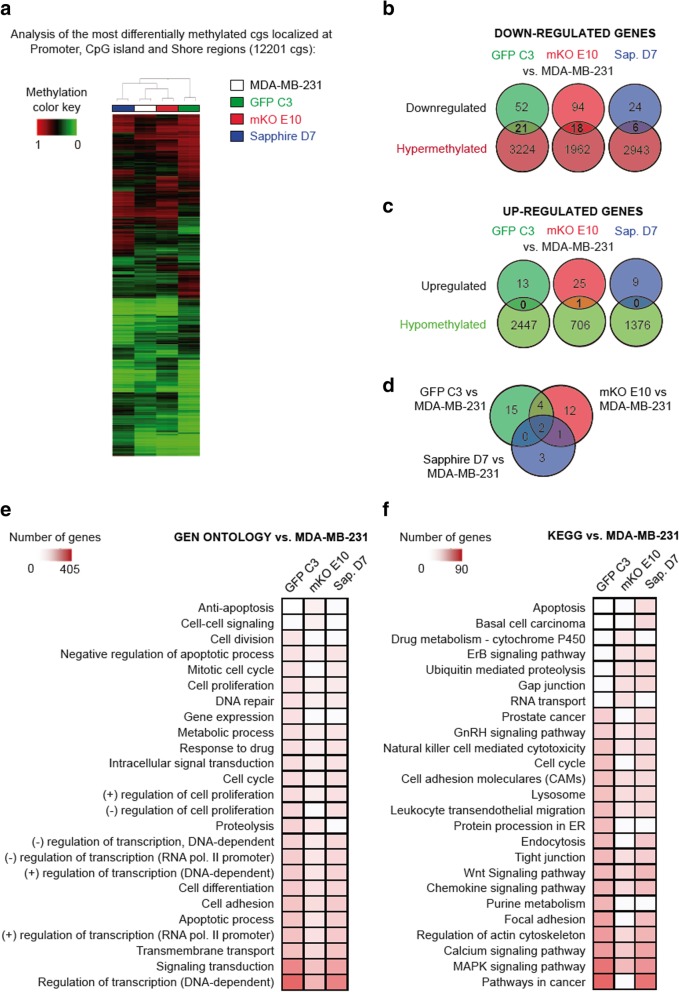
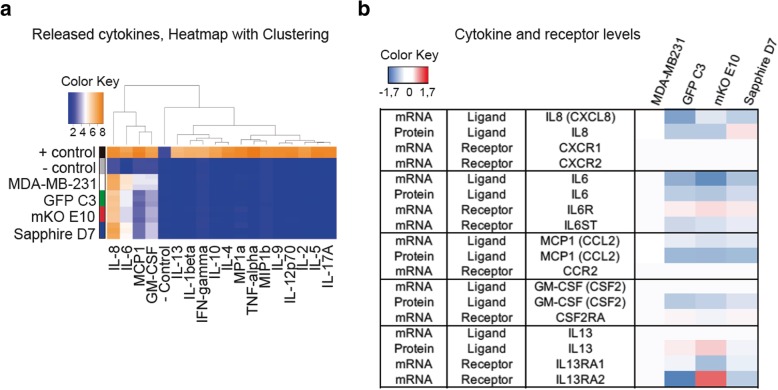
Characterization of these clones in vitro revealed clear genetic and epigenetic differences that affected growth rate, cell metabolic activity, morphology and cytokine expression among cell lines. In vivo, all clonal cell lines were able to form tumors; however, injection of an equal mix of the different clones led to tumors with very few mKO E10 cells. Additionally, the mKO E10 clonal cell line showed a significant inability to form lung metastases. These results confirm that even in stable cell lines heterogeneity is present. In vitro, the complementation of growth medium with medium or exosomes from parental or clonal cell lines increased the growth rate of the other clones. Complementation assays, co-growth and co-injection of mKO E10 and GFP C3 clonal cell lines increased the efficiency of invasion and migration.
These findings support a model where interplay between clones confers aggressiveness, and which may allow identification of the factors involved in cellular communication that could play a role in clonal cooperation and thus represent new targets for preventing tumor progression.
癌症是一种快速演变的多因素疾病,会积累大量的遗传和表观遗传改变。这导致肿瘤内存在分子和表型异质性,而癌细胞之间的特定相互作用进一步放大了这种复杂性。我们旨在剖析不同克隆间合作的分子机制。
我们使用 UbC-StarTrack 系统从 MDA-MB-231 乳腺癌细胞系中产生了克隆细胞系,该系统允许通过颜色跟踪多个克隆:GFP C3、mKO E10 和 Sapphire D7。通过生长速度、细胞代谢活性、划痕愈合、侵袭实验以及遗传和表观遗传阵列对这些克隆进行了表征。通过原位和静脉注射测试了肿瘤发生能力。通过培养基互补、共培养和共注射实验评估了克隆合作。
对这些克隆的体外特性分析揭示了明显的遗传和表观遗传差异,这些差异影响了细胞系之间的生长速度、细胞代谢活性、形态和细胞因子表达。在体内,所有克隆细胞系均能够形成肿瘤;然而,注射等量的不同克隆导致肿瘤中 mKO E10 细胞非常少。此外,mKO E10 克隆细胞系形成肺转移的能力显著降低。这些结果证实,即使在稳定的细胞系中也存在异质性。在体外,用亲本或克隆细胞系的培养基或外泌体补充生长培养基会增加其他克隆的生长速度。互补实验、mKO E10 和 GFP C3 克隆细胞系的共生长和共注射增加了侵袭和迁移的效率。
这些发现支持了这样一种模型,即克隆间的相互作用赋予了侵袭性,并且可能鉴定出参与细胞通讯的因子,这些因子可能在克隆合作中发挥作用,从而代表预防肿瘤进展的新靶点。