Faculty of Medicine, Institute of Surgical Research, University of Szeged, Szeged, Hungary.
Cardiovascular Research Group, Department of Biochemistry, University of Szeged, Szeged, Hungary.
Mol Cell Biochem. 2019 Oct;460(1-2):195-203. doi: 10.1007/s11010-019-03580-1. Epub 2019 Jul 6.
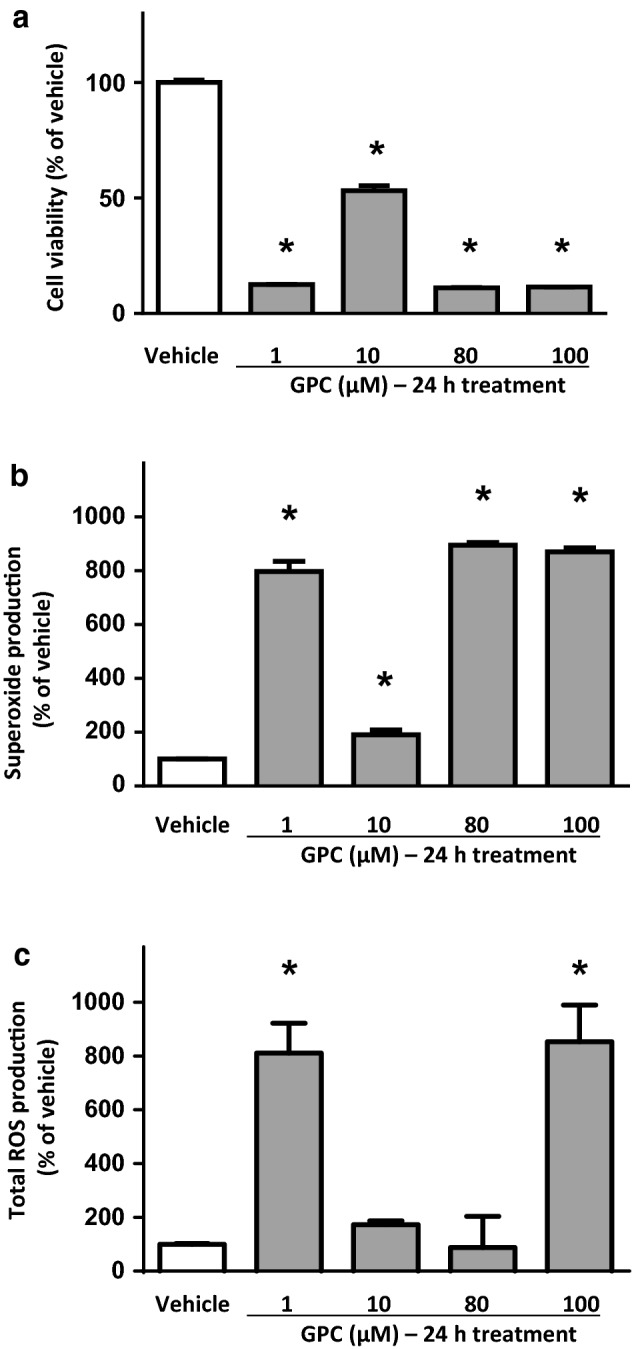
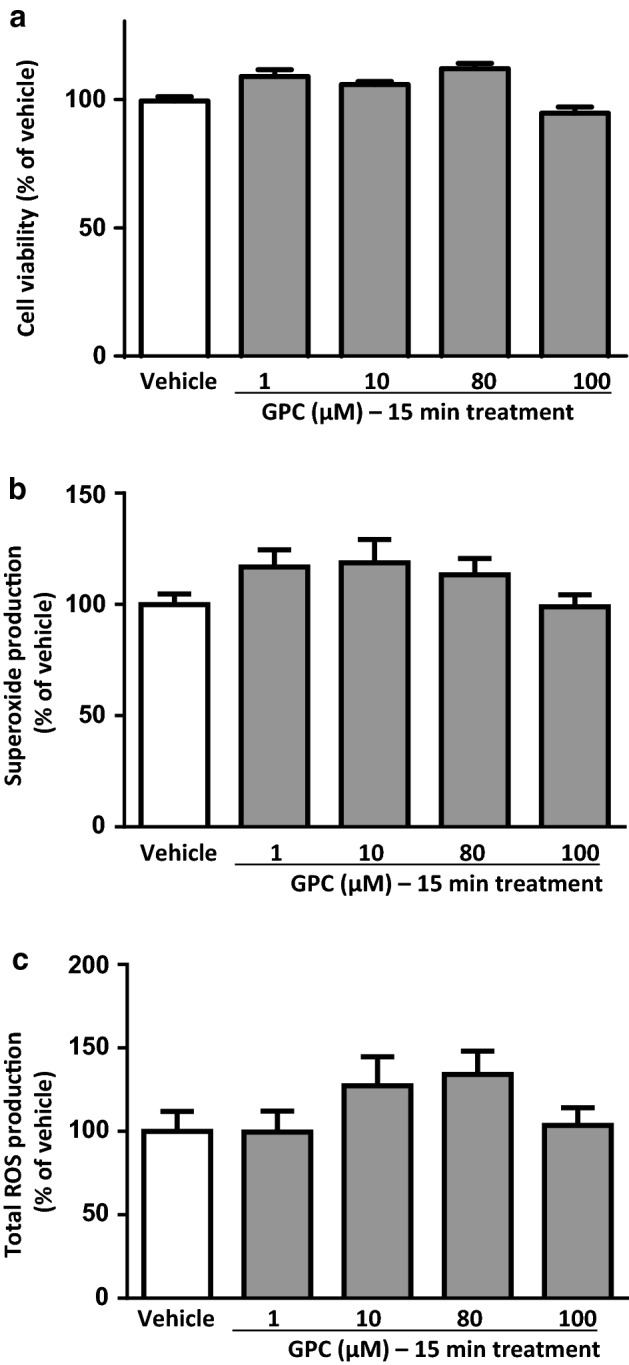
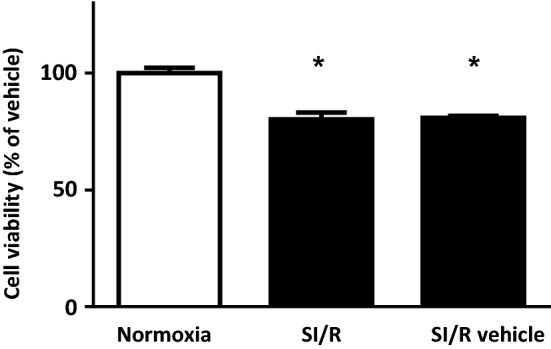
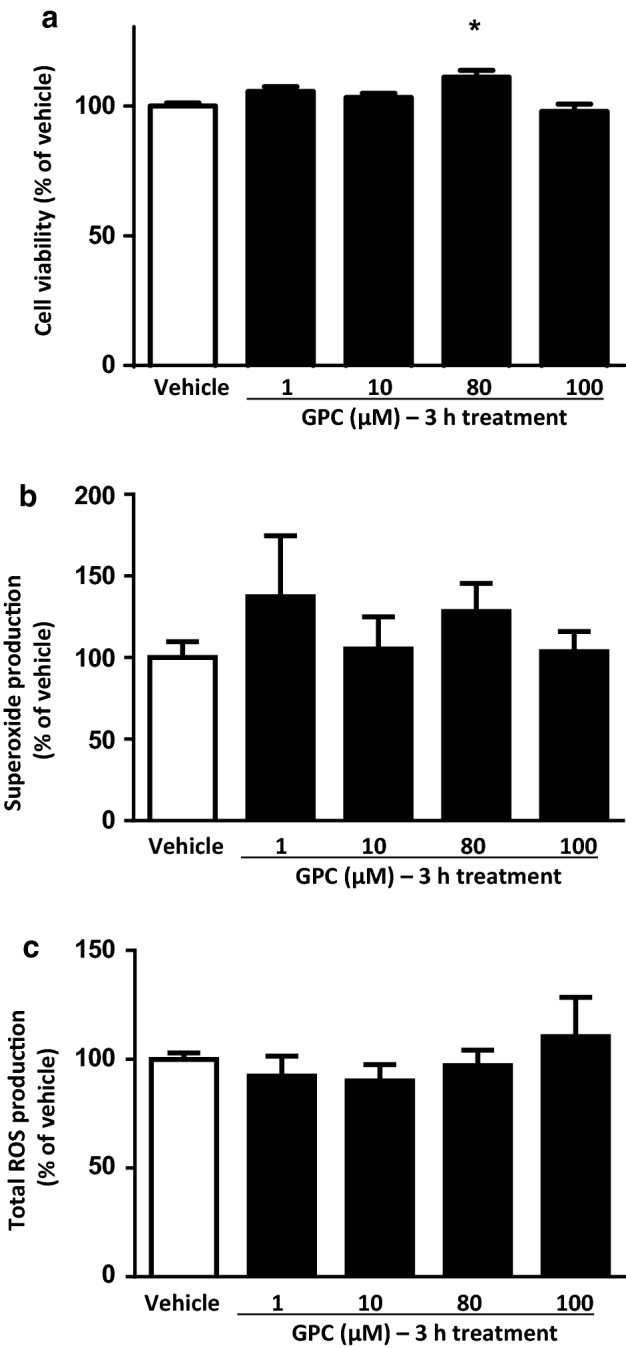
L-Alpha-glycerylphosphorylcholine (GPC) is a widely used food supplement. GPC has been shown to exert beneficial effects in several organs; however, the cardiac effects of GPC have yet to be investigated. The aim of the present study was therefore to map out the effects of GPC on cardiac myocytes, with or without ischemia-reperfusion insult. Neonatal rat cardiac myocytes were treated with GPC at 1, 10, 80, and 100 µM concentrations for 15 min, 3 h, or 24 h, respectively. Cell viability by calcein assay and the degree of oxidative stress by DHE (superoxide level) and HDCF (total ROS accumulation) staining were measured. In separate experiments, cardiomyocytes were pre-treated with the optimal concentration of GPC for 3 h and then cells were exposed to 4 h of simulated ischemia followed by 2 h of reperfusion (SI/R). Cell viability was measured at the end of the SI/R protocol. In normoxic conditions, the 15-min and the 3-h GPC treatment did not affect cell viability, total ROS, and superoxide levels. Under SI/R conditions, the 3-h GPC treatment protected the cardiac myocytes from SI/R-induced cell death and did not alter the level of oxidative stress. The 24-h GPC treatment in normoxic conditions resulted in significant cell death and increased oxidative stress at each concentration. Here we provide the first evidence for the cytoprotective effect of short-term GPC treatment. However, long-term administration of GPC may exert cytotoxicity in a wide concentration range in cardiac myocytes. These results may draw attention to a comprehensive cardiac safety protocol for the testing of GPC.
L-α-甘油磷酸胆碱(GPC)是一种广泛使用的膳食补充剂。已经证明 GPC 对几种器官都有有益的影响;然而,GPC 的心脏效应尚未得到研究。因此,本研究旨在探讨 GPC 对心肌细胞的影响,包括有无缺血再灌注损伤。分别用 1、10、80 和 100 μM 的 GPC 处理乳鼠心肌细胞 15 分钟、3 小时或 24 小时。通过钙黄绿素测定法测量细胞活力,通过 DHE(超氧化物水平)和 HDCF(总 ROS 积累)染色测量氧化应激程度。在单独的实验中,心肌细胞用最佳浓度的 GPC 预处理 3 小时,然后暴露于 4 小时模拟缺血,随后再灌注 2 小时(SI/R)。在 SI/R 方案结束时测量细胞活力。在常氧条件下,15 分钟和 3 小时的 GPC 处理不影响细胞活力、总 ROS 和超氧化物水平。在 SI/R 条件下,3 小时的 GPC 处理可保护心肌细胞免受 SI/R 诱导的细胞死亡,并且不会改变氧化应激水平。常氧条件下 24 小时的 GPC 处理导致显著的细胞死亡和每个浓度的氧化应激增加。这里我们首次提供了短期 GPC 处理具有细胞保护作用的证据。然而,GPC 的长期给药可能会在广泛的浓度范围内对心肌细胞产生细胞毒性。这些结果可能会引起对 GPC 测试的全面心脏安全性方案的关注。