Makkos András, Szántai Ágnes, Pálóczi János, Pipis Judit, Kiss Bernadett, Poggi Paola, Ferdinandy Péter, Chatgilialoglu Alexandros, Görbe Anikó
Cardiometabolic Research Group, Department of Pharmacology and Pharmacotherapy, Semmelweis University, Budapest, Hungary.
Department of Biochemistry, University of Szeged, Szeged, Hungary.
Front Physiol. 2020 Jan 9;10:1564. doi: 10.3389/fphys.2019.01564. eCollection 2019.
The use of comorbidity models is crucial in cardioprotective drug development. Hypercholesterolemia causes endothelial and myocardial dysfunction, as well as aggravates ischemia/reperfusion (I/R)-induced myocardial injury. Endogenous cardioprotective mechanisms against I/R are impaired in hyperlipidemic and hyperglycemic animal models. Therefore, our aim was to develop a medium throughput comorbidity cell-based test system of myocardial I/R injury, hypercholesterolemia and hyperglycemia that mimics comorbidity conditions.
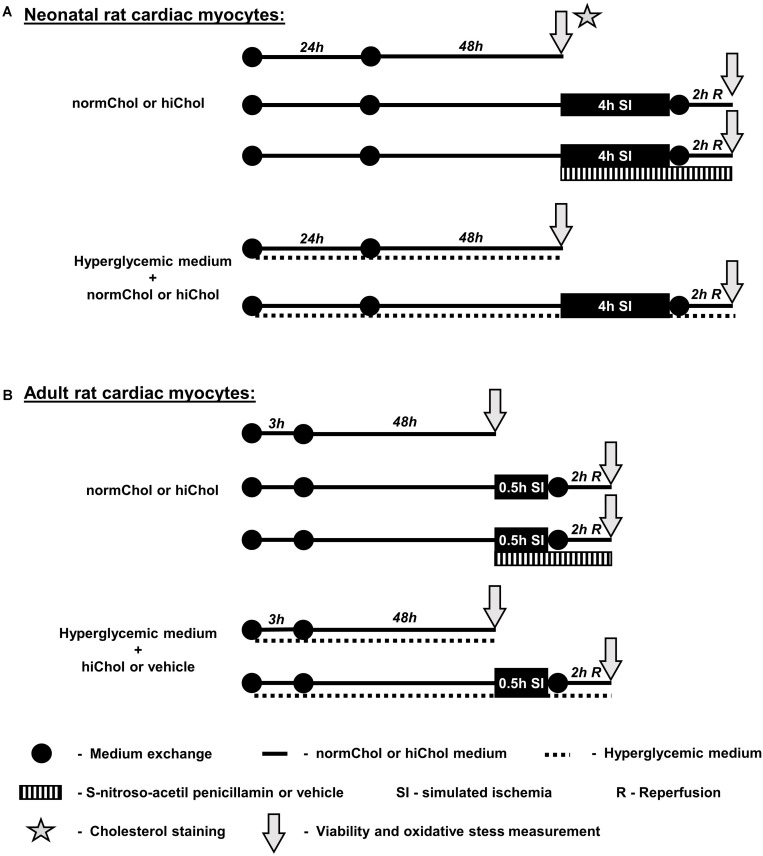
Cardiac myocytes isolated from neonatal or adult rat hearts were cultured in control or in three different hypercholesterolemic media with increasing cholesterol content (hiChol) or hiChol + hyperglycemic medium, respectively. Each group was then subjected to simulated ischemia/reperfusion (SI/R) or corresponding normoxic condition, respectively. Cholesterol uptake was tested by Filipin staining in neonatal cardiac myocytes. Cell viability, total cell count and oxidative stress, i.e., total reactive oxygen species (ROS) and superoxide level were measured by fluorescent assays.
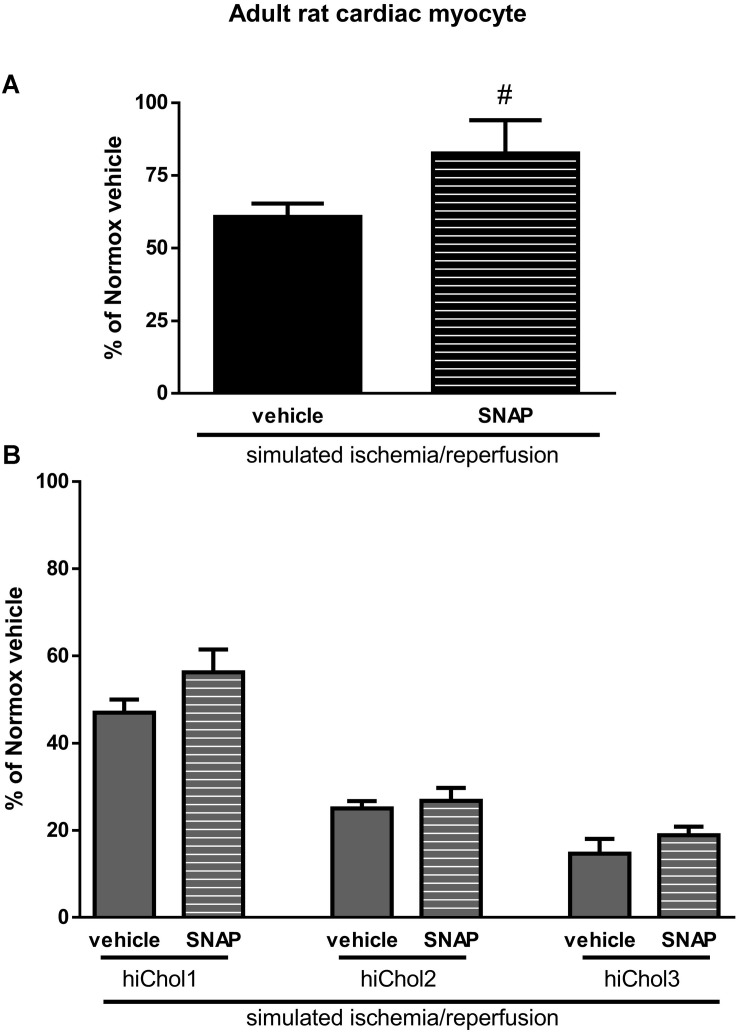
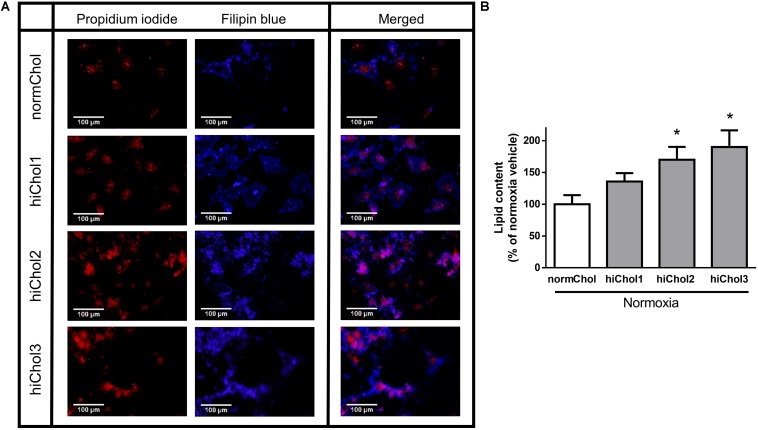
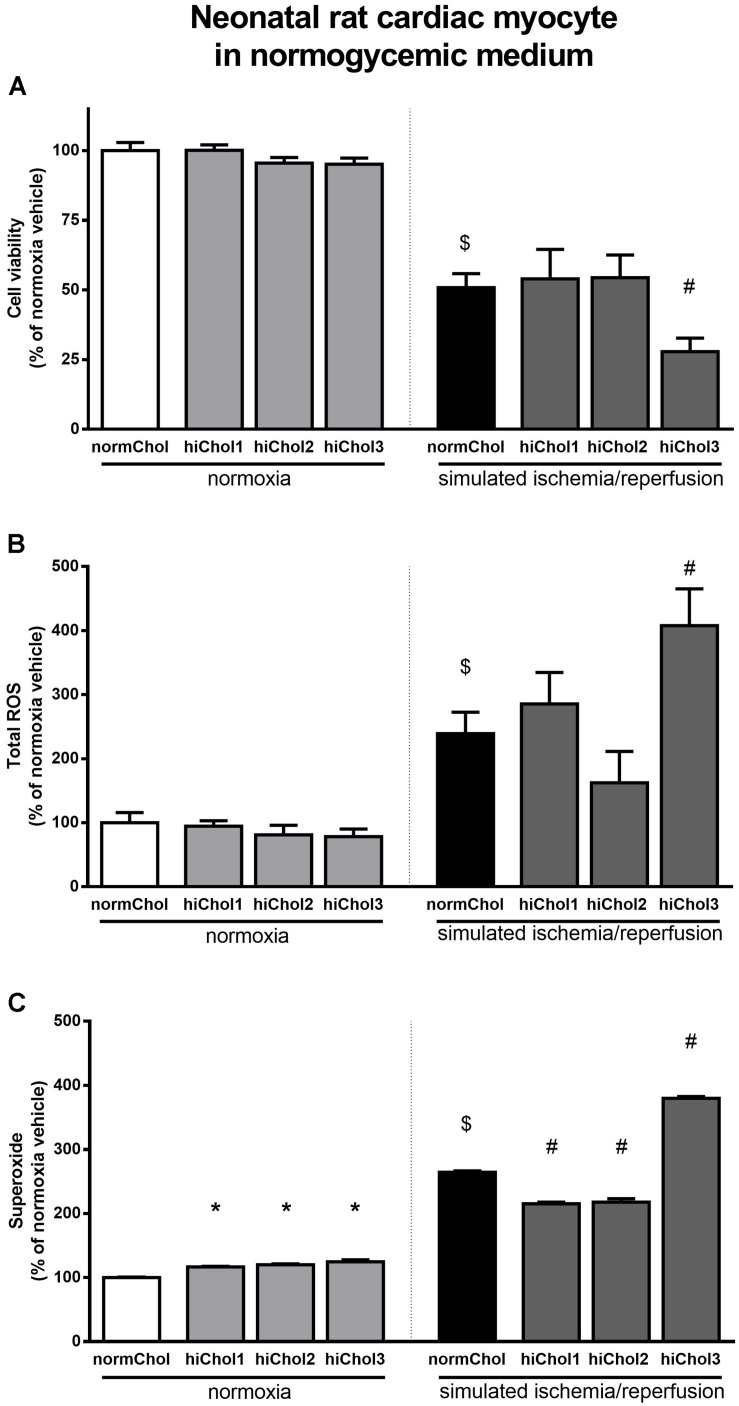
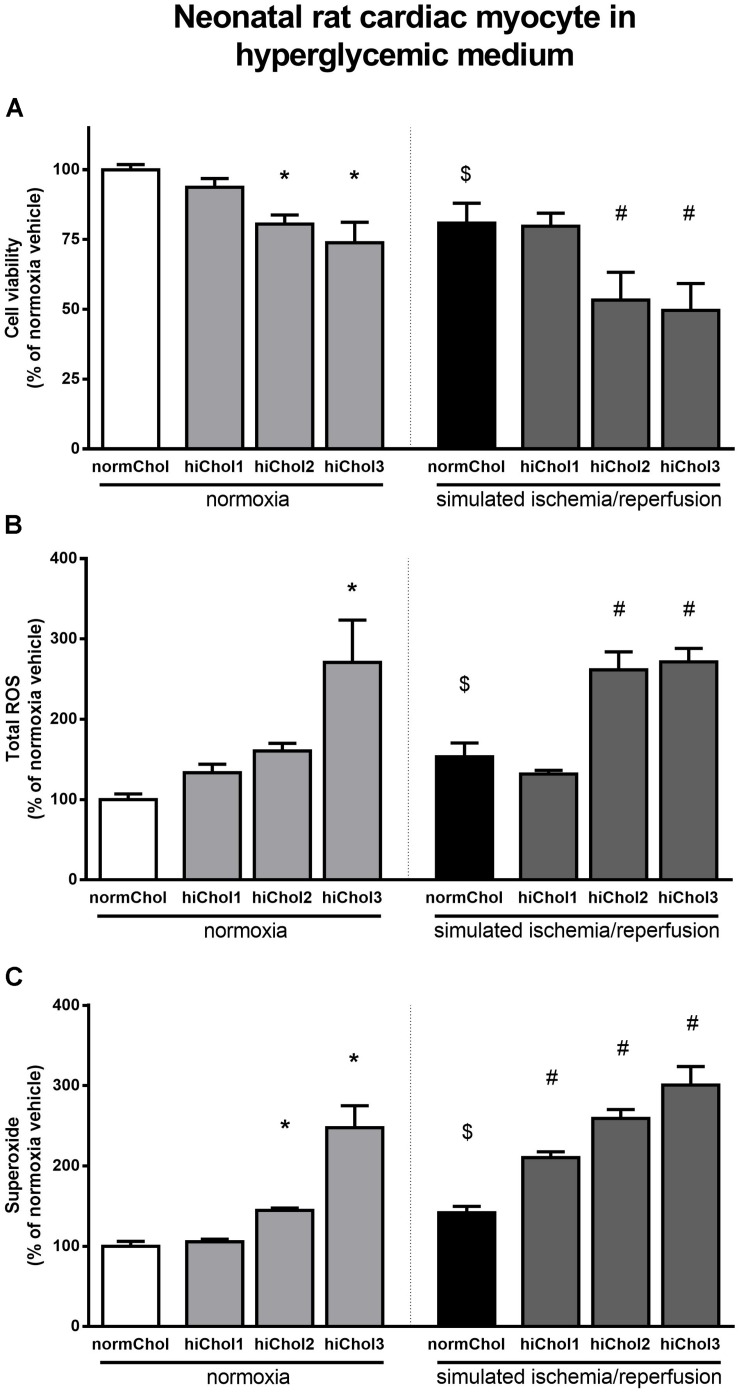
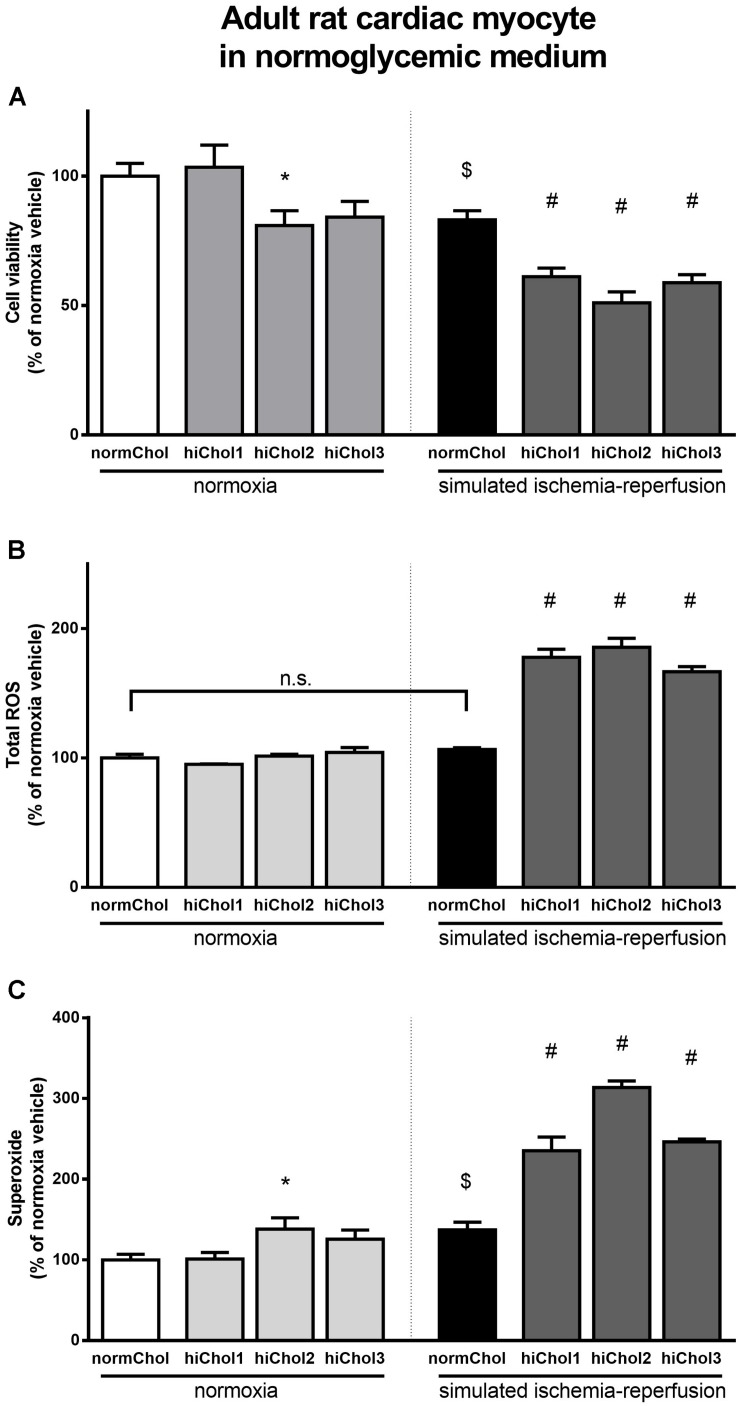
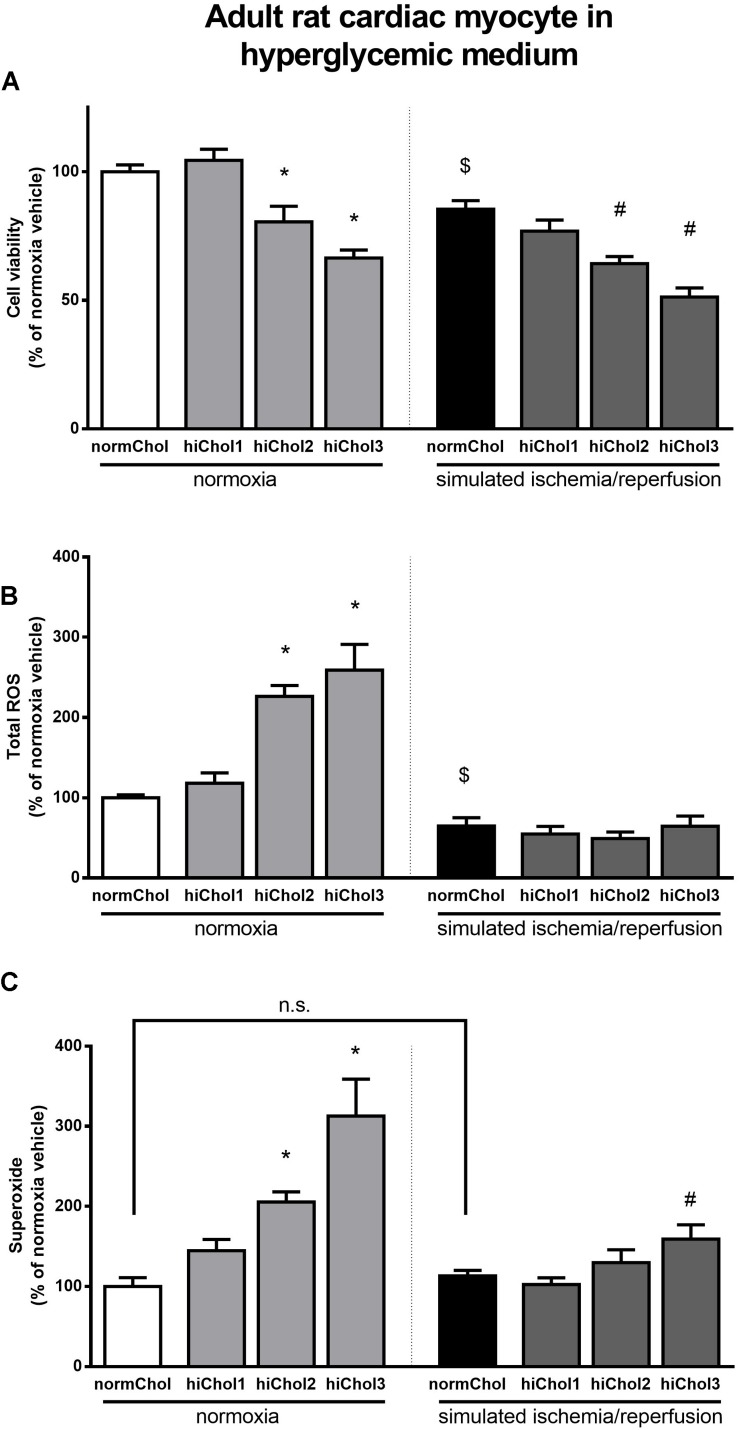
Neonatal cardiac myocytes took up cholesterol from the different hiChol media at a concentration-dependent manner. In normoxia, viability of hiChol neonatal cardiac myocytes was not significantly changed, however, superoxide levels were increased as compared to vehicle. After SI/R, the viability of hiChol neonatal cardiac myocytes was decreased and total ROS level was increased as compared to vehicle. HiChol combined with hyperglycemia further aggravated cell death and oxidative stress in normoxic as well as in SI/R conditions. Viability of hiChol adult cardiac myocytes was significantly decreased and superoxide level was increased in normoxia and these changes were further aggravated by SI/R. HiChol combined with hyperglycemia further aggravated cell death, however level of oxidative stress increased only in normoxic condition.
HiChol rat cardiac myocytes showed reduction of cell viability and increased oxidative stress, which were further aggravated by SI/R and with additional hyperglycemia. This is the first demonstration that the combination of the current hypercholesterolemic medium and SI/R in cardiac myocytes mimics the cardiac pathology of the comorbid heart with I/R and hypercholesterolemia.
共病模型在心脏保护药物研发中至关重要。高胆固醇血症会导致内皮和心肌功能障碍,还会加重缺血/再灌注(I/R)诱导的心肌损伤。在高脂血症和高血糖动物模型中,针对I/R的内源性心脏保护机制受损。因此,我们的目标是开发一种基于细胞的中通量共病测试系统,用于模拟共病情况的心肌I/R损伤、高胆固醇血症和高血糖。
从新生或成年大鼠心脏分离的心肌细胞分别在对照培养基或三种胆固醇含量递增的不同高胆固醇血症培养基(高胆固醇,hiChol)或高胆固醇 + 高血糖培养基中培养。然后每组分别进行模拟缺血/再灌注(SI/R)或相应的常氧条件处理。通过荧光素染色检测新生心肌细胞中的胆固醇摄取。通过荧光测定法测量细胞活力、总细胞计数和氧化应激,即总活性氧(ROS)和超氧化物水平。
新生心肌细胞以浓度依赖的方式从不同的高胆固醇血症培养基中摄取胆固醇。在常氧条件下,高胆固醇血症新生心肌细胞的活力没有显著变化,然而,与载体相比,超氧化物水平升高。SI/R后,与载体相比,高胆固醇血症新生心肌细胞的活力降低,总ROS水平升高。高胆固醇血症与高血糖联合在常氧以及SI/R条件下进一步加重细胞死亡和氧化应激。在常氧条件下,高胆固醇血症成年心肌细胞的活力显著降低,超氧化物水平升高,而SI/R进一步加重了这些变化。高胆固醇血症与高血糖联合进一步加重细胞死亡,然而氧化应激水平仅在常氧条件下升高。
高胆固醇血症大鼠心肌细胞显示细胞活力降低和氧化应激增加,SI/R和额外的高血糖会进一步加重这些情况。这是首次证明当前的高胆固醇血症培养基与心肌细胞中的SI/R相结合可模拟合并I/R和高胆固醇血症的共病心脏的心脏病理情况。