Goodson Jo Max, Hardt Markus, Hartman Mor-Li, Alqaderi Hend, Green Daniel, Tavares Mary, Mutawa Al-Sabiha, Ariga Jitendra, Soparkar Pramod, Behbehani Jawad, Behbehani Kazem
Department of Applied Oral Sciences, The Forsyth Research Institute, Cambridge, MA, United States.
Kuwait School Health Program, Kuwait City, Kuwait.
Front Endocrinol (Lausanne). 2019 Jun 20;10:382. doi: 10.3389/fendo.2019.00382. eCollection 2019.
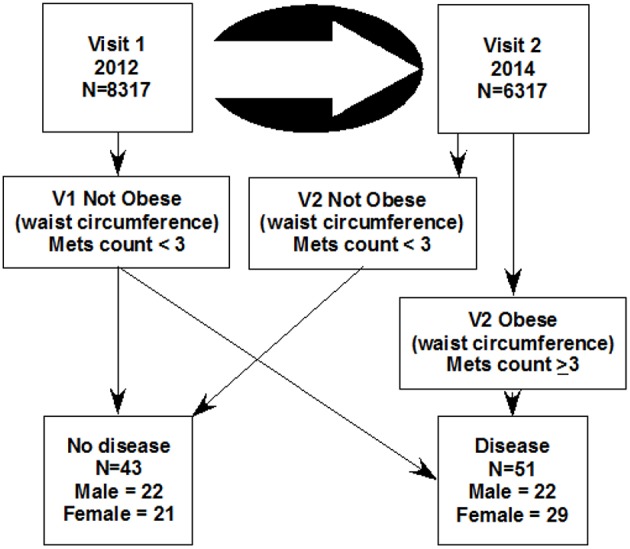
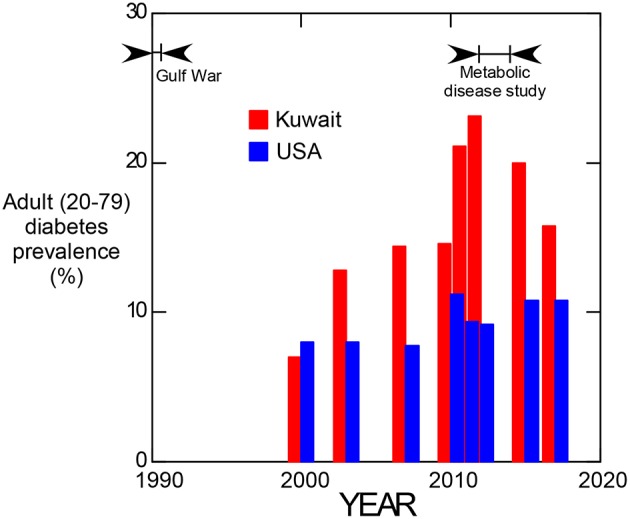
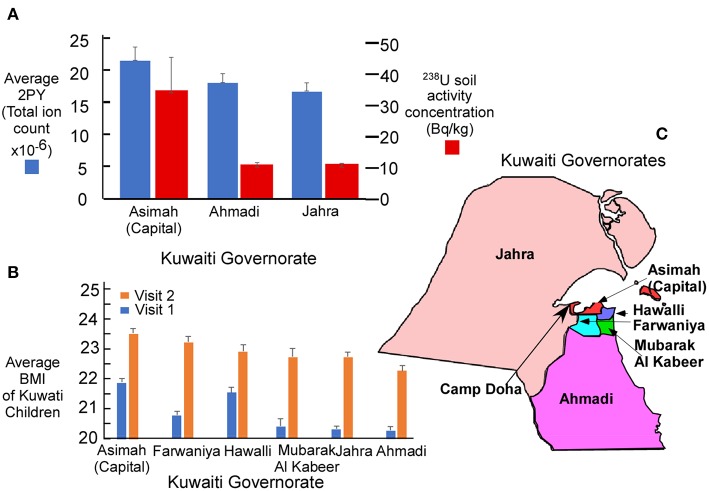
In a longitudinal study of 6,158 Kuwaiti children, we selected 94 for salivary metabolomic analysis who were neither obese (by waist circumference) nor metabolic syndrome (MetS) positive (<3 diagnostic features). Half (43) remained healthy for 2 years. The other half (51) were selected because they became obese and MetS positive 2 years later. In the half becoming obese, metabolomic analysis revealed that the level of salivary N1-Methyl-2-pyridone-5-carboxamide (2PY) had the highest positive association with obesity ( = 0.0003, AUC = 0.72) of 441 salivary biochemicals detected. 2PY is a recognized uremic toxin. Also, 2PY has been identified as a biomarker for uranium uptake. Considering that a relatively recent military conflict with documented uranium contamination of the area suggests that this weight gain could be a toxicological effect of long-time, low-level uranium ingestion. Comparison of salivary 2PY in samples from the USA and Kuwait found that only Kuwait samples were significantly related to obesity. Also, the geographic distribution of both reported soil radioactivity from U and measured salivary 2PY was highest in the area where military activity was highest. The prevalence pattern of adult diabetes in Kuwait suggests that a transient diabetogenic factor has been introduced into the Kuwaiti population. Although we did not measure uranium in our study, the presence of a salivary biomarker for uranium consumption suggests potential toxicity related to obesity in children.
在一项对6158名科威特儿童的纵向研究中,我们挑选了94名儿童进行唾液代谢组学分析,这些儿童既不肥胖(根据腰围判断)也不是代谢综合征(MetS)阳性(诊断特征少于3项)。其中一半(43名)儿童在两年内保持健康。另一半(51名)则是因为在两年后变得肥胖且MetS呈阳性而被挑选出来。在变得肥胖的这一半儿童中,代谢组学分析显示,在所检测的441种唾液生化物质中,唾液N1-甲基-2-吡啶酮-5-甲酰胺(2PY)水平与肥胖的正相关性最高(P = 0.0003,AUC = 0.72)。2PY是一种公认的尿毒症毒素。此外,2PY已被确定为铀摄取的生物标志物。鉴于该地区近期发生过军事冲突且有记录表明该地区存在铀污染,这表明这种体重增加可能是长期低水平摄入铀的毒理学效应。对美国和科威特样本中的唾液2PY进行比较发现,只有科威特的样本与肥胖有显著关联。而且,报告的土壤铀放射性和测量的唾液2PY的地理分布在军事活动最频繁的地区最高。科威特成人糖尿病的流行模式表明,一种短暂的致糖尿病因素已引入科威特人群。尽管我们在研究中没有测量铀,但存在铀摄入的唾液生物标志物表明儿童肥胖可能存在潜在毒性。